 blog
Commercial Outdoor Storage Yard Rental: 2026 Guide
Table of Contents
- What to Look for in a Commercial Outdoor Storage Yard
- Contractor Storage Yard Lease: Terms, Flexibility, and What to Watch
- Commercial Storage Yard Security Requirements
- Zoning Compliance for Commercial Outdoor Storage
- Site Preparation Checklist Before You Move In
- Outdoor vs. Indoor Storage: A Cost-Benefit Analysis
- Frequently Asked Questions
Last Updated: September 29, 2026
What to Look for in a Commercial Outdoor Storage Yard
Finding the right commercial outdoor storage yard rental starts with knowing what separates a functional site from an expensive mistake. Big Sky Self Storage Yards helps contractors, RV owners, and small businesses across the Binghamton area secure yard space that actually fits their equipment and their budget. The checklist below covers the details that matter most before you sign anything.
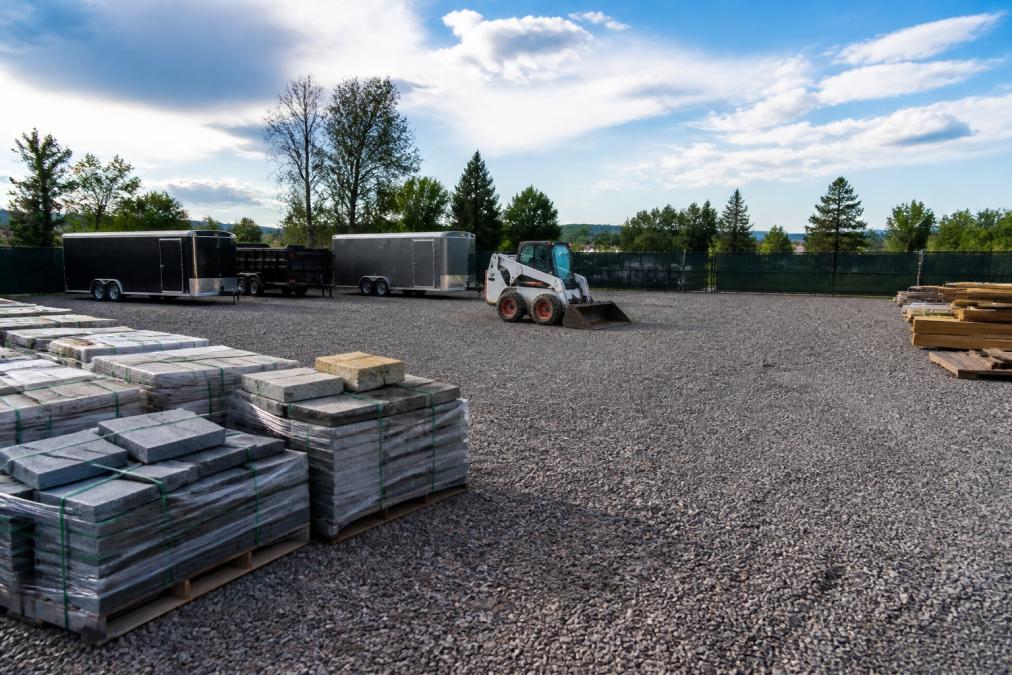
Lot Sizes, Dimensions, and Square Footage
Yard space is measured in square footage, but what you can actually park there depends on shape and access, not just total area. A long, narrow lot fits a trailer and a truck; a wide, shallow one may only fit equipment.
Ask these questions before committing:
- Can a full-size enclosed trailer turn around inside the gate?
- Is there room to park a truck beside the trailer, or do you unhitch every time?
- Does the lot drain, or does it turn to mud after a storm?
Surface, Grading, and Drainage
Gravel and compacted stone handle heavy loads better than dirt, and a graded surface keeps water moving away from your equipment. Standing water rusts steel, rots wood, and freezes into ruts that trap trailers.
Contractor Storage Yard Lease: Terms, Flexibility, and What to Watch
A contractor storage yard lease is the agreement that governs how long you can stay, what you can store, and how quickly you can leave. Read every clause about notice periods and renewal before signing, because the exit terms matter as much as the entry terms.
Month-to-Month vs. Annual Agreements
Month-to-month leases suit contractors whose workload shifts with the seasons. Annual agreements often cost less per month but lock you in.
Watch for these details:
- Notice period required to cancel (30 days is common; 60 or 90 days is not)
- Whether unused months are refundable
- Auto-renewal clauses that extend your term without a reminder
- Penalties for early termination on annual contracts
Commercial Storage Yard Security Requirements
Meeting commercial storage yard security requirements means more than a fence. The best sites layer access control, lighting, and camera coverage so no single failure leaves your equipment exposed. Understanding how each layer actually works, and what it costs the operator, helps you ask the right questions before you sign.
Access Control and Surveillance Technology Compared
Security layers fall into two categories: those that prevent access and those that document it. Prevention is cheaper and more effective; documentation helps after an incident. A well-run yard uses both.
| Security Layer | How It Works | Operator Cost Considerations | Best For |
|---|---|---|---|
| Chain-link or wrought-iron perimeter | Physical barrier, typically 6-8 ft tall | Varies | All tenants; deters casual trespass |
| Locking gate with keypad or card reader | Restricts entry to credentialed tenants; logs entry times | Varies | Sites with multiple tenants |
| Motion-activated floodlights | Illuminates activity after dark; deters loitering | Varies | Overnight equipment storage |
| 24/7 camera coverage (IP or analog) | Records activity for review; some systems offer remote monitoring | Varies | High-value tools, trailers, containers |
| Onsite live monitoring or patrol | Human response to alarms or incidents | Varies | High-crime areas or high-value yards |
| Motion sensors and alarms | Triggers alert when perimeter is breached | Varies | Remote or unstaffed yards |
What to Ask Before You Sign
- Who monitors the cameras, and how long is footage retained?
- Is the gate code unique to you, or shared? Shared codes make it impossible to trace who entered.
- Are lights on timers or motion sensors? Timers can leave dark windows; motion sensors are more reliable.
- Is there a written security policy? Ask for it.
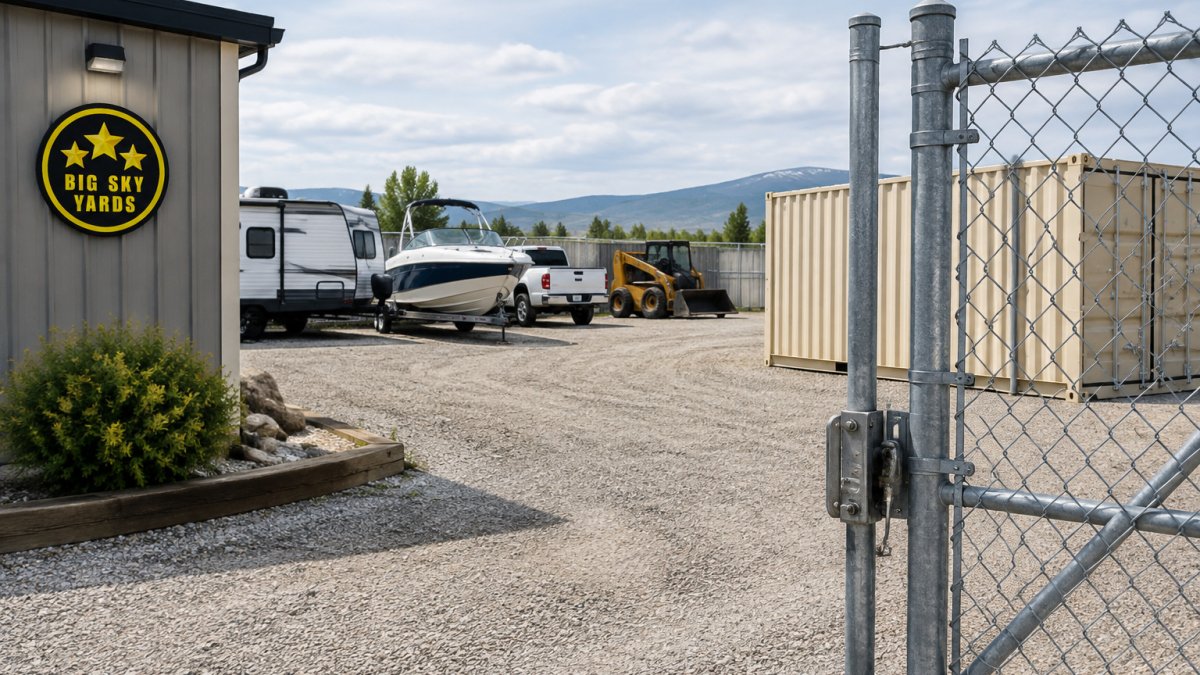
Big Sky Self Storage Yards uses double-secured fenced yards with locking gates, onsite lighting, and security cameras to protect equipment around the clock. Ask the property manager for a walkthrough of the security setup before you commit.
Zoning Compliance for Commercial Outdoor Storage
Zoning rules decide whether a lot can legally host commercial outdoor storage at all. Local codes classify yard space under industrial or commercial designations, and each has different rules for fencing, setbacks, and permitted uses. Most listing sites skip this entirely, but a yard that fails zoning can be shut down mid-lease, forcing you to move on short notice.
Step 1: Identify the Property's Zoning Designation
Ask the property manager for the parcel's zoning code (e.g., I-1 Light Industrial, I-2 Heavy Industrial, C-2 Commercial). You can verify this yourself through your county's assessor or planning department website, which typically publishes zoning maps and parcel lookups. If the manager can't provide it, that's a red flag.
Step 2: Confirm Your Use Is Permitted
Zoning codes list permitted uses by category. Outdoor storage of vehicles, trailers, and containers is often allowed in industrial zones but may be restricted or require a conditional use permit in commercial zones. Ask specifically:
- Is outdoor storage a permitted use, a conditional use, or prohibited?
- Are there limits on the number of vehicles or containers per lot?
- Are there restrictions on storing certain materials (e.g., flammable liquids, tires)?
Step 3: Check Fencing, Setback, and Screening Requirements
Many jurisdictions require outdoor storage to be screened from public view with a fence or landscaping, and setbacks dictate how close storage can be to property lines. Common requirements include:
- Fence height: typically 6-8 ft
- Setback: often 5-20 ft from property lines
- Screening: opaque fencing or landscaping in commercial zones
Step 4: Get Written Confirmation
Before signing, request a written statement from the property manager confirming that your intended use complies with current zoning. If they hesitate, contact the local planning department directly and ask for a zoning verification letter. This document protects you if the city later questions the use.
What Happens If Zoning Fails
If a yard is operating outside its zoning, the city can issue a cease-and-desist, fine the operator, and require tenants to vacate. You could lose access to your equipment for weeks and be forced to find alternative storage on short notice.
Find your local planning department and zoning maps
A Note on Homeowners Association and Deed Restrictions
Even if a property is zoned for outdoor storage, private restrictions like HOA covenants or deed restrictions can prohibit it. These are common in mixed-use developments. Ask the property manager whether any private restrictions apply, and request a copy of the relevant documents if they do.
Site Preparation Checklist Before You Move In
Moving day goes faster when you plan the layout first. Use this checklist before your first load arrives:
- Measure your largest vehicle, including hitch and mirrors
- Confirm gate width clears your trailer with room to spare
- Photograph the lot's condition before moving anything in
- Label and inventory every container and pallet
- Confirm your insurance covers off-site equipment storage
- Save the property manager's contact for after-hours issues
- Check that utility access meets your needs for power or water
Confirm your insurance covers off-site equipment storage.
Outdoor vs. Indoor Storage: A Cost-Benefit Analysis
Outdoor storage offers cost-effective and accessible solutions for weather-tolerant items like trailers, containers, heavy equipment, and vehicles. Indoor storage provides protection for sensitive items but typically comes at a higher cost and may have more restricted access.
Choose outdoor when:
- Your equipment is weather-resistant or already covered
- You need drive-in access without scheduling a dock
- You want to park and leave on your own schedule
Choose indoor when:
- You store electronics, paperwork, or climate-sensitive materials
- Theft risk in your area is high enough to justify the premium
Frequently Asked Questions
What is industrial outdoor storage (IOS)?
Industrial outdoor storage refers to fenced, paved or gravel lots used to park heavy equipment, store construction materials, containers, and commercial vehicles. These yards typically offer grade-level loading, drive-in access, and security features like cameras and locking gates. IOS works well for contractors who need quick access to equipment without the cost of an indoor warehouse. When evaluating commercial outdoor storage yard rental options, confirm the lot has adequate square footage, proper drainage, and zoning that permits your specific use.
What security features are necessary for outdoor equipment storage?
At minimum, look for a fenced and gated perimeter with locking access points, onsite lighting, and surveillance cameras covering entry points and storage rows. Access control systems that log who enters and exits add accountability. For high-value equipment, consider yards with double-secured areas or individual container storage. Commercial storage yard security requirements vary by insurer, so check with your carrier before signing a lease.
Can I store construction materials in an outdoor storage yard?
Yes, most commercial outdoor storage yards allow construction materials, but restrictions vary. Common permitted items include lumber, steel, pipe, palletized goods, and containers. Some yards prohibit hazardous materials, chemicals, or anything that creates runoff concerns. Before signing a contractor storage yard lease, confirm which materials are allowed and whether the yard requires you to keep items on pallets or within a designated square footage. Also verify that your general liability insurance covers materials stored outdoors.
How do I determine the right size storage yard for my business needs?
Start by measuring the footprint of every vehicle, trailer, and material stack you plan to store, then add clearance for ingress and egress. A single full-size pickup with an enclosed trailer can need a 12' x 40' spot. If you also store containers or palletized inventory, add that square footage separately. Visit the yard in person to confirm the space fits your largest piece of equipment and that drive-in access is wide enough. Ask about month-to-month lease options so you can scale up or down as your workload changes.
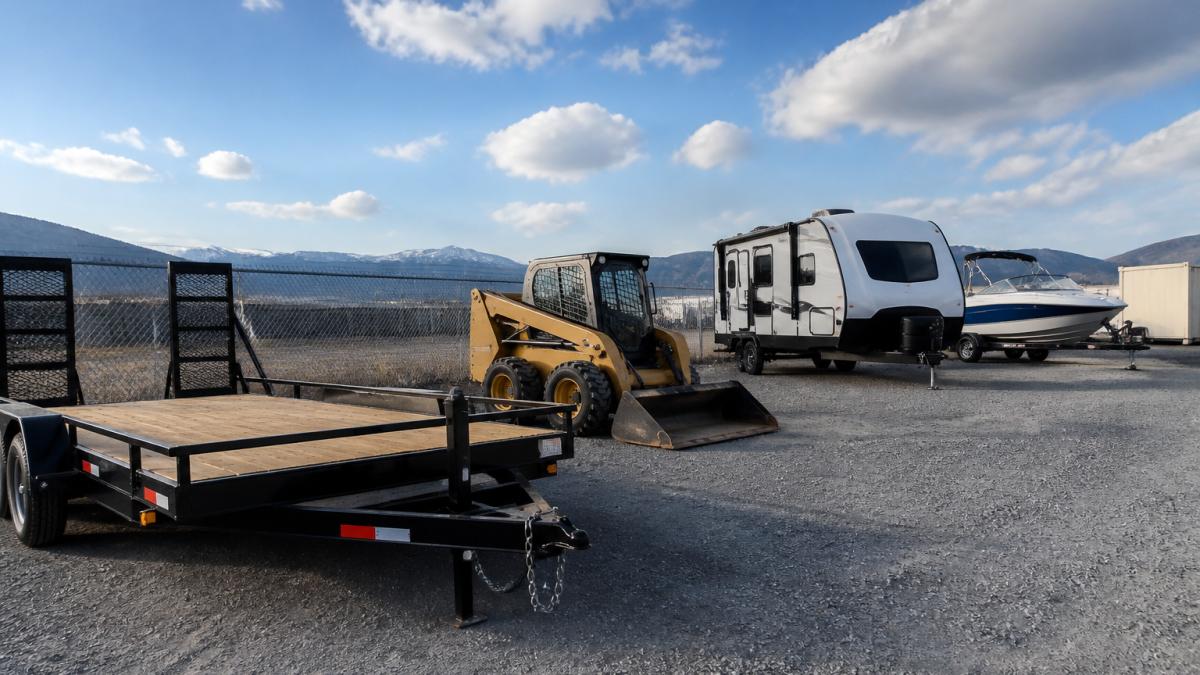
Choosing yard space comes down to matching the site to how you actually work. Big Sky Self Storage Yards offers double-secured fenced yards with locking gates, 20' containers for contractor equipment, and 12' x 40' spots built for XL RVs, all near major crossroads with easy access to I86. Get started with Big Sky Self Storage Yards and store your equipment somewhere it stays secure and reachable.