 blog
Alternatives to Indoor Boat Storage for Winter Compared
Quick Summary
The main alternatives to indoor boat storage for winter are outdoor dry storage, racks and trailers, wet storage in the water, covered storage, and self-storage yards. Each trades some protection for lower cost or easier access, so the right choice depends mostly on boat size and budget.
- Compare total seasonal cost, not just the monthly rate, including transport, cover, winterization and spring recommissioning.
- Vent the cover and use a support frame so condensation and snow do not damage an outdoor boat.
- Drain the engine cooling system and fuel lines, and add fuel stabilizer before storing outdoors.
- A fitted cover with a frame is usually better than shrink wrap for most owners.
- Ask your insurer whether outdoor or in-water storage reduces coverage before you sign a contract.
Table of Contents
- What Are the Alternatives to Indoor Boat Storage for Winter?
- Winter Boat Storage Cost Compared Across Options
- Outdoor Boat Storage for Winter: Dry Storage, Racks and Trailers
- How to Winterize a Boat for Storage Outside
- Boat Storage Covers and Shrink Wrap: Which Protects Better
- Wet Storage, Self-Storage Units and Other Choices Compared
- Choosing a Winter Storage Option Based on Your Boat, Climate and Budget
- Frequently Asked Questions
What Are the Alternatives to Indoor Boat Storage for Winter?
The main alternatives to indoor boat storage for winter are outdoor dry storage, racks and trailers, wet storage in the water, covered storage, and self-storage yards. Each one trades a bit of protection for lower cost or easier access.
Indoor storage protects a boat from snow load, sun, and wind. Most alternatives cannot match that. The goal is to close the gap as far as possible, and to make sure the gap you accept is one you can actually live with.
NOAA National Weather Service guidance on winter storm impacts
Two questions decide most of the choice. How much protection does your boat need? And how much can you spend each month and over the whole season? Answer those first, and the list shrinks quickly.
Winter Boat Storage Cost Compared Across Options
Winter boat storage cost varies widely, and the monthly rate is only part of the picture. The number that matters is the total seasonal cost: facility fees plus transport, winterization, cover or wrap, insurance adjustments, and spring recommissioning. Comparing only the monthly rent is the most common budgeting mistake we see.
Here is how the main alternatives compare on the cost drivers that actually move the total:
| Option | Typical Monthly Rate Range | Transport / Haul | Cover or Wrap | Winterization | Spring Recommissioning | Total Seasonal Cost Pattern |
|---|---|---|---|---|---|---|
| Outdoor dry storage lot | $40-$150 | Often included or short tow | $150-$600 fitted cover, or $300-$700 shrink wrap | $150-$400 DIY or pro | $100-$300 | Lowest facility cost, highest DIY labor |
| Rack or trailer storage | $75-$250 | Short tow or launch service | Same as dry lot | Same as dry lot | $100-$300 | Low to moderate; launch service adds up |
| Wet storage in the water | $200-$600 per slip | None | Minimal | $150-$400 | $100-$250 | Moderate; hull and ice risk costs are hidden |
| Covered or shelter storage | $150-$400 | Short tow | Not needed | $150-$400 | $50-$150 | Moderate; less cover and labor |
| Self-storage yard | $75-$300 | Short tow | Same as dry lot | Same as dry lot | $100-$300 | Moderate; security included, cover still needed |
| Indoor storage (baseline) | $250-$700 | Short tow | Not needed | $100-$300 | $50-$150 | Highest facility cost, lowest labor and risk |
Spring Recommissioning
Rates depend on boat length, region, and season length, so confirm current pricing with each facility.
Three cost items are commonly overlooked when budgeting:
- Transport. If the boat is not already on a trailer, hauling to and from a yard adds cost. Wet storage avoids this entirely.
- Cover and frame. A fitted cover plus a support frame is a purchase that can last several seasons; shrink wrap is a recurring annual cost and cannot be reused.
- Insurance and contract terms. Some policies reduce coverage or raise deductibles when a boat is stored outdoors or in the water over winter. Ask your insurer before you sign, and ask the facility whether security monitoring is included or billed separately.
A common pattern is that the cheapest monthly rate is not the cheapest season. Add the facility fee, transport, cover, winterization, and recommissioning for each option before you decide. For a fuller breakdown of how these line items add up at a yard, see our outdoor storage cost breakdown.
Insurance Information Institute on boat insurance and storage
Outdoor Boat Storage for Winter: Dry Storage, Racks and Trailers
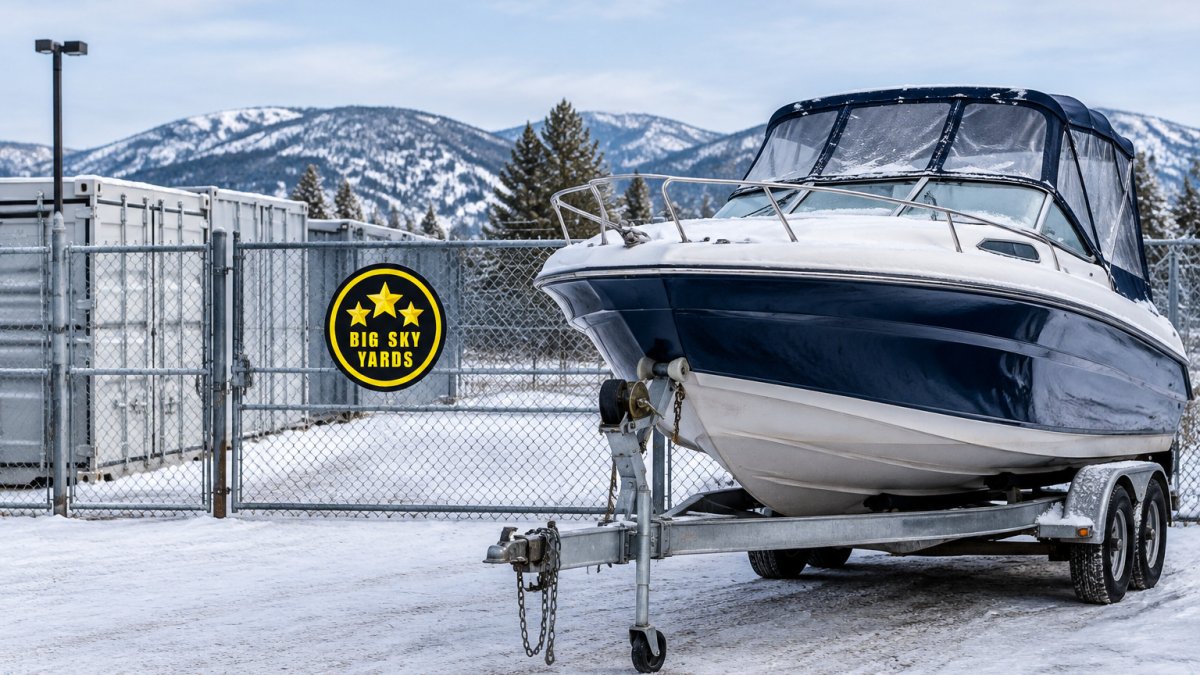
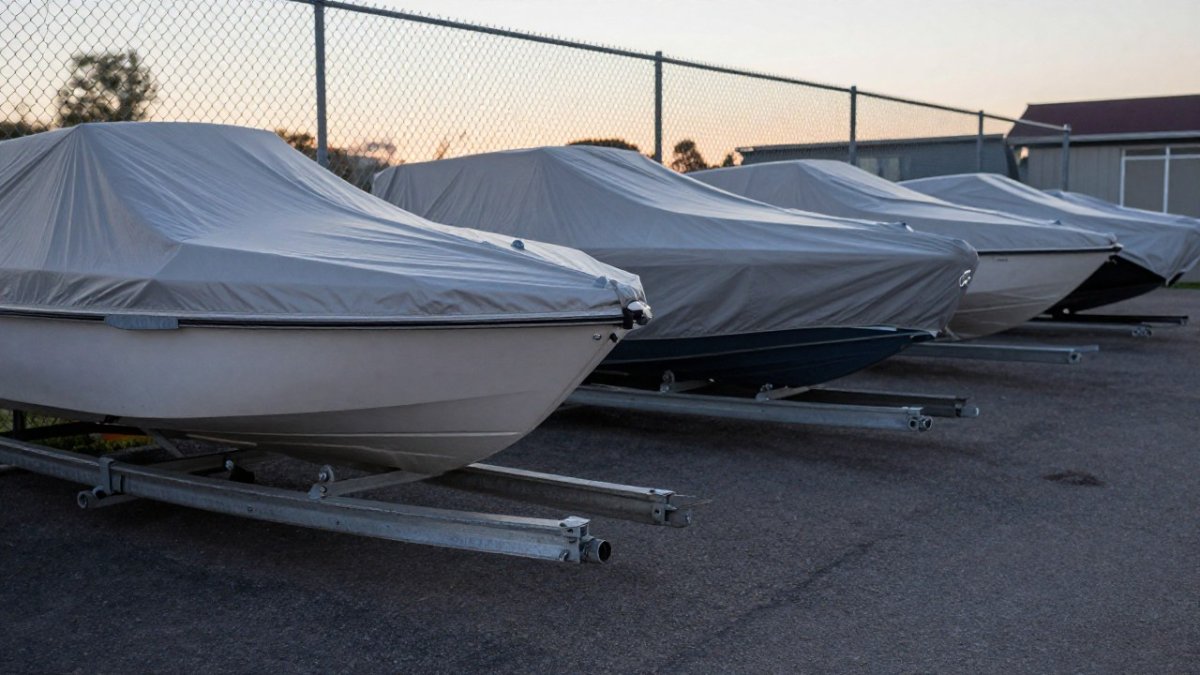
Outdoor boat storage for winter usually means one of three setups: a dry storage lot, a cradle or rack, or parking the boat on its trailer. Each keeps the boat out of the water and off the ground, which prevents the worst moisture problems.
!A pontoon boat wrapped in a fitted cover parked on a gravel lot beside a fenced yard under a light snowfall
Pros and Cons of Outdoor Dry Storage
Dry storage is simple and usually inexpensive. The boat stays on stands or a trailer, and you protect it with a quality cover.
- Pro: Low monthly cost and easy access in spring.
- Pro: No ongoing marina fees for slip space.
- Con: Exposed to snow load, wind and UV unless covered well.
- Con: Moisture can collect under the cover and cause mildew.
Watch out: a cover that is not vented will trap condensation. Leave a gap at the bottom and use a support frame so snow does not pool on the top.
Dry-Stack Racks and Home Driveway Storage
Dry-stack racks lift boats off the ground and keep them in a controlled yard. Home driveway storage is common for trailerable boats, but check local rules on how long a boat can sit on residential property.
- Pro: Easy to launch and retrieve.
- Con: Driveway storage may conflict with local ordinances.
How to Winterize a Boat for Storage Outside
Winterizing is what protects a boat that sits outdoors. Skipping steps costs more later in repairs than the time saved now.
- Drain the engine cooling system and fuel lines, and add fuel stabilizer to the tank.
- Change the engine oil and filter so contaminants do not sit in the engine all winter.
- Remove the drain plug, and clear the bilge and livewell of standing water.
- Flush freshwater systems and add non-toxic antifreeze to the plumbing lines.
- Remove batteries, store them in a cool place, and keep them charged.
- Wrap or cover the boat, leaving airflow at the bottom.
Expected result: A boat that starts cleanly in spring with no frozen lines or stale fuel.
Most owners in cold regions find that engine and plumbing damage from freezing is the costliest winter mistake. Freezing water expands and cracks fittings, so drain completely.
US Coast Guard boating safety resources
For a fuller walkthrough, see our step-by-step guide to storing a boat safely.
Boat Storage Covers and Shrink Wrap: Which Protects Better
A fitted cover and shrink wrap both protect against snow, sun and debris. They differ in cost, durability and how well they breathe.
- Fitted covers are reusable, easy to remove, and allow some airflow. They need a frame to shed snow.
- Shrink wrap seals the boat tightly and handles harsh weather well. It traps moisture if not vented, and it is hard to remove and dispose of.
For most owners, a fitted cover with a frame and a vent is the better choice. Shrink wrap suits boats that will sit through severe winters without access for months.
Wet Storage, Self-Storage Units and Other Choices Compared
Wet storage keeps the boat in the water in a slip or mooring. It avoids hauling costs but exposes the hull to ice and freezing water.
Covered slips and boat lifts sit between these extremes. They protect against weather at a higher price.
Note that a self-storage unit's contract terms matter. Ask whether you can end the rental early, and what happens if you need to pick up the boat for a short trip.
Insurance Information Institute on boat insurance and storage
Our outdoor storage cost breakdown explains how these options add up over a full season.
Choosing a Winter Storage Option Based on Your Boat, Climate and Budget
The harder question is which option fits your boat, your winter, and your budget. Use this decision matrix to narrow the list before you call anyone.
| Boat Size | Winter Severity | Budget Priority | Best-Fit Alternative | Why |
|---|---|---|---|---|
| Under 20 ft, trailerable | Mild (rarely below freezing) | Lowest cost | Outdoor dry lot or home driveway | Cover and frame handle the risk; no hauling needed |
| Under 20 ft, trailerable | Heavy snow and freeze | Security | Self-storage yard | Fenced, monitored space at moderate cost |
| 20-28 ft | Moderate | Balanced | Covered or shelter storage | Snow load and UV are the main threats; cover is built in |
| 20-28 ft | Heavy snow | Protection | Covered storage or indoor | Frame and roof carry the snow load |
| Over 28 ft, in-water slip | Any | Access | Wet storage with bubbler or de-icer | Hauling a large boat is costly; ice management is essential |
| Any size | Any | No maintenance worry | Fully managed facility | Higher fee buys labor and risk transfer |
Three inputs drive the choice: boat size, how cold and snowy your winter runs, and what you can spend over the whole season. A small trailerable boat in a mild climate can sit comfortably in dry storage. A large cabin boat in a heavy-snow area usually needs covered or enclosed protection.
Booking lead times. Rack space and covered storage can fill early, so reserve ahead of the season. If you need a 12' x 40' space or a container, call early.
Contract questions to ask before you sign. These matter more than the sticker rate:
- Can you end the rental early, and is there a penalty?
- What happens if you need the boat for a short trip mid-season?
- Who is responsible for damage from snow load, wind, or a neighbor's boat?
- Does the facility require proof of insurance, and does outdoor storage affect your policy?
- Is security monitoring included or billed separately?
Maintenance trade-offs by option. Every alternative trades protection for cost or access, and the trade-off shows up as maintenance:
- Outdoor dry storage: condensation under the cover is the main risk. Vent the cover and use a frame so snow does not pool. Expect to check the boat once or twice over winter.
- Wet storage: ice and freezing water are the threats. A bubbler or de-icer is often required, and hull inspection in spring is wise.
- Self-storage yard: security is the strength, but the boat still needs a cover and frame; the yard does not protect against moisture.
- Covered storage: the roof handles snow load, but ventilation still matters to prevent mildew.
A useful rule: the colder and snowier the winter, the more the decision should lean toward a roof over the boat. The tighter the budget, the more the decision should lean toward a quality cover, a proper frame, and doing winterization yourself.
Big Sky Self Storage Yards offers secured yards with locking gates, onsite lighting and security cameras, plus 12' x 40' spaces for large vehicles and optional 20' containers.
Frequently Asked Questions
Can you store a boat outside during winter?
Yes, many boat owners store boats outdoors for winter, but protection depends on the setup. A boat on a trailer or stands should be covered with a breathable fitted cover or shrink-wrapped, drained of water, and supported so snow and ice do not sag the hull. Outdoor storage costs less than indoor storage, but the boat faces UV exposure, moisture and theft risk. Check the cover weekly after heavy snow and remove standing water from the cover so it does not pull on the frame.
Do you need to winterize a boat if it is stored inside?
Most boat owners should still winterize a boat stored indoors, because an enclosed building does not stop temperature swings from freezing water left in the engine, pump or plumbing. Draining the engine cooling system, fuel stabilization and removing the battery are common steps. Indoor storage reduces weather damage, but it does not replace the preparation work that protects the engine and systems over winter.
How much does winter boat storage cost?
Winter boat storage costs vary widely by boat size, location and storage type, so pricing depends on the facility and the season length. Outdoor dry storage, trailer storage and covered options each price differently. For current rates, check the Big Sky Self Storage Yards pricing page or request a quote, since prices depend on space size, contract length and any add-on services.
Is covered outdoor boat storage better than storing a boat uncovered outside?
Covered outdoor storage generally protects a boat better than leaving it fully exposed, because a roof or sturdy cover reduces snow load, UV damage and rain exposure. A boat still needs drainage, ventilation and a fitted cover to limit condensation and mildew. Covered storage costs more than open storage, so weigh the added protection against the value of the boat and your local snowfall.