 How-to
How to Store a Boat Safely: Step-by-Step Guide
Last Updated: October 23, 2026
Quick Summary
To store a boat safely, choose indoor or covered storage for long-term or freezing conditions, then clean it, remove gear, cover and vent it, and stabilize the fuel. Pull the battery and store it charged and dry, drain every water passage, and seal pest entry points. Check the boat monthly during storage.
- Indoor storage suits long-term parking, harsh winters, and boats with wood trim or upholstery.
- Block trailer wheels and use jack stands under the frame to take weight off tires.
- Top the fuel tank nearly full and add stabilizer, then run the engine to mix it.
- Store the battery at a partial-to-full charge and never flat in freezing conditions.
- Trim the outboard down so water drains and the lower unit does not sit in snow.
Table of Contents
- Step 1: Choose Your Storage Location and Support
- Step 2: Clean and Prep the Boat Inside and Out
- Step 3: How to Store a Boat Outside Safely
- Step 4: Boat Fuel Storage and Stabilizer Basics
- Step 5: Boat Battery Storage and Engine Preservation
- Step 6: Mold, Pests, and Interior Moisture Prevention
- Your Long-Term Boat Storage Checklist
- Frequently Asked Questions
Step 1: Choose Your Storage Location and Support
Learning how to store boat safely starts with one decision: where the hull sits for the off-season.
The core question is indoor versus outdoor storage. Cost, climate, and how long you plan to park all shape the answer. Most owners default to whichever option is closest or cheapest, then discover in spring that the choice drove every problem they now have to fix.
Indoor vs. Outdoor Storage
Indoor storage is a building or covered structure that shields the boat from rain, snow, and direct sun. Outdoor storage is an open yard, driveway, or lot where the boat sits exposed to the weather.
- Indoor: Best for long-term storage, harsh winters, and boats with wood trim or upholstery you want to last. Costs more and needs booking early.
- Outdoor: Cheaper and easier to access. Works well when you use a quality cover and prep the boat properly.
- Covered storage: A middle path. A carport-style roof blocks sun and snow but leaves the sides open to wind and moisture.
For most owners storing four to five months, a secure outdoor yard with a good cover does the job. For year-round parking or a boat worth protecting from every freeze, indoor wins.
Choosing by Duration and Climate
The right option changes with how long the boat sits and what the weather does:
- Short-term (under 60 days), mild climate: Outdoor with a fitted cover is usually enough. The boat stays accessible, and you avoid the cost and booking hassle of indoor space.
- Short-term, freezing climate: Covered outdoor or indoor. A single hard freeze can crack a lower unit or a livewell pump if water is left in the system, and a cover alone does not stop that.
- Long-term (four months or more), any climate: Indoor or covered storage pays for itself in reduced UV damage, fewer cover replacements, and less spring cleanup. Upholstery and gelcoat degrade fastest under months of direct sun.
Climate drives the decision as much as duration. Heavy snow load can sag a flat-topped cover; a peaked one sheds it. In hot, dry regions, UV is the main enemy and shade beats rain protection. In humid regions, ventilation matters most, because trapped moisture causes mold.
Cost Comparison by Storage Type
Storage pricing varies by region, boat length, and season, so treat any figure as a planning range:
- Uncovered outdoor yard: The lowest-cost option, typically billed monthly. You supply and maintain the cover.
- Covered outdoor (carport-style): Mid-range. You still get side exposure to wind and blowing rain.
- Indoor, unheated: Higher cost, often with a seasonal minimum. Protects from sun, snow, and rain but not from freezing temperatures.
Ask each facility what the rate includes: power for a trickle charger, access hours, winterization services, and whether the price is locked for the season. A low rate with no power access can cost more once you haul the battery home.
Trailer and Jack Stand Setup
The support under your boat matters as much as the roof over it. A trailer is fine for short-term parking, but tires and bearings suffer under months of dead weight.
- Block the trailer wheels so it cannot roll.
- Take weight off the tires with jack stands under the frame if parking long-term.
- Keep the tongue slightly raised so water drains off the deck.
Keep tongue weight within the trailer and tow vehicle ratings, center the boat so the load does not shift, and place jack stands under the frame or designated hull support points, never under a strake or fitting that can crack.
Step 2: Clean and Prep the Boat Inside and Out
Dirt left on a hull bakes into stains over winter. Mildew in a damp cabin spreads fast. Cleaning before storage is not cosmetic, it is protection.
Start outside: wash the hull top to bottom with fresh water and mild boat soap, scrub off algae, bird droppings, and salt, rinse the trailer, then let everything dry fully in the sun.
Move inside next. Vacuum carpet, wipe down vinyl, and clear every locker. Moisture trapped in a dirty boat turns into mold within weeks.
What to Remove Before Storing
Anything that holds moisture, attracts pests, or can be stolen comes out.
- Life jackets, cushions, and towels
- Food, drinks, and coolers
- Fishing gear, tackle, and lines
Leaving gear aboard "just for the season" is how you get chewed wiring and a stolen radio. Store valuables at home.
Step 3: How to Store a Boat Outside Safely
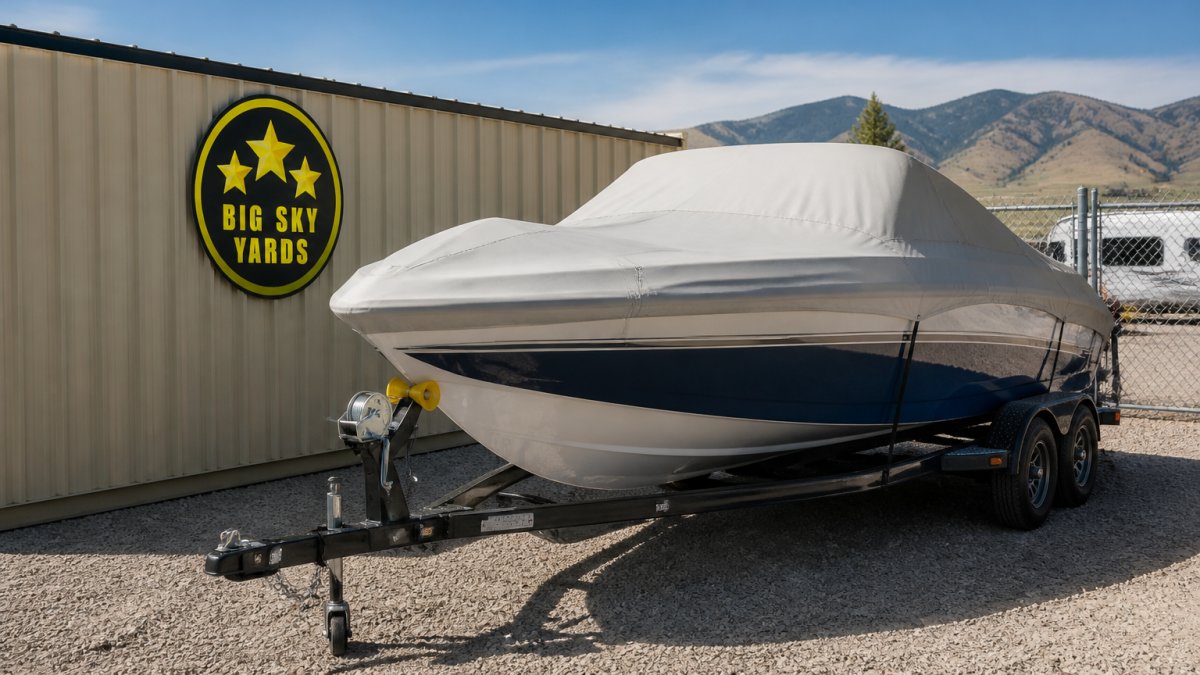
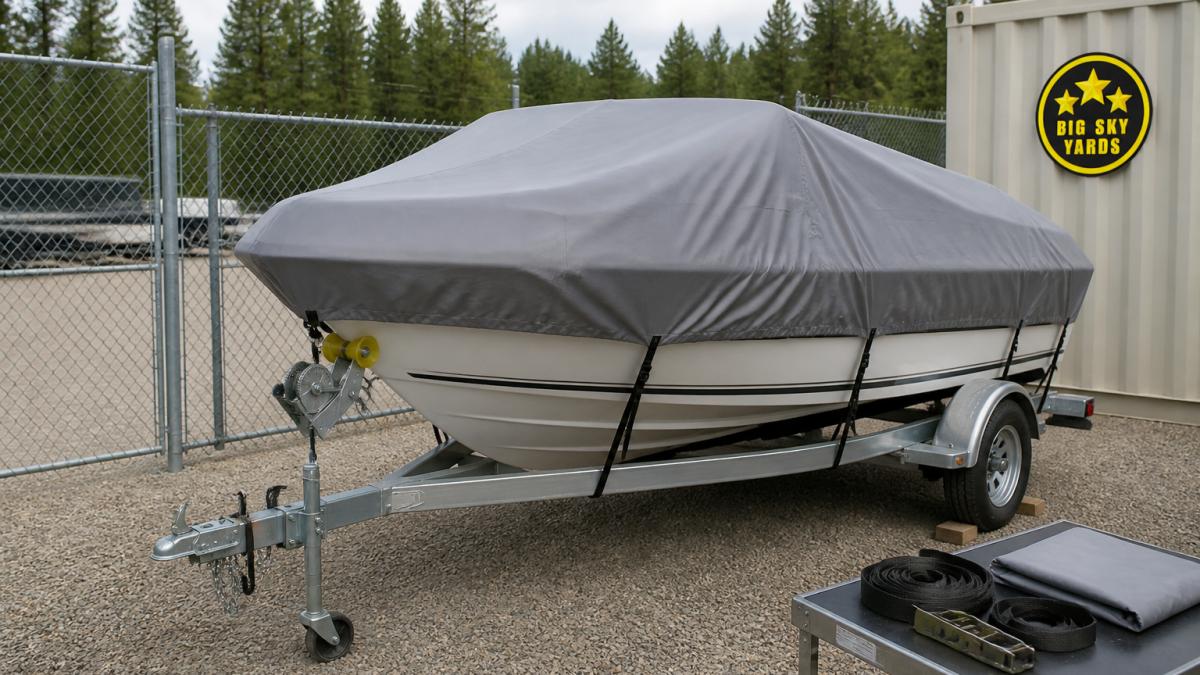
When you store a boat outdoors, the cover does most of the work. A marine-grade cover or a proper shrink wrap keeps rain, snow, and UV rays off the hull and interior.
Covers, Shrink Wrap, and Ventilation
Fit matters more than material. A loose cover flaps in the wind, scuffs gelcoat, and lets water pool.
- Pull the cover tight and secure it with rubber snubbers at every anchor point.
- Slope it so rain runs off instead of collecting in the middle.
- Leave a vent open. Trapped air turns into condensation, and condensation turns into mildew.
Shrink wrap seals a boat tight, which is great for snow protection but risky for moisture. If you wrap, add a vent or a moisture absorber inside. Skip the plastic tarp. It traps water and does not breathe.
Step 4: Boat Fuel Storage and Stabilizer Basics
Fuel sitting for months breaks down. Stale gas clogs carburetors and injectors, a spring repair bill you can avoid.
For boat fuel storage, top the tank nearly full. A full tank leaves little room for air, and less air means less condensation. Add a fuel stabilizer at the rate on the bottle, then run the engine for a few minutes so treated fuel reaches the whole system.
- Fill the tank before storage, not after.
- Add stabilizer and let it mix by running the motor.
- On a carbureted engine, run it dry by disconnecting the fuel line.
Step 5: Boat Battery Storage and Engine Preservation
A battery left connected drains slowly and can freeze in cold weather. Pull it out and store it properly.
For boat battery storage, disconnect the terminals, clean them, and move the battery somewhere cool and dry. A trickle charger keeps it topped up and extends its life.
A few specifics separate a battery that cranks in spring from one that does not:
- Clean the terminals with a baking-soda solution, then coat them with dielectric grease before reconnecting.
- Store the battery at a partial-to-full charge, not flat. A discharged battery can freeze at temperatures a charged one shrugs off.
- Bring the battery indoors if the storage space will drop below freezing for extended periods.
Engine preservation depends on whether the motor is an outboard, inboard, or sterndrive, and on whether it is carbureted or fuel-injected.
Outboard Motor Storage
- Flush the cooling system with fresh water using earmuffs or a flush port. Salt and debris left in the passages corrode over months.
- Fog the cylinders with fogging oil to coat the inside and prevent rust.
- Change the oil and filter on four-stroke motors. On two-strokes, check the oil injection system and top off the reservoir.
A common mistake is leaving the outboard tilted up all winter. Water pools in the lower unit and can crack it when it freezes.
Inboard and Sterndrive Storage
- Run the engine on treated fuel long enough for stabilizer to reach the fuel system, then shut it down.
- Change the oil and filter while the engine is warm, so contaminants drain fully.
- Drain the cooling system completely, including the block, manifolds, and heat exchanger. Trapped water is what cracks blocks.
Fuel System Preservation
- Fill the tank before storage, not after.
- Add stabilizer and let it mix by running the motor.
- On a carbureted engine, run it dry by disconnecting the fuel line.
Cooling System and Freeze Protection
Freeze damage is the most expensive storage mistake and the most preventable. Water left in the block, manifolds, or lower unit expands when it freezes and can crack cast iron and aluminum. Drain every low point, open the drain plugs, and confirm water runs out. On a closed cooling system, check coolant strength with a tester and top up as needed.
Step 6: Mold, Pests, and Interior Moisture Prevention
Mold and pests love a closed, damp boat. Stop both before they start.
Ventilation is your first defense. Crack a vent, leave a hatch ajar under the cover, or use a solar vent. Air moving through the cabin keeps moisture from settling.
For pests, seal the boat up and block entry points:
- Stuff steel wool into openings mice use, not foam.
- Set traps inside the cabin and check them monthly.
- Remove all food and crumbs.
Your Long-Term Boat Storage Checklist
Use this long-term boat storage checklist before you lock the gate. It works for any boat type and season.
| Task | When | Why It Matters |
|---|---|---|
| Choose location and support | Before storage | Prevents hull and tire damage |
| Clean inside and out | Before storage | Stops stains and mildew |
| Remove gear and valuables | Before storage | Prevents theft and pests |
| Cover and vent the boat | At storage | Blocks weather, allows airflow |
| Stabilize and fill fuel | At storage | Prevents stale gas and clogs |
| Pull and charge battery | At storage | Extends battery life |
| Seal pest entry points | At storage | Stops mice and insects |
| Check monthly | During storage | Catches cover, moisture, and pest issues early |
| Recommission in spring | Before launch | Confirms the boat is ready to run |
Where you park matters as much as how you prep. A fenced yard with locking gates, onsite lighting, and security cameras takes the worry out of leaving a boat for months. Big Sky Self Storage Yards offers secure outdoor space for boats, RVs, and trailers, plus easy highway access.
Frequently Asked Questions
How long can fuel sit in a boat before it goes bad?
Untreated gasoline can start to degrade in as little as 30 days, and ethanol-blended fuel can separate and attract moisture even faster. For storage longer than a few weeks, add a marine fuel stabilizer, fill the tank to reduce air space, and run the engine briefly so treated fuel reaches the carburetor or fuel injection system. If you store for more than a year, drain the tank completely or plan to dispose of old fuel at a hazardous waste facility.
Should you store a boat with the motor up or down?
For an outboard motor, store it in the down position so water drains from the lower unit and cooling passages. If the boat sits on a trailer and the lower unit would hit the ground, tilt it up just enough for clearance, then lower it again once the boat is parked. Never leave the motor tilted up for months, because the seals and hydraulic trim system can dry out and the leg is more exposed to weather.
How do you keep moisture and mold out of a stored boat?
Start with a clean, dry interior, then open all hatches and compartments for a day before covering. Place moisture absorbers or a small dehumidifier inside, and use a cover that vents rather than traps air. A support pole under the cover keeps water from pooling and lets air circulate. Check the boat monthly, wipe down any condensation, and reapply mildew preventer on vinyl and canvas surfaces.
What should you remove from a boat before storing it?
Take out life jackets, electronics, fishing gear, and anything else that can be damaged by dampness or stolen. Remove the fish finder, radio, and GPS, along with detachable gear like cushions, lines, and anchors. Open all storage compartments so air can move through, and leave the plug out so rainwater drains. If you store outside, lock the cabin and secure the cover with rubber snubbers at every anchor point.
Storing a boat safely comes down to prep, protection, and a secure spot to park it. If you want a yard that guards your boat while you are away, Big Sky Self Storage Yards offers double-secured fenced yards with locking gates, onsite lighting and security cameras, and room for boats and trailers in one location. Get started with Big Sky Self Storage Yards and park your boat with peace of mind this season.