 How-to
How to Prevent Job Site Tool Theft: A Practical Guide
Quick Summary
Preventing job site tool theft takes layers: reduce access, lock everything down, track what you own, and act fast when something goes missing. Most theft is opportunistic, so making tools harder to reach cuts the risk quickly. Locking tools at the end of every shift and keeping vehicles locked is a strong place to start.
- Lock tools and equipment at the end of every shift.
- Keep vehicles locked, including the truck bed.
- Write down serial numbers before anything leaves the yard.
- Keep a running inventory with item name, serial number, price, and photo.
- File a police report and get the report number for insurance claims.
Table of Contents
- Assessing Your Site's Theft Risks and Vulnerable Areas
- How to Secure Tools on a Construction Site
- Building a Construction Tool Inventory Checklist
- Tool Tracking Systems for Contractors: Marking, GPS, and Records
- Balancing Security With Crew Access and Productivity
- What to Do When Tools Are Stolen From a Job Site
- Booking Secure Outdoor Yard Space for Your Equipment
- Frequently Asked Questions
How do you prevent job site tool theft?
Job site tool theft costs contractors time, money, and jobs they can't finish on schedule. The short answer is layers: reduce access, lock everything down, track what you own, and act fast when something goes missing.
Most theft is opportunistic. A thief spots a tool left in an open truck bed or a pile of materials near a road, and takes it in minutes.
Quick wins to start today:
- Lock tools and equipment at the end of every shift
- Keep vehicles locked, including the truck bed
- Store the most valuable items out of sight
Assessing Your Site's Theft Risks and Vulnerable Areas
Start by finding the weak spots. Walk the site at different times of day and ask where someone could enter unseen. Look at fence gaps, poorly lit corners, and areas where trucks park out of view.
Many contractors find that theft happens at the same few points. The gate during shift changes is one common spot. The materials staging area is another.
- Check fence lines and gates for gaps or damage
- Note dark spots where lighting is weak
- Track when deliveries and crew arrivals happen
How to Secure Tools on a Construction Site
Security works best when several controls work together. No single lock or fence stops a determined thief, but a combination makes a site a poor target.
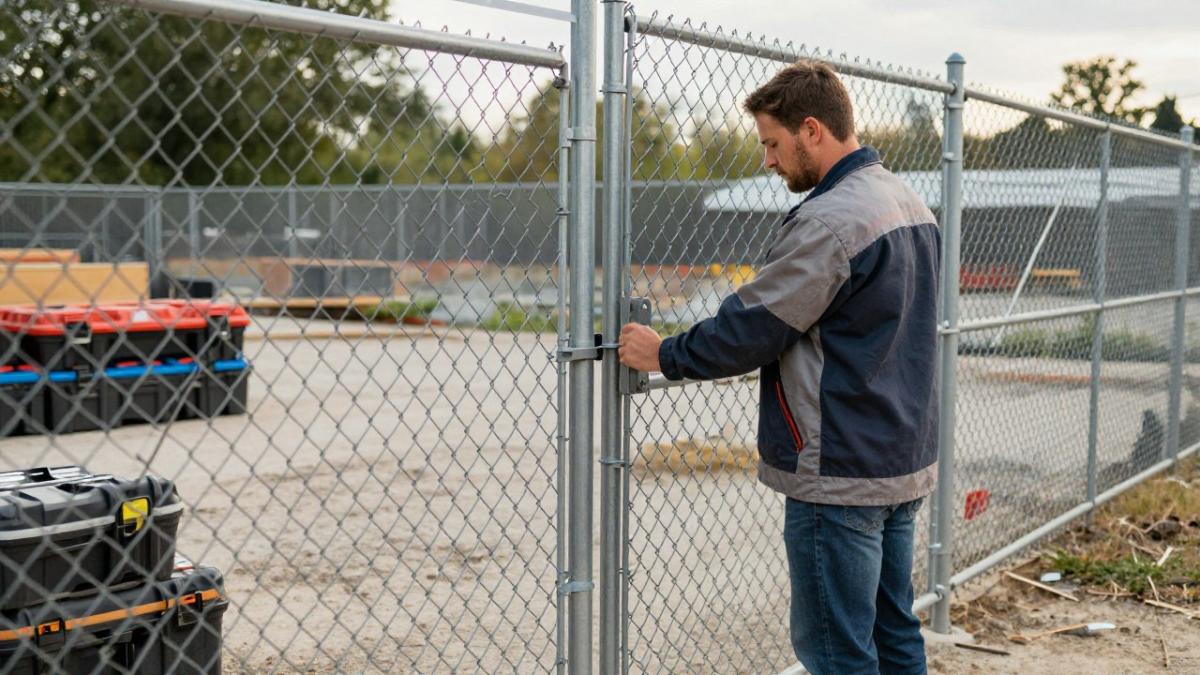
Perimeter fencing and locked gates
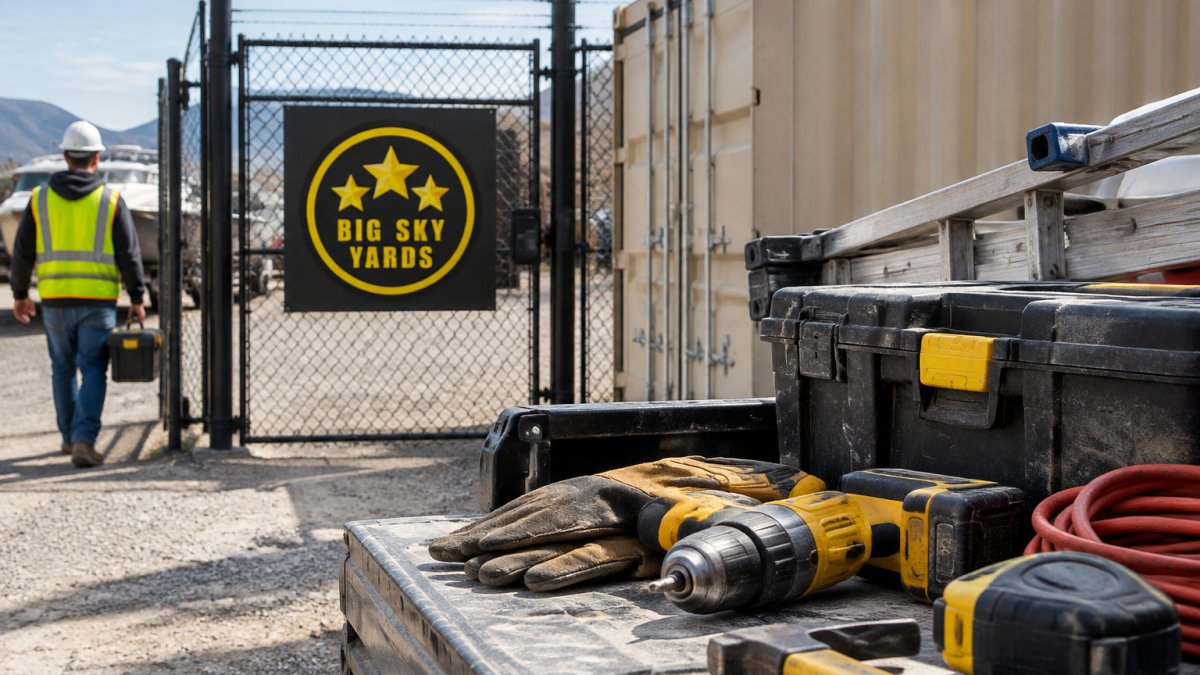
A full perimeter fence with a locked gate is the first line of defense. Keep the gate closed and locked whenever no one is working.
Big Sky Self Storage Yards offers fenced yards with locking gates for contractors. Rent a fenced yard for equipment to see what a gated yard offers.
For more on what gated storage offers, read about the security benefits of gated storage yards.
Locking tools, containers, and vehicles
Every tool should have a home that locks. Use padlocks on tool boxes, cable locks on larger equipment, and lockable containers for smaller items.
- Lock tool boxes and cases every time you leave them
- Chain heavy equipment to a fixed object
- Keep vehicles locked, including the truck bed and toolbox
Building a Construction Tool Inventory Checklist
You cannot protect or recover what you have not recorded. A simple inventory shows what you own, what it is worth, and what is missing.
Keep a running list with the item name, make, model, serial number, and purchase date. Update it when tools are added, sold, or replaced.
- Item name and description
- Brand, model, and serial number
- Purchase date and price
Use this checklist to record each tool so you can identify and claim it if it goes missing.
| Item | What to record | Why it matters |
|---|---|---|
| Item name | Name and description | Identifies the tool on a police report |
| Brand and model | Make, model, and serial number | Matches stolen property to records |
| Purchase | Date and price | Supports ownership and insurance claims |
| Location | Current location | Shows where it was last kept |
| Photo | Clear image of the item | Proves what the tool looks like |
Tool Tracking Systems for Contractors: Marking, GPS, and Records
Tracking serves two purposes: it makes a stolen tool harder to sell, and it gives you the evidence to get it back. The most effective programs combine marking, records, and tracking in a repeatable workflow rather than treating them as separate chores.
Marking tools for identification and recovery
Mark every tool in a way that is visible to you but not obvious to a thief. Engrave or stamp a unique identifier, your company initials plus a sequential number, in a discreet location such as the underside of a drill housing or inside a toolbox lid.
- Use a consistent format so anyone on your crew can read it
- Record the identifier in your inventory alongside the serial number
- Photograph the mark and the tool together
A common pattern is to mark tools at intake, before they ever go to a site. That way the identifier is already in your records when a theft occurs.
Serial numbers, photos, and ownership records
Serial numbers are the backbone of recovery. Most manufacturers stamp or print a serial number on the tool, and police and pawn shops use that number to match stolen property. Keep a digital record that includes:
- Item name, brand, and model
- Serial number and your own mark
- Purchase date, price, and receipt or invoice
- Clear photos of the tool, the serial number, and any distinguishing damage
Update it whenever a tool is added, transferred, or retired.
GPS and Bluetooth trackers for high-value equipment
Tracking devices work best on items that are expensive, portable, and likely to be resold. Small GPS trackers can be hidden inside tool cases, attached to heavy equipment, or placed in a vehicle. Bluetooth trackers are cheaper and work over shorter distances, which makes them useful for tools that stay on a known site.
- Prioritize trackers for items that are costly to replace and easy to carry
- Test the tracker's battery life and signal range before relying on it
- Log the tracker ID in your inventory so you can correlate it with the tool
- Check trackers during routine inventory counts to confirm they still work
Watch out: a tracker that is visible or poorly hidden can be removed in seconds, so place it where a thief will not think to look.
Prioritizing by tool value and portability
Not every tool needs the same level of protection. A risk-based checklist helps you spend effort where it matters most.
- High value, high portability (cordless drills, impact drivers, lasers, specialty hand tools): mark, record, track, and lock in a secure container every night.
- High value, low portability (compressors, generators, heavy equipment): chain or lock to a fixed point, record serial numbers, and consider GPS.
- Low value, high portability (hand tools, consumables): keep in a locked gang box and mark with a crew identifier to discourage casual loss.
- Low value, low portability (materials, bulky items): secure the perimeter and rely on access control.
This tiering keeps your crew from spending time on low-risk items while ensuring the tools most likely to be stolen get the attention they need.
Balancing Security With Crew Access and Productivity
Security should not slow your crew down. If every tool needs a sign-out sheet and a five-minute unlock, workers will find ways around the rules.
Aim for controls that fit how your crew works. Give each lead a key or code for the tools they manage.
Watch out: a lock that no one uses is the same as no lock at all.
What to Do When Tools Are Stolen From a Job Site
The first hours after a theft determine whether you recover tools and whether your insurance claim goes smoothly. A written incident-response procedure keeps the crew from improvising.
Immediate steps (first hour)
- Confirm the loss. Check the tool's assigned location, the gang box, and the vehicles before calling it theft. Misplaced tools are common, and a false report wastes police time.
- Secure the scene. Do not clean up or move items near the point of entry. Note broken locks, cut chains, or damaged fencing.
- Notify the site supervisor and owner. If the site is leased or shared, the property owner may need to preserve camera footage.
- File a police report. Provide the location, time window, and a list of missing items with serial numbers. Get the report number, insurers and pawn shops will ask for it.
- Preserve video and access records. Ask for camera footage from the site, neighboring businesses, and any gate or access-control logs before they are overwritten.
Documentation for insurance and recovery
Your inventory record is the difference between a fast claim and a denied one. Gather:
- The inventory list with serial numbers, photos, and purchase receipts
- The police report number
- Photos of the forced entry or damaged locks
- A written timeline of when the tools were last seen and when they were discovered missing
Notify your insurer promptly and follow their specific claim instructions. Most policies require proof of ownership, and a well-maintained inventory satisfies that requirement without a scramble.
Recovery and reporting to pawn shops and marketplaces
Give the serial numbers and your unique marks to local pawn shops and online marketplaces. Many pawn shops check serial numbers against police reports, and online platforms have stolen-property reporting processes. Post the identifiers in contractor groups and with local tool rental yards, which are sometimes offered stolen tools for sale.
Post-incident review and prevention update
After the immediate response, review what failed. Ask:
- Was the tool locked up according to procedure?
- Was the gate or access point secured?
- Did the inventory record match what was missing?
- How long did it take to notice the loss?
Update your procedures and retrain the crew on the specific control that failed. Track the incident in a simple log so you can see patterns over time, repeat losses at the same access point or the same shift are a signal to change the routine, not just remind people to be careful.
Booking Secure Outdoor Yard Space for Your Equipment
For contractors who need more room than a job site can offer, a secured outdoor yard is a practical option.
Before you book, ask how the yard is accessed and how the lease works. Pricing depends on the size and type of space you need, so check our website for current rates and availability. See available yard space and options to compare what fits your equipment.
For guidance on planning a budget, review this outdoor storage pricing guide for contractors.
Equipment security comes down to making theft harder, faster to detect, and easier to recover from. Start with your weakest point this week, and build from there.
Frequently Asked Questions
What is the best way to prevent tool theft on a job site?
Layer your defenses rather than relying on one measure. Start with a fenced perimeter and locked gates, control who holds keys, and lock tools in steel containers or lockable storage at the end of every shift. Good lighting and visible security cameras deter opportunistic theft, while marking tools with your company name or serial numbers makes them harder to resell and easier to recover. No single step stops every theft, but the combination makes your site a much less attractive target than the one next door.
How should contractors secure tools overnight?
Remove portable tools from open truck beds and job trailers, and store them in lockable steel containers or locked storage units. Use heavy-duty padlocks or disc locks rather than cheap combination locks, and keep a written list of who holds keys or codes. Before leaving, walk the site to confirm gates are latched, containers are closed, and high-value items are out of sight. Overnight storage in a fenced, lit yard is far safer than leaving equipment on an open lot.
Do tool engravings or labels help prevent theft?
Engraving or permanently marking tools with your company name, phone number, or a serial number does not stop theft by itself, but it changes the risk for thieves. Marked tools are harder to sell through pawnshops and online marketplaces, and they give police and insurers proof of ownership if items are recovered. Keep a photo record of each marked tool alongside its serial number so you can document a claim quickly.
What should I do if tools are stolen from a job site?
Report the theft to local police immediately and get a report number, since insurers usually require one. Compile your inventory records, serial numbers, and photos to document what was taken and its value. Notify your insurance carrier promptly and check whether your policy covers equipment on site. Review how the theft happened, such as an unlocked gate or a missing key, and update your access controls and lockup procedures to close that gap.