 Listicle
Benefits of Gated Storage Yards for Vehicles & Gear
Table of Contents
- What a Gated Storage Yard Actually Is (and Isn't)
- Gated Storage Facility Security Features That Matter
- Outdoor Vehicle Storage: RVs, Boats, Trailers, and Fleets
- Outdoor Storage Safety Tips Before You Sign
- How Gated Yards Compare to Ungated Parking and Indoor Units
- The Limits of Gated Access: What It Won't Do
- Frequently Asked Questions
Last Updated: October 14, 2026
What a Gated Storage Yard Actually Is (and Isn't)
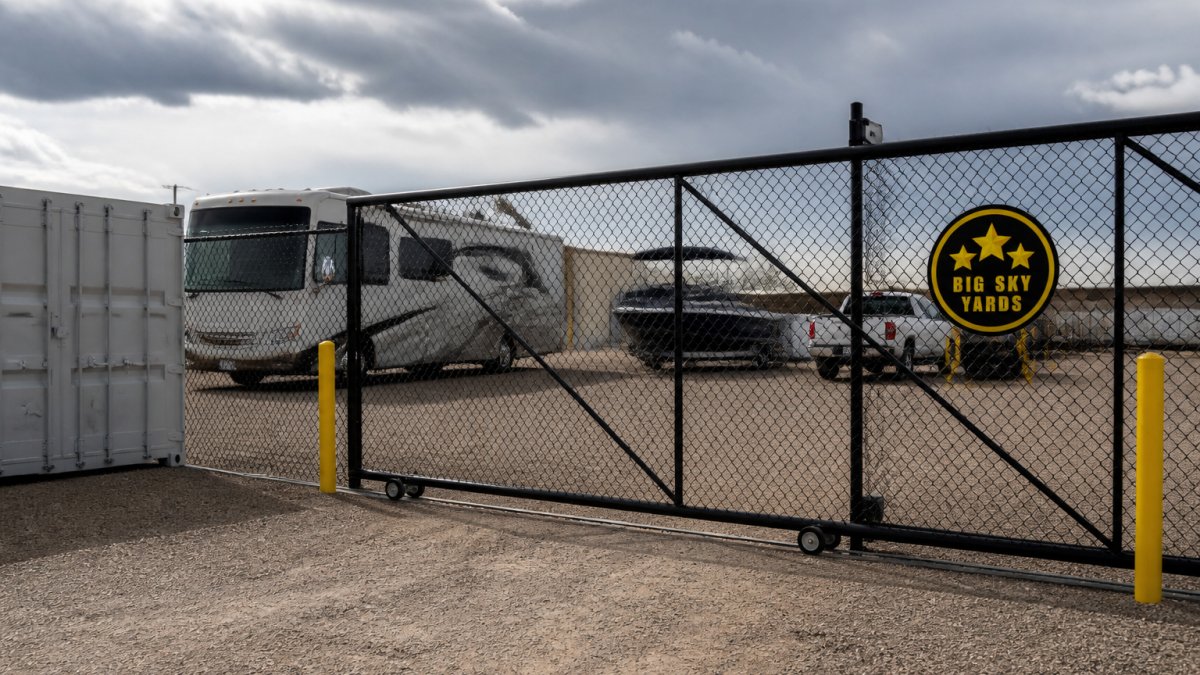
A gated storage yard is a fenced outdoor lot where vehicles, trailers, equipment, and gear are parked behind a controlled entry point rather than inside a building. Access runs through a gate, usually with a keypad, card reader, or remote, and the lot is monitored by cameras and lighting. That definition matters because "gated" gets used loosely in listings.
Here's what most guides get wrong: they treat "gated" as a single feature. It isn't. A gate is only as good as what backs it up.
The benefits of gated storage yards come down to three things: controlled access, a record of who came and went, and a physical barrier that makes casual theft harder. Everything else, from lighting to patrols, supports those three.
Gated Storage Facility Security Features That Matter
Security features at a gated storage facility fall into two groups: who gets in, and what happens once they're inside. The strongest yards layer both. A gate with no camera coverage just moves the problem to the back row of the lot.
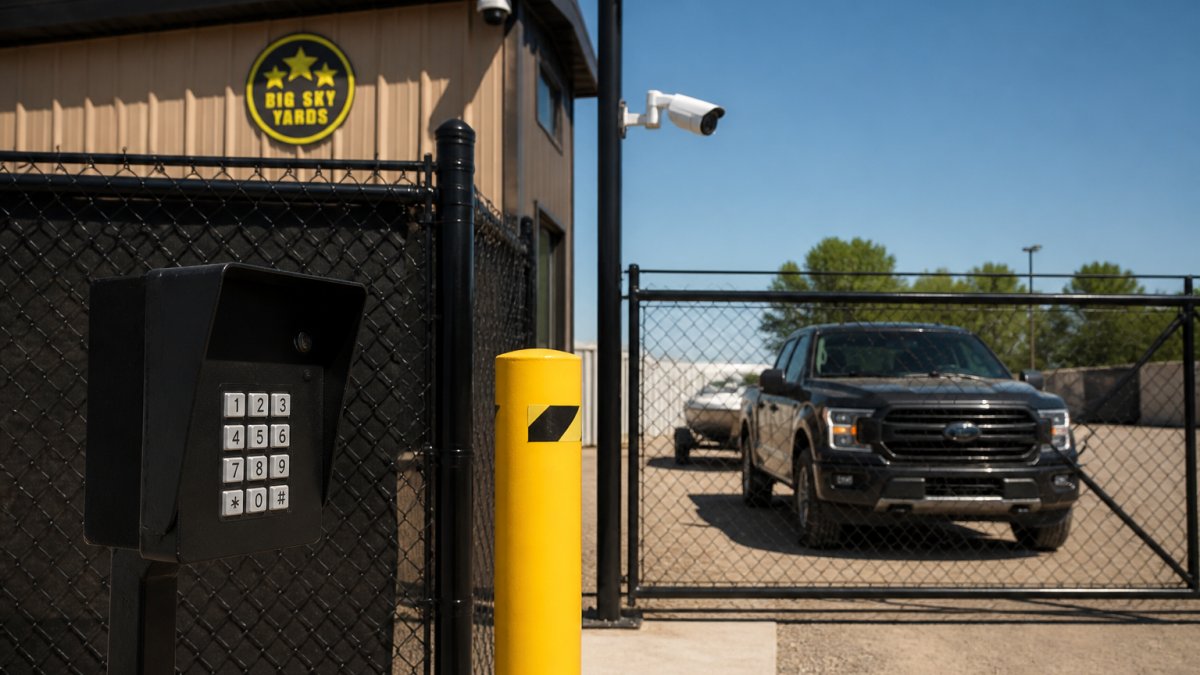
How Gate Systems Actually Work
Most gated yards run one of three entry systems, and the differences matter more than the marketing copy suggests.
- Keypad codes. Each tenant gets a unique numeric code tied to their account. The gate controller logs the code, date, and time on every entry and exit. Codes can be deactivated the moment a tenant leaves or a credential is compromised.
- Access cards and fobs. A proximity card or key fob is presented to a reader at the gate. These are harder to share casually than a code and are common at facilities that want tighter control over who holds a credential.
- Mobile credentials and remote access. Some newer systems let tenants open the gate from a smartphone app, and let managers issue or revoke access remotely. This is convenient for fleet operators who need to add a driver to the account without a site visit, but it also means the facility's software, not a human, is deciding who gets in.
Behind any of these is an access log: a record of every credential used, with a timestamp. That log is the single most useful security feature for a tenant, because it turns a vague suspicion into a specific question. If a trailer goes missing, the facility can pull the entry and exit history for the relevant window and see which credentials were used.
Visitor procedures matter too. A yard that lets tenants bring in guests without any check-in is effectively handing out access. Ask whether visitors must be registered, whether they can enter alone, and whether the facility requires a tenant to accompany them. A common pattern is a sign-in sheet at the office during business hours and a strict no-guests-after-hours rule.
Cameras, Lighting, and On-Site Presence
Video surveillance and adequate lighting do the heavy lifting after dark. Cameras should cover the gate, the drive lanes, and the rows where vehicles sit, not just the office door. Nighttime visibility matters because most theft happens when no one is watching and the lot is dark.
On-site staff and security patrols add a human layer. Some yards have a manager on the property during business hours and random site checks after close. Others rely entirely on remote monitoring. Neither is automatically better, but you should know which one you're paying for.
What to Ask Before You Trust the Gate
- How are credentials issued, and can they be revoked immediately?
- Can the facility pull an access log for a specific date and time?
- Are visitors required to register, and can they enter unaccompanied?
- How long is camera footage retained, and who reviews it?
- What happens to the gate during a power outage or system failure?
A gate is a deterrent, not a guarantee. The features behind it, unique credentials, retrievable logs, reviewed footage, and clear visitor rules, are what turn a fence into a security system.
Outdoor Vehicle Storage: RVs, Boats, Trailers, and Fleets
Outdoor vehicle storage is where gated yards earn their keep, because the vehicles people park outside are the ones that can't fit in a garage.
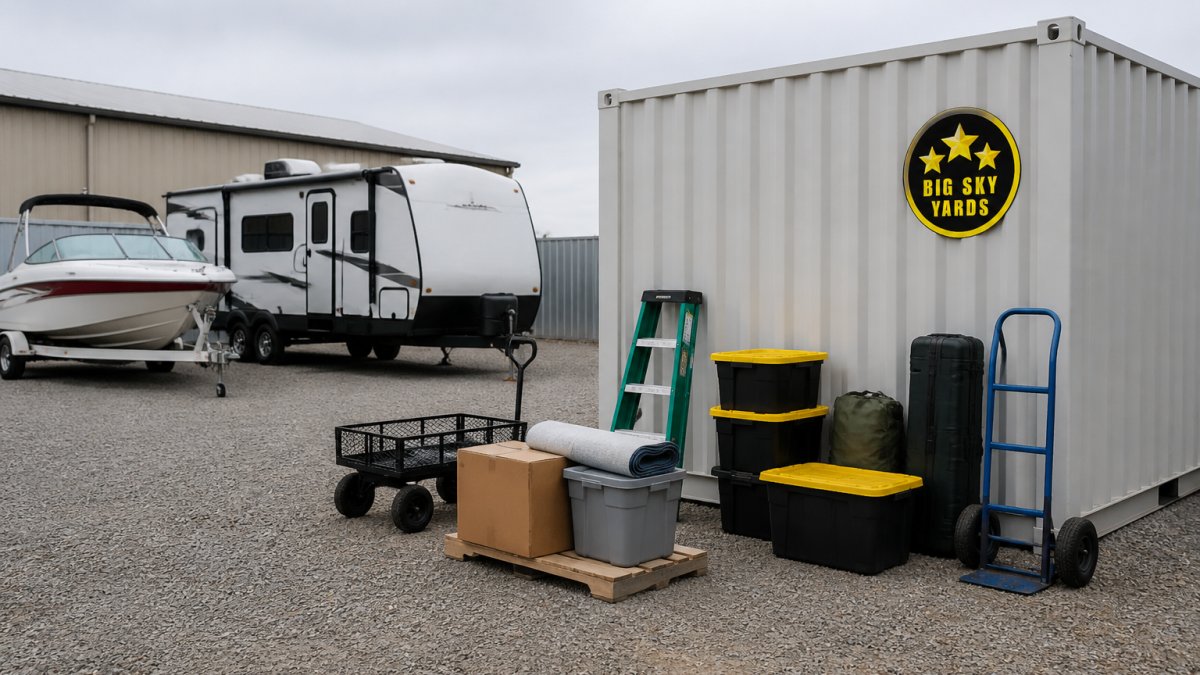
A 12' x 40' parking spot handles an XL RV with room to walk around it.
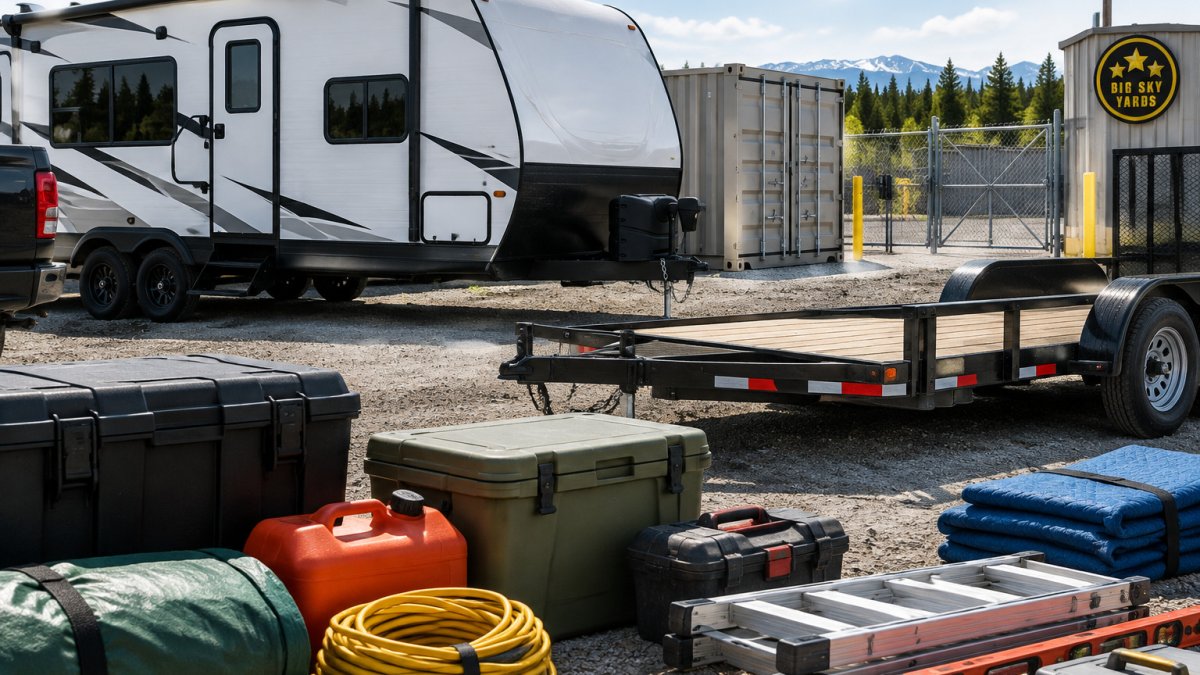
Contractors get a different setup. A storage yard with drive-up access lets you pull a truck and trailer in, load materials, and leave without moving three other vehicles. Some yards pair a parking space with a 20' container.
Gated yards also suit commercial fleets. If you run several trucks or trailers, keeping them in one monitored lot with entry and exit records gives you a cleaner story for insurance and for your own records than parking them at a shop or on the street.
Outdoor Storage Safety Tips Before You Sign
Outdoor storage safety tips start with the lease, not the lock. Before you sign, confirm what the facility actually controls and what falls on you.
- Ask whether the monthly rate includes camera monitoring or if it's billed separately
- Confirm the exact spot dimensions and measure your vehicle plus its trailer
- Request the access hours, including whether after-hours access is allowed
- Ask how entry records are stored and how far back they go
- Check whether the yard carries insurance on stored property or if you need your own
- Find out the cancellation terms if your business slows down mid-year
- Walk the lot at night before committing and look at the lighting yourself
- Ask whether short-term or seasonal terms are available for boats and RVs
Two mistakes show up constantly. The first is signing without measuring, then discovering the spot is tight for a full-size trailer. The second is assuming the facility's insurance covers your equipment. Most storage leases put the responsibility for stored property on the tenant, so a separate policy or a rider on your existing one is worth the call.
How Gated Yards Compare to Ungated Parking and Indoor Units
Gated yards sit between two extremes: open parking, which is cheap and exposed, and indoor units, which are secure but often too small and too expensive for vehicles. The right choice depends on what you're storing, how often you need to reach it, and how much weather exposure you can tolerate.
| Option | Best For | Access | Security Level | Weather Exposure | Typical Cost Tier |
|---|---|---|---|---|---|
| Gated outdoor yard | RVs, boats, trailers, fleets | Drive-up, gated entry, often 24/7 | Controlled access, cameras, lighting, logs | Full exposure to sun, rain, snow | Mid |
| Ungated parking lot | Short-term overflow, low-value items | Open, any time | Minimal, relies on visibility | Full exposure | Low |
| Indoor storage unit | Small vehicles, tools, valuables | Gated or keyed building, often limited hours | Highest, fully enclosed, climate options | None | High |
Ungated parking works if you're storing something with little resale value and you just need the space. Indoor units win when the item is small and valuable, or when climate control matters, a classic car or a set of power tools that shouldn't sit in freezing temperatures.
A few trade-offs are worth naming directly:
- Cost. Indoor units typically cost the most per square foot because you're paying for a building. Ungated parking is the cheapest because you're paying for pavement. Gated yards land in between, and the premium over ungated parking is essentially what you pay for the gate, cameras, and logs.
- Access convenience. Gated yards usually offer the best combination of drive-up access and flexible hours. Indoor units often restrict access to business hours or a single door, which is fine for a stored box but painful for a trailer you need at 6 a.m.
- Weather exposure. Anything stored outdoors, gated or not, is exposed to UV, rain, snow, and temperature swings. That's a real cost over time for tires, gelcoat, and finishes. Indoor storage avoids it but rarely fits a full-size RV or trailer.
- Security reality. Indoor units have a structural advantage: a locked building with individual doors. Gated yards compensate with controlled entry, cameras, lighting, and access logs. Ungated parking offers almost none of this.
For most RV and boat owners, the gated yard is an option that fits the vehicle and the budget at the same time. For a contractor with a trailer and tools, the decision often comes down to whether the yard offers a container or locker for the tools.
The Limits of Gated Access: What It Won't Do
Gated access reduces risk. It does not eliminate it. Anyone who tells you a gate makes theft impossible is selling, not advising.
A gate stops opportunity theft: the person walking through an open lot looking for an unlocked trailer. It does less against someone with a legitimate code, a copied credential, or a plan.
There are operational limits too. Gates fail, keypads lose power, and a locked gate can slow your own access during an emergency. Ask about emergency egress and what happens if the gate won't open when you need to leave in a hurry.
Finally, a gate doesn't replace your own precautions. Lock your trailer, secure your equipment, and don't leave valuables visible. The facility provides the perimeter; you still control what's inside it.
Storing a trailer, RV, or a full set of contractor tools outside means trusting a perimeter you can't watch yourself.
Frequently Asked Questions
What security features should I look for in a gated storage facility?
Focus on three layers: perimeter and access control (locking gates, keypad or credential entry, and entry and exit records), surveillance (security cameras with digital video recording and 24/7 monitoring), and visibility (adequate lighting for nighttime visibility). On-site staff, random site checks, and lock checks add a human layer. Ask whether cameras cover the gate, aisles, and individual parking spots, and whether access logs are reviewed. A facility with only a gate and no cameras or lighting leaves gaps that a determined thief can exploit.
Is a gated storage yard suitable for RVs, boats, and work equipment?
Yes, and it is often the better fit for oversized items. Gated storage yards offer drive-up access and ground-level access, so you can back a trailer or RV directly into a 12' x 40' spot without maneuvering through indoor aisles. Contractors can park trucks, trailers, and equipment alongside a 20' container for materials. The trade-off is exposure to weather, so cover what you can and check whether the yard allows climate control options if you store sensitive gear.
Are outdoor storage yards actually safe from theft?
No storage option eliminates risk, but gated yards with layered security reduce it. Controlled access, entry credentials, security cameras, and lighting deter casual theft and create a record if an incident occurs. Intrusion deterrence works best when the gate is locked, the perimeter is intact, and someone reviews access logs. Ask the facility about its incident history and what security patrols or random site checks they run. A yard that answers those questions directly is usually a better sign than one that avoids them.
How much does outdoor vehicle storage cost per month?
Pricing depends on the spot size, whether you need a container, and the length of your rental term. A 12' x 40' parking space for an XL RV costs more than a smaller trailer spot, and adding a 20' container changes the rate. Facilities near highways and major crossroads often charge more because access is easier. Check the facility's pricing page for current rates, and ask whether security monitoring is included or billed separately before you sign.