 Listicle
What Are the Best Short-Term Storage Options?
Last Updated: November 4, 2026
Quick Summary
The best short-term storage options are month-to-month self-storage units for furniture and household goods, portable containers for moves, secure outdoor yards for RVs and equipment, and climate-controlled units for sensitive items. Match the option to what you're storing, then compare the all-in monthly cost rather than the advertised rate.
- Month-to-month units rent in rolling 30-day cycles, but most need 10 to 30 days written notice before move-out.
- Build the all-in monthly total from base rent, deposit, admin fee, insurance, and minimum rental terms.
- Portable containers bill pickup and delivery separately from monthly rent, so measure large furniture first.
- Climate control is worth the extra cost for wood furniture, electronics, artwork, documents, and instruments.
- Big Sky Self Storage Yards offers 12-by-40-foot parking spots for XL RVs and optional 20-foot containers.
Table of Contents
- Quick Comparison: Best Short-Term Storage Options
- Short-Term Storage Unit Cost: What Drives the Monthly Price
- Month-to-Month Storage Units and Rental Agreement Terms
- Portable Storage Containers for Moving and Temporary Transitions
- Secure Outdoor Storage Options for Vehicles, Boats, and Equipment
- Climate-Controlled and Indoor Storage: When It Is Worth the Extra Cost
- Choosing a Facility: Access, Security, and Hidden Fees to Check
- Reserve a Secure Yard Space at Big Sky Self Storage Yards
- Frequently Asked Questions
Quick Comparison: Best Short-Term Storage Options
Short-term storage is temporary space rented for weeks or a few months, usually on a month-to-month basis. Finding the best short term storage options starts with matching the space to what you're storing and how long you need it. This guide breaks down costs, contracts, and facility types so you can choose with confidence. Compare major storage brands side by side to inform your shortlist.
Here is how the main options stack up:
| Option | Best For | Typical Contract | Watch Out For |
|---|---|---|---|
| Self-storage unit | Furniture, household goods, decluttering | Month-to-month rental | Administration fees, insurance add-ons |
| Portable container | Moving and temporary transitions | Per-delivery plus monthly | Pickup and delivery charges |
| Outdoor yard space | RVs, boats, trailers, contractor equipment | Month-to-month or seasonal | Limited weather protection |
| Climate-controlled unit | Electronics, wood furniture, documents | Month-to-month rental | Higher monthly rent |
| Business storage | Inventory, tools, materials | Flexible terms | Access hours and loading access |
How We Evaluated These Storage Options
Each option can be judged on four things: total monthly cost, contract flexibility, security features, and access logistics. A cheap rate means little if the gate is unlocked at night or the facility sits an hour off your route.
A useful approach is to match the option to the item first, then compare prices. An outdoor space suits a boat. It does not suit a leather sofa.
Short-Term Storage Unit Cost: What Drives the Monthly Price
A short-term storage unit cost depends on size, location, and demand. Expect the monthly rent to rise with square footage, climate control, and ground-floor drive-up access. But the advertised rate is only one line of the bill. To compare options fairly, build the all-in monthly total from five parts.
1. Base rent. This is the sticker price for the unit size and type. A small unit costs less than a large one, but the price per square foot often drops as size grows. Climate-controlled units typically carry a premium over standard storage.
2. Deposit. Many facilities collect a refundable deposit, though the amount varies by operator and unit type. Ask whether the deposit is refundable, what condition triggers a deduction, and how long the refund takes after move-out.
3. Administration fee. A one-time admin fee is common at move-in and is usually non-refundable. It covers paperwork and gate access setup. Because it is charged once, it hits short rentals harder than long ones: on a two-month rental, a one-time fee can add a meaningful percentage to your effective monthly cost.
4. Insurance or protection plan. Storage facilities often require some form of coverage, either through their own plan or your own renter's or homeowner's policy. Some operators bill their protection plan monthly, and it may be required unless you show proof of your own coverage. Confirm the coverage limit and exclusions before you rely on it.
5. Minimum rental period and prorating. Some facilities charge for a full month even if you leave after two weeks. Others prorate the first month but not the last. Ask exactly how a partial month is billed at move-in and move-out.
Promotions. A first-month discount is common, but read the fine print. The regular rate applies after it ends, and some promotions require a minimum stay or convert to a higher rate automatically.
A simple way to compare. For each facility, write down base rent plus insurance plus any recurring fees, then add one-time costs (admin fee plus deposit) divided by the number of months you expect to stay. That effective monthly cost is the number to compare, not the advertised rate.
Ask for the full monthly total in writing before you reserve. The sticker rate is rarely the final bill.
Month-to-Month Storage Units and Rental Agreement Terms
Month-to-month storage units rent in rolling 30-day cycles, which makes them the most flexible option for a moving timeline or a temporary housing gap. You are not locked into a year. But "month-to-month" is a billing cycle, not a promise that you can leave any day without cost. Read the rental agreement before signing, and focus on these clauses.
Minimum rental period. Some facilities charge for a full month even if you leave after two weeks. Ask whether the first month is prorated and whether the last month is prorated. A common pattern is to prorate the move-in month but bill the move-out month in full unless you give notice before the cycle starts.
Notice period for moving out. Most month-to-month rentals need written notice, often 10 to 30 days, before you move out. If you miss the window, you may owe another full month even if the unit is empty. Put the notice in writing and keep a copy.
Renewals. Month-to-month agreements usually renew automatically each cycle. That is convenient for a short stay, but it also means nothing stops the rental from continuing, and continuing to be billed, until you give notice.
Rate change terms. Many agreements let the facility raise your monthly rent with notice, often 30 days. For a short rental this matters less, but confirm whether a promotional rate converts to a higher rate after a set period.
Late fees. Payments are usually due on the first of the cycle. A late fee, often a flat charge plus a daily amount after a grace period, can apply if payment arrives late. Ask for the grace period and the fee schedule in writing.
Cancellation and early termination. If you sign an annual lease for a lower rate, ask what happens if your plans change. Early termination can trigger a penalty equal to one or more months' rent. Flexible rental terms beat a small discount when your timeline is uncertain.
What month-to-month really means for a temporary renter. You get flexibility, but you also carry the responsibility of giving notice on time and paying on schedule. Before you book, confirm four numbers in writing: the notice period, the grace period for late payment, the late fee, and whether the final month is prorated.
Portable Storage Containers for Moving and Temporary Transitions
Portable storage containers for moving solve a specific problem: you need storage at the house, then at the destination. The container drops in your driveway, you load it, and the company moves it.
What to know before you book:
- Pickup and delivery are usually billed separately from the monthly rent.
- Container size limits what fits. Measure large furniture before you commit.
- Ground rules: some neighborhoods restrict containers in driveways, so check local rules first.
- Loading access matters. A container at ground level beats hauling boxes up a ramp.
For a short move, a container can replace both a rental truck and a storage unit. For long-term storage, an outdoor yard space usually costs less per month.
Secure Outdoor Storage Options for Vehicles, Boats, and Equipment
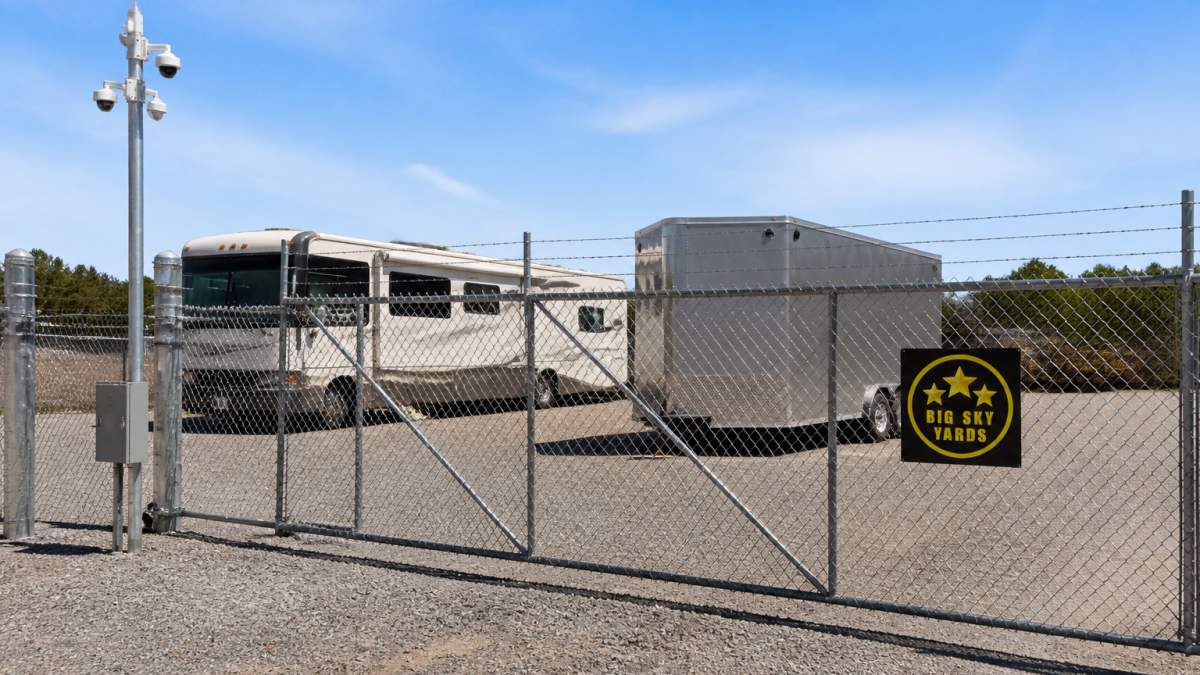
Secure outdoor storage options work best for items that live outside anyway: RVs, boats, trailers, ATVs, and contractor equipment. The right facility gives you gated access, surveillance, and enough room to maneuver a full-size trailer.
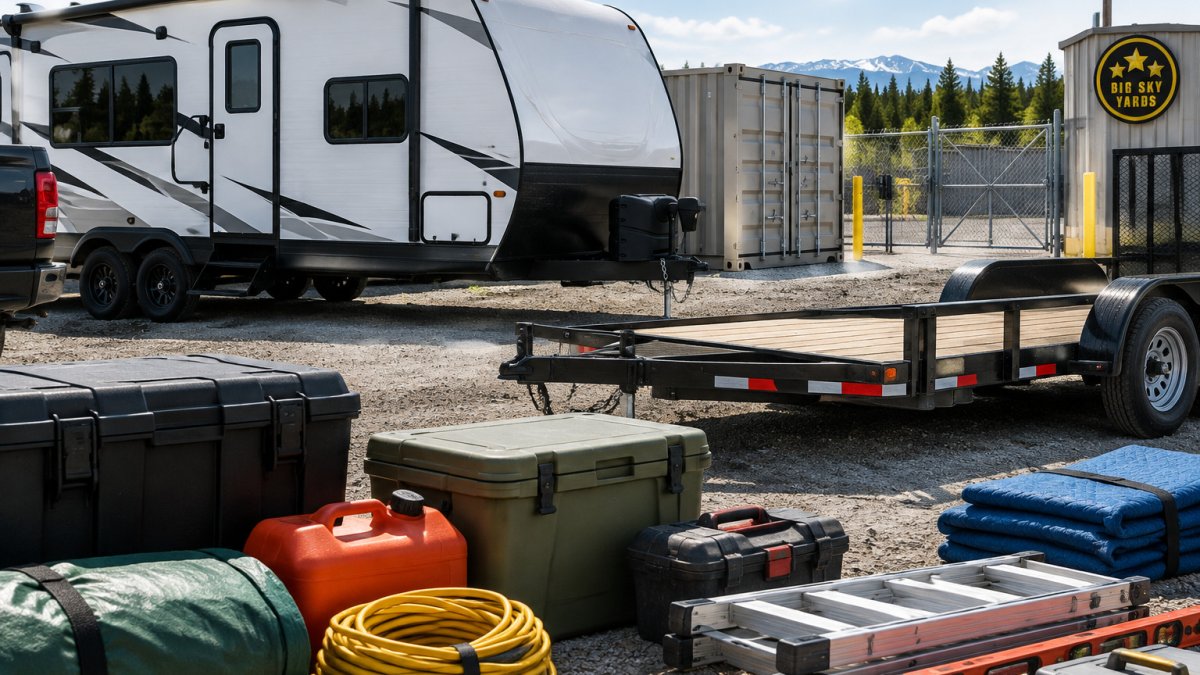
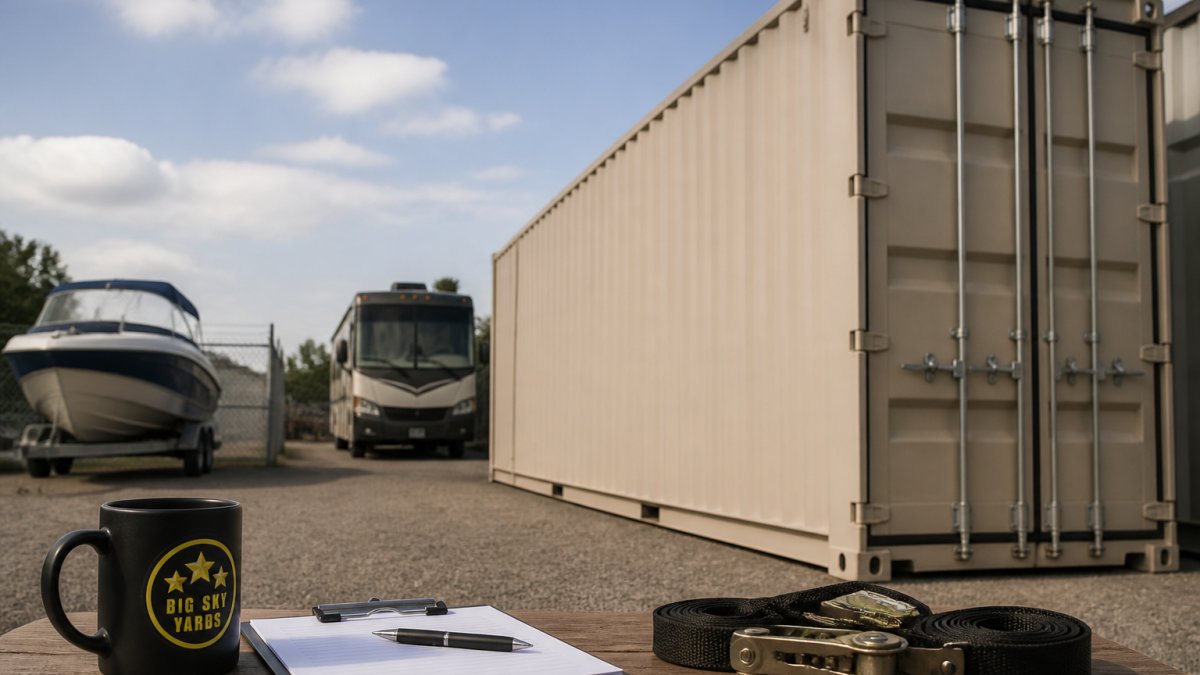
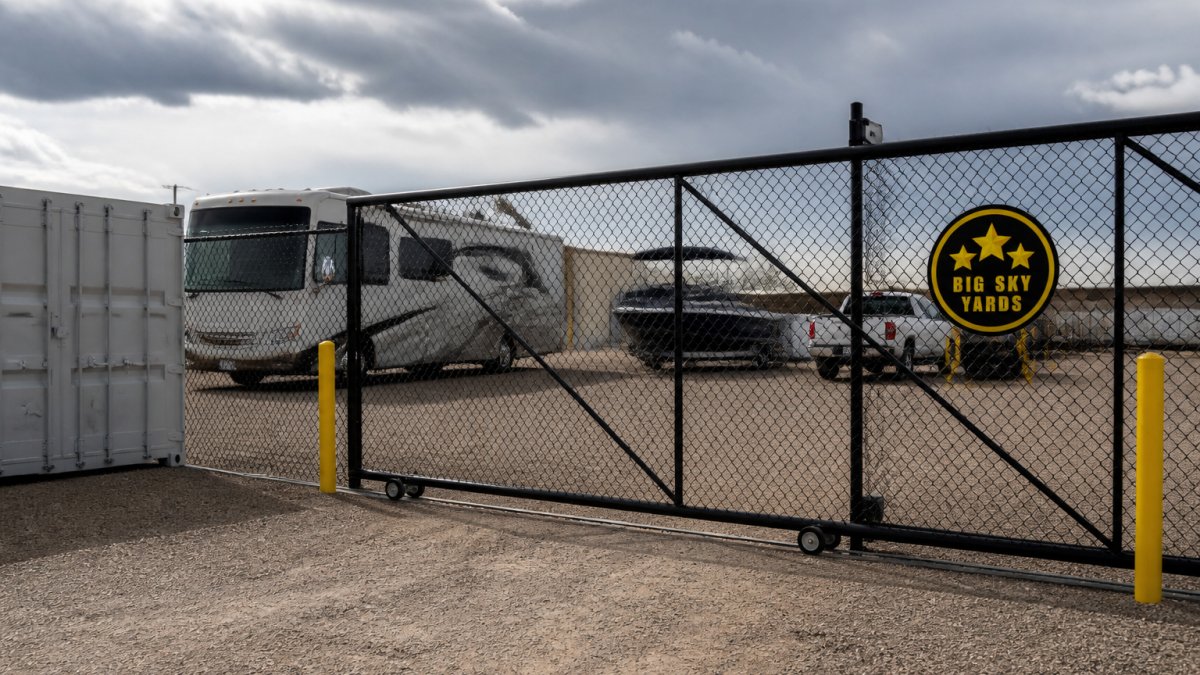
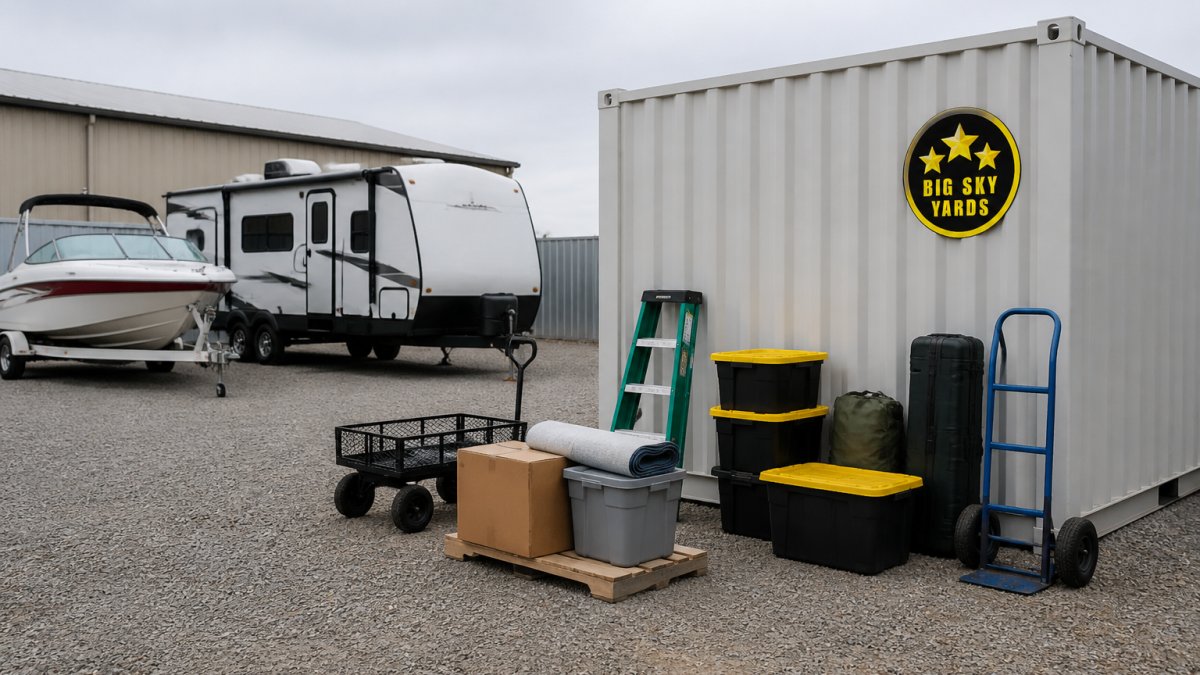
Big Sky Self Storage Yards offers double-secured fenced yards with locking gates, onsite lighting, and security cameras. Contractors can pair a yard space with an optional 20-foot container, and 12-by-40-foot parking spots are available for XL RVs. The location near major crossroads provides access to I86 and surrounding areas.
Whether outdoor storage is safe enough for your gear depends largely on the facility. Learn why gated yards add a layer of protection, and read what to know before renting a fenced yard for equipment.
Climate-Controlled and Indoor Storage: When It Is Worth the Extra Cost
Climate-controlled storage keeps temperature and humidity within a set range. It is worth the extra cost for items that heat, cold, or moisture will damage: wood furniture, electronics, artwork, documents, and musical instruments.
Skip it for items that tolerate weather. Lawn equipment, plastic bins, and metal tools generally handle standard storage conditions.
The trade-off is simple. Climate control raises your monthly rent, often by a noticeable margin. If your belongings are replaceable and sturdy, put the savings toward a larger unit instead.
Choosing a Facility: Access, Security, and Hidden Fees to Check
Choosing a facility comes down to three checks: can you get in when you need to, is the site actually secure, and does the final bill match the quote?
Run this checklist before you book online:
- Gate hours match your schedule, including weekends
- Surveillance cameras cover the yard, not just the office
- Onsite lighting reaches the far corners of the lot
- Loading access fits your trailer or truck
- The quote lists administration fee, deposit, and insurance separately
- The rental agreement states the notice period for moving out
- The facility sits on a route you actually drive
Watch out: advertised rates that exclude insurance and admin fees can push the real monthly cost well above the number you compared. Ask for the all-in figure in writing.
Reserve a Secure Yard Space at Big Sky Self Storage Yards
Finding space is only part of short-term storage; the space also needs to protect your gear without locking you into a long contract.
If you need a secure place for contractor equipment or an RV, Big Sky Self Storage Yards offers fenced yards with locking gates and security cameras, 12-by-40-foot parking spots for XL RVs, and optional 20-foot containers. Book your secure outdoor storage space online or request a quote for current pricing.
Frequently Asked Questions
Can I rent a short-term storage unit for just a few days?
Most facilities rent by the month, so a three-day stay usually bills as a full month. Ask about the minimum rental period before you book, because some locations set a one-month floor while others allow prorated weeks. If you only need a few days, compare the monthly rate against a free alternative like a friend's garage or a short moving-container rental. Read the rental agreement closely: cancellation terms and any administration fee decide what a brief stay actually costs.
Is a portable storage container cheaper than a self-storage unit?
It depends on the length of the job and the delivery distance. Portable storage containers for moving often bundle delivery, pickup, and a set rental window into one price, which can beat a unit plus truck rental for a single move. Month-to-month storage units tend to win when you need ongoing access over several months. Request itemized quotes from both and compare the total, including fuel, insurance coverage, and any early-return fee.
What should I look for in a secure outdoor storage facility?
Check gated access with locking gates, onsite lighting, working surveillance cameras, and whether staff or other tenants can see the yard. Ask how often security incidents happen and request references from current tenants. Confirm the surface is packed gravel or concrete so heavy equipment does not sink, and measure your largest trailer against the spot size before signing. Measure your largest trailer against the 12' x 40' spot size before signing.
How much does the smallest storage unit cost per month?
Short-term storage unit cost varies by market, unit size, and whether the space is climate-controlled. Small units in most metros land in a modest monthly range, but first-month discounts and administration fees can shift the real number. Always ask for the total move-in cost: first month, deposit, admin fee, and insurance coverage. Compare prices across at least three facilities near your route, and confirm whether the quoted rate holds after the promotional month ends.
Your equipment deserves more than a gravel lot and a padlock. Get started with Big Sky Self Storage Yards and store everything in one protected, easy-to-reach location.