 Listicle
7 Things to Know Before Renting Storage Containers for Business
Last Updated: November 1, 2026
Quick Summary
Renting storage containers for business means comparing four things before you sign: on-site versus off-site placement, container size against your actual freight, the all-in monthly cost including delivery and pickup, and the security terms in writing. A complete quote should break out the monthly rate, delivery fee, pickup fee, deposit or damage waiver, and any site-preparation charges as separate lines.
- Storage container rental sizes run from 8-foot units up to 40-foot containers, and you should match size to your longest item first.
- A 20-foot container with ground-level access covers the job for most contractors, and sizing up one step is cheaper than a second delivery.
- Place containers on firm, level ground with a clear approach, ground-level access, and drainage before you order.
- Secure construction equipment storage needs three layers: physical locks, visible deterrence, and a clear liability agreement in writing.
- The rental company's insurance usually covers the container, not the tools stored inside it.
Table of Contents
- What to Compare Before Renting Storage Containers for Business
- Storage Container Rental Sizes and What Each One Holds
- Shipping Container Rental Cost per Month: What Drives the Number
- Outdoor Equipment Storage for Contractors: Site and Placement Rules
- Secure Construction Equipment Storage: Locks, Lighting, and Liability
- Business Use Cases Beyond the Job Site
- How the Top Container Rental Providers Compare
- Reserve a Secured Yard and Container at Big Sky Self Storage Yards
- Frequently Asked Questions
What to Compare Before Renting Storage Containers for Business
Renting storage containers for business is a logistics decision, not a real estate one. Contractors and small business owners often make the same mistake: picking the cheapest monthly rate before knowing how the container gets placed, who controls access, and what happens when the project ends.
Compare four things before you sign: on-site versus off-site placement, container size against your actual freight, the all-in monthly cost including delivery and pickup, and the security terms in writing.
On-Site vs. Off-Site Container Storage
On-site storage means the container sits on your property or job site. Off-site storage means it sits in a secured yard you drive to.
On-site wins when your crew needs materials within arm's reach all day, and the container doubles as a locked tool room.
Off-site wins when you have no room, no secure perimeter, or a site that changes weekly. For a full guide to commercial outdoor storage yard rental, see our detailed breakdown.
A common mistake is assuming on-site is always cheaper. Delivery, pickup, and site prep are real line items.
Storage Container Rental Sizes and What Each One Holds
Storage container rental sizes run from 8-foot units up to 40-foot containers, and picking the right one comes down to your freight, not your budget.
- 8-foot container: roughly a small tool crib. Good for a single trade's hand tools and consumables.
- 12-foot container: a step up for a two-person crew. Fits longer materials and a workbench.
- 16-foot container: the common middle ground for renovation work. Holds palletized material and equipment together.
Match container size to the longest item you store first, then to volume.
For most contractors, a 20-foot container with ground-level access covers the job. If unsure, size up one step, the cost difference is smaller than a second delivery.
Shipping Container Rental Cost per Month: What Drives the Number
The shipping container rental cost per month is not a single number. It is a stack of line items, and the businesses that get burned compare only the monthly rate.
The Five Line Items in Every Container Rental Quote
A complete quote should separate these costs. If a provider will not break them out, treat that as a warning sign.
- Monthly rental rate. The recurring charge for the container, the number most providers advertise and the one that matters least on its own.
- Delivery fee. A one-time charge to bring the container to your site, driven by distance, truck size, and access difficulty.
- Pickup fee. A separate one-time charge when the rental ends. Many renters forget this line.
- Deposit or damage waiver. A refundable deposit or non-refundable waiver covering damage. Confirm which you are paying and what it covers.
- Site-preparation or access charges. If the truck cannot place the container on arrival, you may pay for a failed delivery, a return trip, or equipment to reposition the unit.
What Moves the Monthly Rate
- Size. A 40-foot unit rents higher than a 20-foot unit, but usually not double. Per-square-foot cost drops as size increases, which is why sizing up one step is often cheaper than renting a second unit.
- Rental term. Monthly terms price lower per day than weekly rentals. For contractor-specific outdoor storage pricing, see our detailed guide. A long project should always be priced on a monthly or multi-month basis.
- Container condition. New or specialty units (refrigerated, hazardous-material rated) cost more than standard used containers.
The Total-Cost Comparison Method
To compare providers fairly, build a 12-month total for the same specification:
Questions to Ask Before You Sign
- Is delivery and pickup included, or billed separately? What is the fee for each?
- Is the deposit refundable, and what condition standards apply at return?
- What is the minimum rental term, and what notice do you need to end the rental?
Yard-Based Storage as a Cost Alternative
If your business does not need the container delivered to its own site, yard-based storage changes the cost structure. You pay for secured space rather than delivery and pickup on every rental cycle, removing two of the five line items above.
For current prices or a quote, visit the Big Sky Self Storage Yards pricing page.
Outdoor Equipment Storage for Contractors: Site and Placement Rules
Outdoor equipment storage for contractors works when the container sits on stable, level ground with a clear approach for the delivery truck. Placement decides whether the rental runs smoothly or becomes a weekly headache.
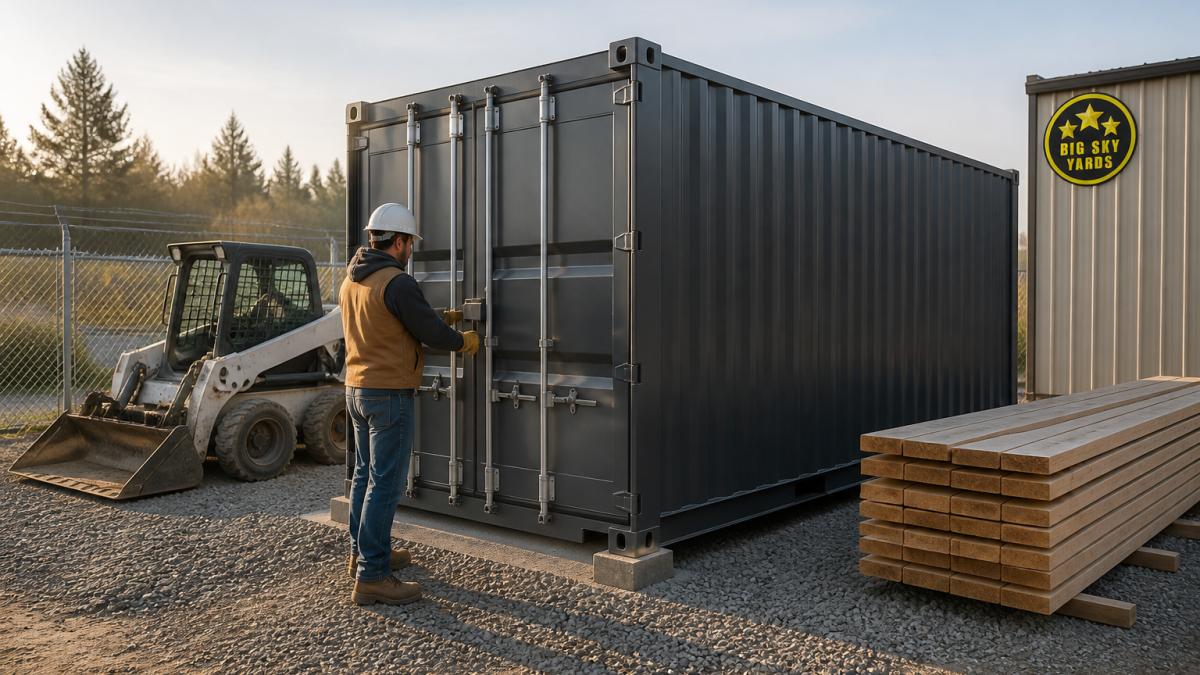
Follow these placement rules:
- Firm, level ground. Gravel, compacted soil, or concrete. Avoid soft ground that a loaded truck will sink into.
- Clear approach. The driver needs room to back in and set the container down without clipping fences or overhead lines.
- Ground-level access. Doors at grade mean you roll equipment in instead of lifting it.
A container that arrives and cannot be placed safely gets sent back, and you pay for the trip. Walk the site with the driver's path in mind before you order.
Secure Construction Equipment Storage: Locks, Lighting, and Liability
Secure construction equipment storage depends on three layers: physical locks, visible deterrence, and a clear liability agreement.
Start with the lock. For proven methods to protect construction tools from theft, see our guide.
Then add deterrence. For deeper secure outdoor equipment storage tips, see our guide.
Liability is the part most renters skip.
A common mistake is assuming the rental company's insurance covers your tools.
Business Use Cases Beyond the Job Site
Construction gets the attention, but commercial storage serves plenty of other businesses.
- Retail inventory: seasonal stock, fixtures, and overflow that will not fit the back room.
- Event storage: tables, tents, signage, and audio gear between bookings.
- Mobile office: a fitted container as a site office or break room.
For these uses, off-site business storage in a secured yard often makes more sense than on-site placement. You get access if the yard allows it, without tying up your own lot.
The question to ask is simple: does this container need to be at my location, or does it just need to be somewhere secure I can reach?
How the Top Container Rental Providers Compare
Provider comparison is easier with a clear framework. A business buyer needs criteria, not a brochure.
The Two Provider Models
Yard-based storage operators give you a secured space in a fenced lot, sometimes with an optional container inside it. You drive to your gear. This model suits businesses that need a fixed, monitored base rather than a unit on their own lot.
Evaluation Criteria That Actually Matter
Before you compare names, score each provider on these six criteria, the same ones a procurement manager would use.
- Service area and delivery radius. Does the provider deliver to your site, and is there a delivery minimum or surcharge outside a core radius?
- Container options. Sizes offered (8-foot through 40-foot), condition (new versus used), and whether specialty units like refrigerated or hazardous-material containers are available.
- Delivery and pickup mechanics. What equipment is used, who is responsible for site access, and what happens if the truck cannot place the unit.
- Access and control. Can you access the container 24/7, or are there gate hours? Who holds the keys and locks?
- Support and terms. Minimum rental period, notice required to end the rental, and whether a dedicated account contact exists for business customers.
- Insurance and liability. Who insures the container, who insures the contents, and what the damage waiver or deposit covers.
How the Major Names Stack Up
| Provider | Model | Delivery to Site | Published Rates | Best Fit |
|---|---|---|---|---|
| Big Sky Self Storage Yards | Secured yard with optional 20' containers | No, yard-based | Yes, on pricing page | Businesses wanting a fixed, monitored base near major highways |
| PODS | Portable container delivered to you | Yes | Quote-based | Businesses wanting storage at their own location |
| 1-800-PACK-RAT | Portable storage containers | Yes | Quote-based | Comparing portable options with drive-up access |
| UNITS Moving and Portable Storage | Portable storage with its own delivery system | Yes | Quote-based | Temporary storage at your location |
| Mobile Mini | Commercial container rental | Yes, in most markets | Quote-based | Commercial customers wanting a quote and account support |
| WillScot | Commercial container rental | Yes, in most markets | Quote-based | Commercial customers comparing quotes |
| United Rentals | Container rental, including specialized units | Yes | Quote-based | Refrigerated or hazardous-material needs |
Where Yard-Based Storage Fits
If your business needs a secure, fixed location rather than a container on your own lot, a yard-based operator like Big Sky Self Storage Yards is the better structural fit.
For a deeper look at how the major brands differ for contractor use, see our breakdown of container rental provider alternatives.
Our pick for most contractors: Big Sky Self Storage Yards, for businesses that want a fixed, camera-monitored base with optional 20-foot containers and dedicated yard space. Skip if: you need the container delivered to a job site you cannot leave.
Reserve a Secured Yard and Container at Big Sky Self Storage Yards
Choosing where your equipment sits matters. Big Sky Self Storage Yards offers secured yard space for that purpose.
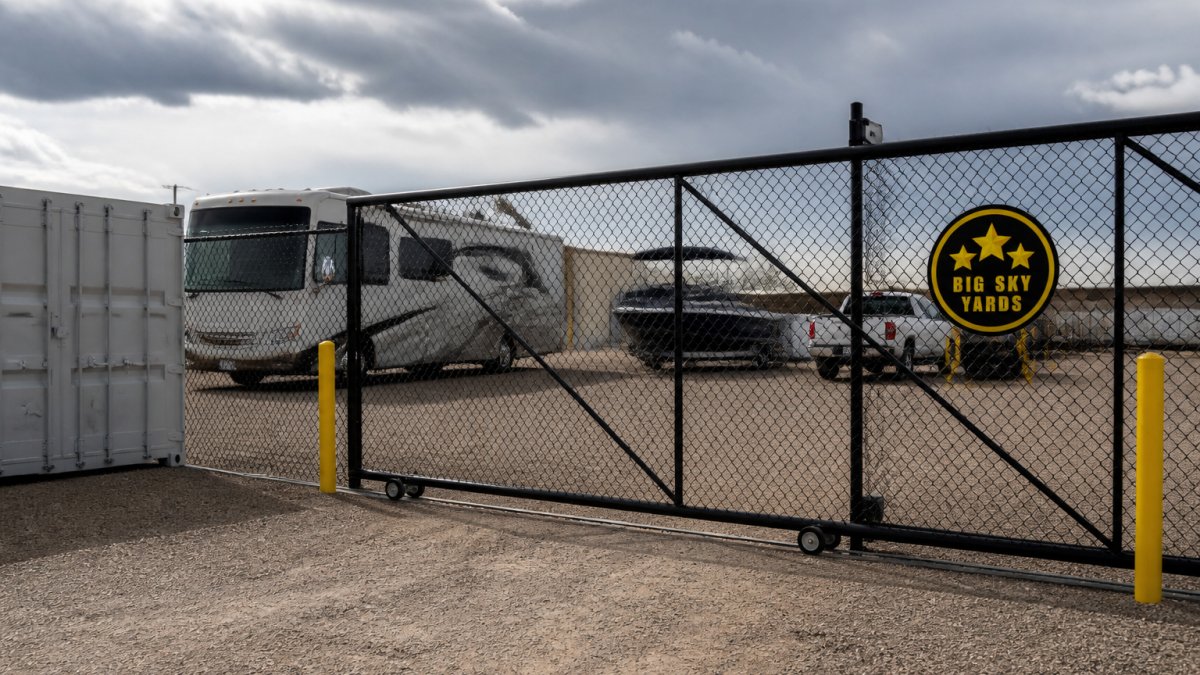
We offer double-secured fenced yards with locking gates, optional 20-foot containers with dedicated space, and 12' x 40' parking spots for XL RVs and trailers.
Whether you need secure construction equipment storage for a season or a long-term base for inventory and fleet gear, we have a space that fits.
Get started with Big Sky Self Storage Yards and give your equipment a locked, monitored home.
Frequently Asked Questions
How much do storage containers cost per month?
Monthly rates depend on container size, rental length, delivery distance, and whether you need it dropped on your site or parked in a secured yard. Monthly rates depend on container size, rental length, and delivery needs. Ask every provider for a written total before you compare.
What size storage container does a business need?
Match the container to what you move most. An 8-foot container handles tools and small inventory, a 12-foot covers a crew's daily equipment, a 16-foot suits renovation materials and retail overflow, and a 20-foot holds palletized goods or a small mobile office setup. A 40-foot container only makes sense when you have forklift access and a large, steady volume. Measure your largest item first, including door clearance, then size up one step for aisle space.
Can a business rent a storage container for tools and equipment?
Yes. Contractors, landscapers, and service businesses routinely rent containers for tools, materials, and equipment. Confirm three things before signing: that the rental agreement permits your specific contents, that the site has firm, level ground with truck access for delivery, and that the container comes with a lock box or lock-ready hasp. If your insurance covers tools, check whether the policy extends to an off-site container or only to your own premises.
What should businesses check before renting an outdoor storage container?
Walk the delivery path first: gate width, overhead branches or wires, and ground that stays firm when loaded. Confirm who is responsible for leveling the site and what happens if the truck cannot reach the drop point. Read the rental period and early termination terms, verify whether security monitoring is included or extra, and ask what the provider requires for contents insurance. Get the all-in monthly figure in writing, including delivery, pickup, and any fuel or mileage charges.
Is renting a container cheaper than buying one?
For projects under roughly a year, renting usually wins because you avoid purchase price, transport, and resale hassle. Buying a used 20-foot container can make sense if you have permanent yard space and steady storage needs, but you still pay for delivery and may need to handle maintenance and security yourself. Compare the total cost over your expected timeline, not the monthly rate alone, and factor in whether a secured yard rental bundles monitoring you would otherwise pay for separately.