 How-to
Is Outdoor Storage Safe Enough for Your Gear?
Last Updated: October 30, 2026
Quick Summary
Outdoor storage is safe enough for most gear when the site and shelter are chosen with care, but weather resistance, a level base, sturdy construction, and real security decide the outcome. Gear that fails is usually gear never protected from ground moisture, wind-driven rain, or theft.
- Keep electronics, paper records, leather goods, mattresses, and food out of outdoor storage.
- Set everything on pallets, blocks, or a gravel pad at least 2 inches off the floor.
- Cover gear with a breathable tarp tied down, not wrapped tight in plastic sheeting.
- Relative humidity above about 60% sustained inside a unit invites mold and rust.
- If a facility fails more than two checklist items, keep looking for another site.
Table of Contents
- Is Outdoor Storage Safe Enough for Your Gear?
- What Not to Store in Outdoor Storage
- How to Protect Belongings in Outdoor Storage
- Weather Resistance, Durability, and Structural Stability
- ATV Outdoor Storage Tips
- Your Outdoor Storage Facility Safety Checklist
- Choosing a Secure Yard for Your Equipment
- Frequently Asked Questions
Is Outdoor Storage Safe Enough for Your Gear?
Outdoor storage is a practical way to keep equipment, vehicles, and seasonal gear on a secure site, and for most items it is safe when the site and the shelter are chosen with care.
So is outdoor storage safe enough? Yes, with conditions. Weather resistance, a level base, sturdy construction, and real security decide the outcome.
A common mistake is judging a site by the gate alone. The gate matters, but drainage, lighting, and how the yard handles wind matter just as much.
What Not to Store in Outdoor Storage
Anything that heat, cold, or moisture can ruin should stay indoors. That includes electronics, paper records, leather goods, mattresses, and food.
Here is what we tell customers to keep out of outdoor storage:
- Electronics and batteries - heat and damp destroy circuit boards
- Cardboard and paper files - they absorb moisture and invite pests
- Upholstered furniture - foam holds damp and grows mold
The dividing line is simple: if water or heat can ruin it, it belongs inside.
How to Protect Belongings in Outdoor Storage
Protection starts before the item leaves your truck, but the real work is matching each item to the conditions it can survive. Outdoor storage is safe enough for most gear only when you separate belongings by how they respond to moisture, heat, and pests, not when you wrap everything in the same tarp.
Sort by item type first
Use this item-by-item guide before you load anything:
- Safe outdoors with prep: lawn and garden tools, mowers, ATVs, boats, trailers, ladders, hand tools, building lumber, metal shelving, plastic totes, and galvanized or powder-coated equipment.
- Safe only in a sealed, ventilated container: power tools with removable batteries, generators (fuel drained), camping gear, and seasonal decor.
- Not safe outdoors: electronics and loose batteries, paper documents and photos, leather goods, upholstered furniture, mattresses, musical instruments, medications, food, paint and solvents, propane cylinders, and anything with a lithium-ion battery you can't remove.
The dividing line is simple: if water, heat, or a humidity swing can ruin it, it belongs indoors or in climate-controlled storage. A sealed plastic tote does not fix this, it traps condensation against the item and can make mold worse than open air.
Stop moisture before it starts
Moisture is the number-one killer of stored gear, and it arrives three ways: ground contact, humid air, and condensation from temperature swings. Address all three:
- Break ground contact. Set everything on pallets, blocks, or a gravel pad at least 2 inches off the floor. Water wicks up concrete and wood.
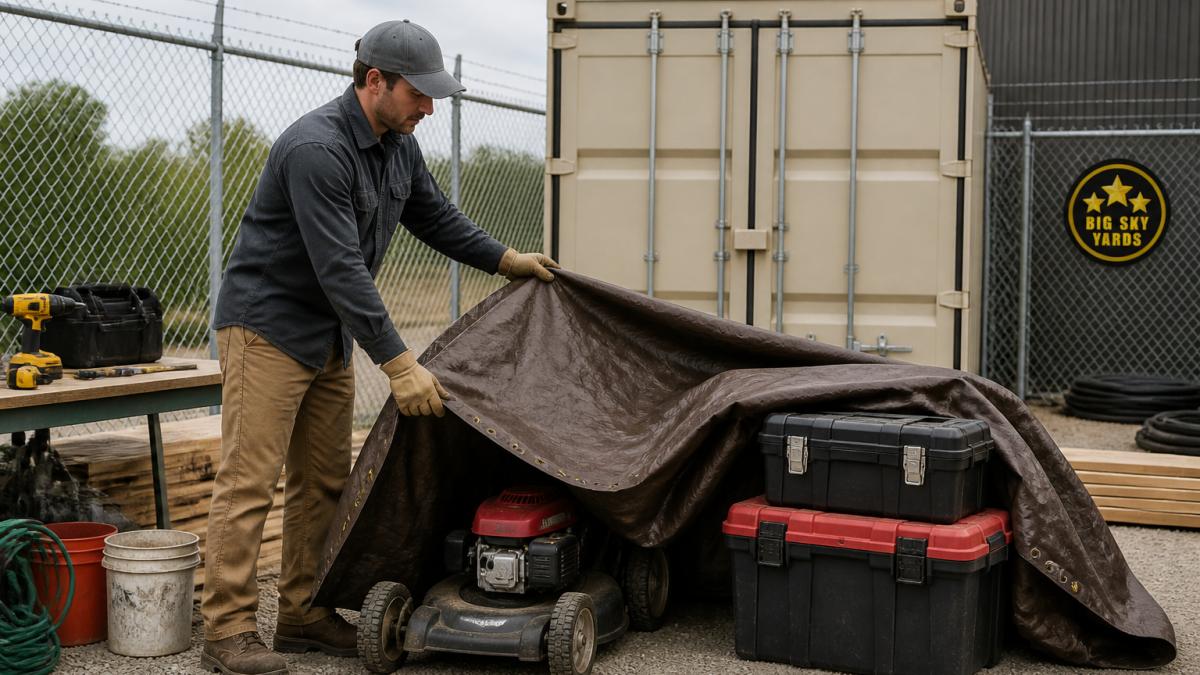
- Let air move. Cover with a breathable tarp or vented cover, tied down but not wrapped tight. Plastic sheeting traps condensation against metal and causes rust faster than leaving the item open.
- Control humidity inside containers. A container that is sealed tight will sweat. Add passive ventilation or a rechargeable desiccant canister, and check it monthly.
- Dry everything first. Dirt traps moisture; a wet tarp seals damp in. Clean, dry, and oil bare metal before storage.
Prevent mold and pests
Mold needs moisture, warmth, and organic material, remove any one and it stalls. Keep fabrics and paper out of outdoor units entirely, and never store cardboard boxes on the floor. For pests, plug exhaust pipes and air intakes on engines, seal gaps in containers with steel wool rather than foam, and avoid storing birdseed, pet food, or anything edible. Rodents chew wiring and nesting material, so inspect corners and wiring looms at each visit.
Prep order that works
Follow this order and most gear survives a full season:
- Drain fuel from small engines or add stabilizer
- Clean and dry all surfaces, then apply a light oil coat on bare metal
- Raise items on pallets or blocks so water never pools underneath
- Cover with a breathable tarp, tied down, not wrapped tight
- Store the heaviest, least-used items at the back
- Label boxes so you don't dig through the whole unit
For a broader set of practical tips, our guide on secure outdoor equipment storage covers locks, lighting, and layout in more detail.
Here is how the article sorts gear by how well it survives outdoor conditions.
| Category | Items | Storage guidance |
|---|---|---|
| Safe outdoors with prep | Lawn and garden tools, mowers, ATVs, boats, trailers, ladders, hand tools, lumber, metal shelving, plastic totes | Prep before storing |
| Safe only in a sealed, ventilated container | Power tools with removable batteries, generators (fuel drained), camping gear, seasonal decor | Sealed and ventilated container |
| Not safe outdoors | Electronics, paper documents, leather goods, upholstered furniture, mattresses, musical instruments, medications, food, paint, solvents, propane | Keep indoors or climate-controlled |
Weather Resistance, Durability, and Structural Stability
Weather resistance comes down to three things: what the shelter is made of, what it sits on, and how it handles wind and water. A sturdy structure on a level base will shrug off rain and cold. The same shed on soft, uneven ground will twist, leak, and pull apart at the doors.
Measurable conditions that matter
Most shed claims are vague. These are the ranges that actually affect stored goods:
- Temperature swings: interior shed temperatures can run well above outdoor air in summer sun and drop below it at night. Anything sensitive to freeze-thaw or heat above roughly 90°F should not live in an uninsulated shed.
- Humidity: relative humidity above about 60% sustained inside a unit invites mold and rust. Below 50% is the safer target for tools and metal.
- Snow load: roofs are rated for a load per square foot; a wet snow can weigh far more than dry powder. Clear the roof before accumulation reaches the structure's rated limit, and never let snow pile against the doors.
Site preparation and drainage
Site prep is where most people cut corners. Clear the spot, level it, and add a base of packed gravel or concrete. Water must drain away from the structure, not toward it. Check that the roof pitch sheds rain and that vents let humid air escape. A common failure pattern is a shed set on bare soil: the base settles unevenly, the doors rack out of square, and rain runs in at the threshold.
Materials and construction
- Galvanized steel resists rust and handles snow load, but dents and can sweat inside without ventilation.
- Heavy resin panels won't dent or rot and resist moisture well, but can flex in high wind if not anchored.
- Wood needs treatment and yearly inspection; it is the most vulnerable to rot at ground contact.
- Anchors and tie-downs hold the structure in high wind, check them after every major storm.
A repeatable safety inspection
Run this checklist before severe weather season and again after any major storm:
- Base is level with no soft spots or settling
- Anchors and tie-downs are tight and rust-free
- Roof pitch sheds water and no seams are lifting
- Vents are open and unobstructed
External pressure and structural failure
External pressure is the quiet killer. Snow piled on a weak roof, wind pushing against a light frame, or a heavy item leaning on a wall all cause structural problems over time. Inspect seams, hinges, and the base after storms. Small fixes now beat a collapsed roof later. If a wall bows or a door stops latching, stop loading the structure and repair it before adding weight.
ATV Outdoor Storage Tips
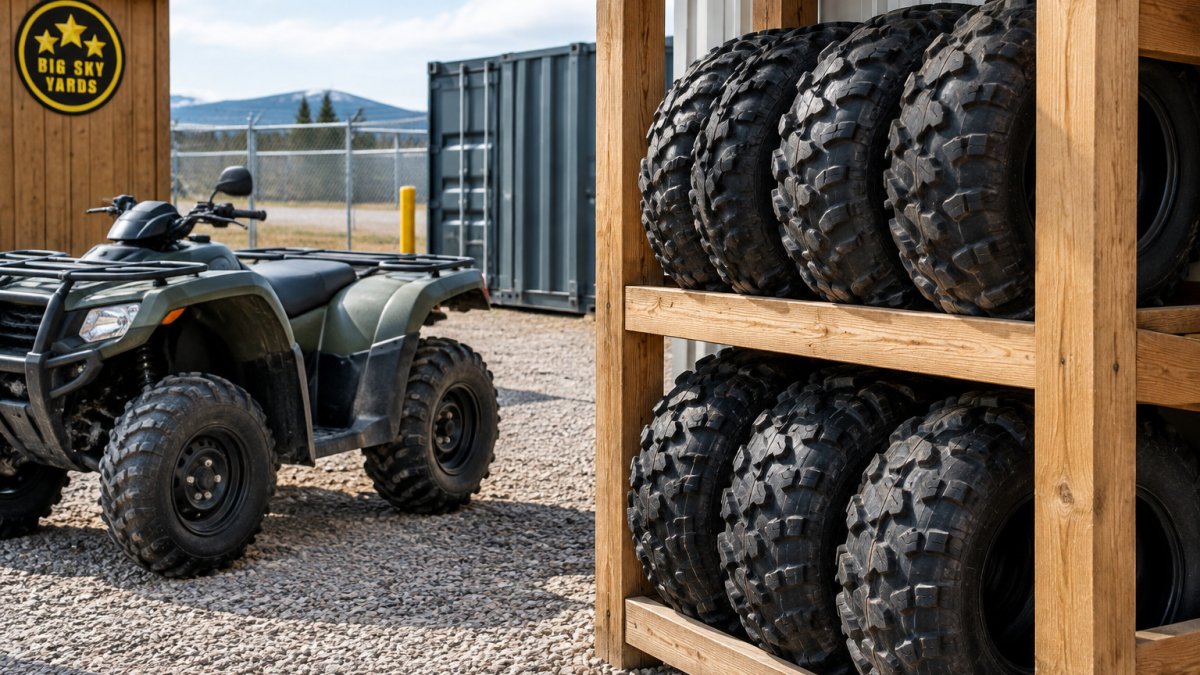
ATVs handle outdoor storage well when you prep them for it. The two enemies are rust on exposed parts and moisture in the fuel and engine.
Do these before you park it:
- Wash off mud and let it dry fully
- Fill the tank to reduce condensation space, or drain it completely
- Remove the battery and store it indoors on a tender
- Spray exposed metal and the chain with a protective coat
Our ATV gear storage setup guide walks through the full layout, and if rust is your main worry, this piece on preventing rust on stored ATV parts covers the products and steps that actually work.
Your Outdoor Storage Facility Safety Checklist
An outdoor storage facility safety checklist is a short set of checks you run before renting and again at each visit. It covers security, drainage, lighting, and access. Run it once and you'll spot a weak site in minutes.
Use this checklist:
- Perimeter fence is intact with no gaps or bent panels
- Gate locks properly and access is controlled
- Security cameras cover the yard and entrances
- Onsite lighting works at night
If a site fails more than two of these, keep looking. Security and drainage are the two you should never compromise on.
Choosing a Secure Yard for Your Equipment
A secure yard beats a cheap one every time. The right facility gives you a locking gate, cameras, lights, and a level, well-drained surface, so your gear stays dry and where you left it.
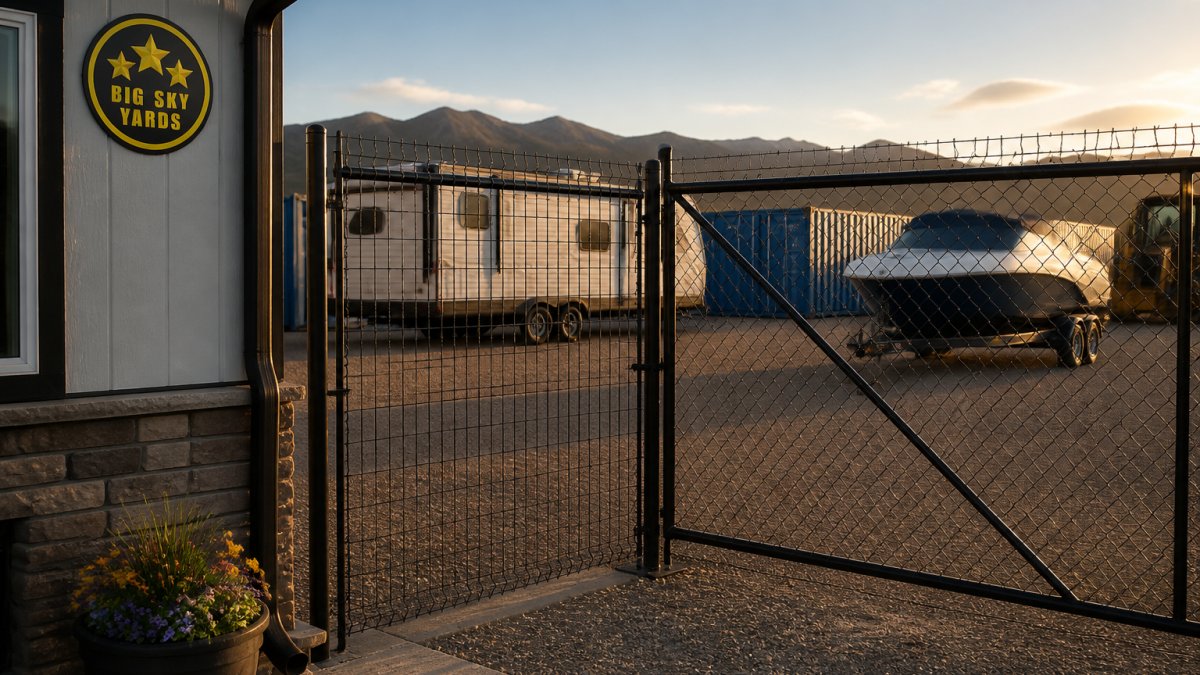
Big Sky Self Storage Yards offers double-secured fenced yards with locking gates, onsite lighting, and security cameras. Optional 20' containers are available for professionals, and 12' x 40' parking spots suit XL RVs.
If you're weighing options, our breakdown of gated storage yard benefits explains why the fence and gate change the risk picture, and this guide on renting a fenced yard for equipment covers what to expect before you sign. For official guidance on securing outbuildings and vehicles, the National Neighborhood Watch program and FEMA's ready.gov preparedness guidance both offer practical checklists worth reading.
Frequently Asked Questions
Is outdoor storage safe for vehicles and equipment?
Yes, for most vehicles and equipment, provided the space matches the item. RVs, boats, trailers, and contractor gear are built to sit outside, but they still need a level, well-drained spot and a locked, fenced yard with lighting and cameras. Check that the facility offers enough space for your full-size trailer or RV, and confirm what security features are included before you sign. Outdoor storage works when the site is secure and the item is prepped.
What should you not store in outdoor storage?
Skip anything that heat, cold, or moisture will ruin: electronics, paper records, upholstered furniture, mattresses, artwork, and anything with liquid that can freeze and burst. Food and pet food draw pests. Propane tanks and gasoline need to follow facility rules and local fire codes. If an item is sensitive to temperature swings or humidity, it belongs in a climate-controlled unit, not an open yard.
How can you protect belongings from theft in outdoor storage?
Use a facility with double-secured fencing, locking gates, onsite lighting, and cameras. Lock your container or trailer with a hardened padlock, keep valuables out of sight, and remove loose items from open trailers. Record serial numbers and photograph your gear. Ask the facility how often security issues occur and whether they can share references from other tenants before you commit.
How do you prepare an ATV or other equipment for outdoor storage?
Clean and dry the machine first, then fill the tank and add fuel stabilizer to limit condensation. Disconnect or maintain the battery, lubricate moving parts, and cover the ATV with a breathable cover that vents moisture. Park it on a level surface, block the wheels, and lock it to a fixed point if the facility allows. Check on it monthly and run the engine briefly during the off-season.
Outdoor storage is safe enough when you match the gear to the shelter and check the site like a professional. That means level ground, sound construction, breathable covers, and a yard with real security. Big Sky Self Storage Yards gives you locking gated yards, onsite lighting and cameras, optional 20-foot containers, and 12' x 40' spots for XL RVs, all near I86. Get started with Big Sky Self Storage Yards and store your equipment, vehicles, and seasonal gear in one secure location.