 blog
Outdoor Storage for ATV Gear: Secure Setup Guide
Table of Contents
- Why Outdoor Storage for ATV Gear Needs More Than a Tarp
- Secure Outdoor Storage for Powersports: What Actually Keeps Thieves Out
- ATV Storage Shed Ideas That Hold Up to Real Weather
- Winterizing ATV for Outdoor Storage: A Step-by-Step Checklist
- DIY vs. Prefab vs. Rented Yard Space: A Cost-Benefit Breakdown
- Gear-Specific Organization: Keeping Helmets, Tires, and Tools in Shape
- Conclusion
- Frequently Asked Questions
Last Updated: September 29, 2026
Why Outdoor Storage for ATV Gear Needs More Than a Tarp
A tarp keeps rain off your ATV. It does nothing about condensation, UV damage, theft, or the family of mice that moves into the airbox over winter. That's the core problem with outdoor storage for atv gear: people protect against the weather they can see and ignore the four threats that actually destroy machines.
This guide breaks down what real protection looks like, from secure fenced yards to winterization checklists that prevent costly spring repairs.
Outdoor storage is the practice of keeping vehicles and equipment outside a fully enclosed building while protecting them from weather, theft, and deterioration. For ATVs and powersports gear, that means combining a covered or sheltered structure with security and ventilation, not just a cover thrown over the seat.
Below, we cover shed options, security layers, a winterization checklist, and a cost comparison of DIY versus prefab versus rented yard space.
Secure Outdoor Storage for Powersports: What Actually Keeps Thieves Out
The best secure outdoor storage for powersports combines three layers: a locked perimeter, visible deterrents, and physical restraints that make your machine hard to move even if someone gets inside. One lock is not a security plan.
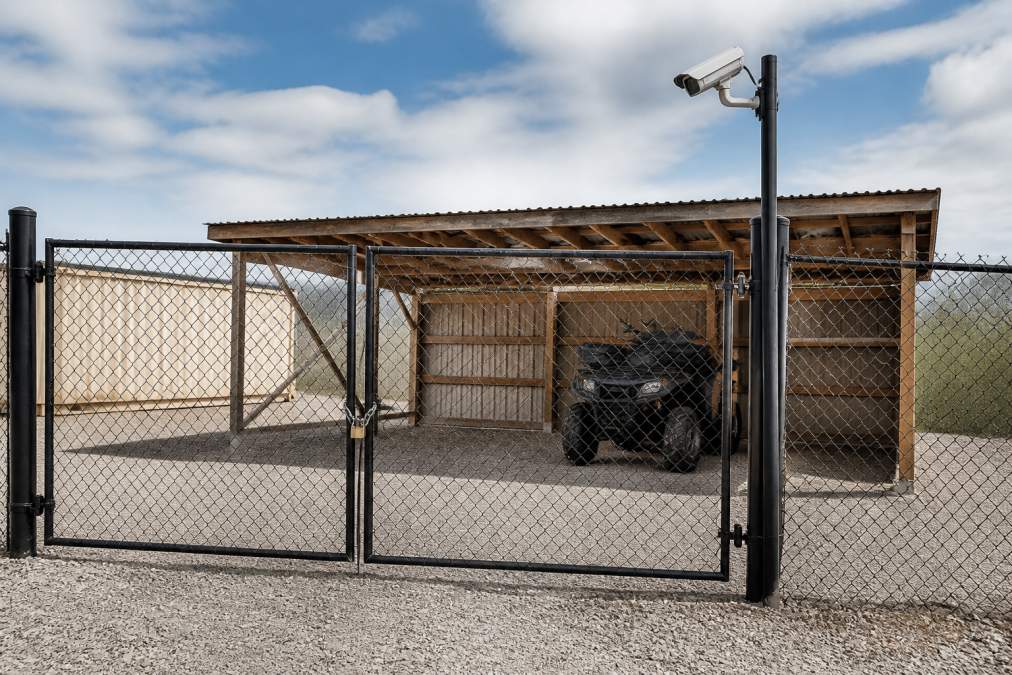
A determined thief needs about 60 seconds to cut a chain and roll an ATV onto a trailer.
Layered Security: Gates, Lighting, and Cameras
Think of security as rings, not a single wall. The outer ring is the perimeter: a fenced yard with a locking gate. The middle ring is visibility: onsite lighting and cameras that remove the dark corners thieves rely on. The inner ring is what you do to the machine itself.
Ground Anchors and Tie-Down Strategies
Physical restraint is the last line of defense, and it's the one owners skip most often. A ground anchor bolted into concrete plus a heavy-duty chain through the frame turns a quick roll-away into a loud, slow struggle.
- Use a hardened steel anchor rated for the load, not a screw-in dog tie-out
- Run the chain through the frame or axle, never through a wheel or handlebar
- Add a brake lock or wheel clamp so the machine can't roll even if the chain is cut
- Park the machine where it's visible from the gate, not tucked behind a shed
ATV Storage Shed Ideas That Hold Up to Real Weather
The right ATV storage shed ideas depend on your climate, your budget, and how long the machine sits. A metal carport handles sun and rain in mild regions. A fully enclosed shed with a ventilation system suits heavy snow and long storage seasons. The variable most owners underestimate is not the roof, it is what happens to moisture inside the structure.
Here's how the three common materials compare:
| Material | Durability | Best For | Main Weakness |
|---|---|---|---|
| Galvanized steel | High, resists rust and UV | Snow load, long-term storage | Higher upfront cost, heat buildup |
| Wood | Moderate, needs sealing | Custom sizes, moderate climates | Rot, pests, and moisture retention |
| Fabric | Low, 1-3 seasons | Temporary or seasonal cover | Tears, no security, no climate control |
Metal, Wood, or Fabric: Material Durability Compared
Galvanized steel wins on structural integrity. It handles snow load capacity and wind resistance better than the alternatives, and it doesn't rot. The trade-off is price and heat buildup, which is why ventilation matters. Steel also conducts temperature changes quickly, so a sealed steel shed can swing from warm and humid during the day to cold and condensing at night, the exact cycle that rusts frames.
Ventilation and Moisture Control Basics
Condensation is the silent killer of stored ATVs. Temperature swings pull moisture out of the air and deposit it on cold metal, which is exactly where corrosion starts. The mechanism is simple: warm daytime air holds more water vapor than cold nighttime air, so when the shed cools, that vapor has to go somewhere, and it lands on the coldest surfaces, typically the frame, engine cases, and electrical connectors.
Winterizing ATV for Outdoor Storage: A Step-by-Step Checklist
Winterizing ATV for outdoor storage takes about an hour and prevents the most expensive spring repairs. Fuel left untreated gums carburetors. A battery left connected drains and can freeze. Coolant that's weak can crack the block.
Work through this checklist before the first hard freeze:
- Fill the fuel tank and add a fuel stabilizer, then run the engine briefly to circulate it
- Change the oil and filter to remove contaminants before storage
- Remove the battery and store it indoors on a trickle charger
- Check coolant strength or drain and refill per the manual
- Inflate tires to the recommended pressure to prevent flat spots
- Lubricate cables, chains, and pivot points
- Plug the exhaust and air intake with steel wool to block rodents
- Wash and dry the machine, then apply a protective coat to exposed metal
- Cover with a breathable cover, leaving air gaps
DIY vs. Prefab vs. Rented Yard Space: A Cost-Benefit Breakdown
Choosing between building, buying, and renting comes down to how much space you need, how many machines you store, and whether you want security handled for you. Each option trades money against time and risk, and the honest comparison requires pricing your own labor, not just the materials.
| Option | Upfront Effort | Ongoing Cost | Security | Best For |
|---|---|---|---|---|
| DIY build | High, weeks of labor | Low after build | Your responsibility | Owners with skills and time |
| Prefab unit | Low, delivered and set | Low maintenance | Your responsibility | Quick setup, resale value |
| Rented yard space | None | Monthly fee | Handled by provider | Multiple machines, seasonal use |
The Time Cost Nobody Prices In
The DIY-versus-prefab decision is usually framed as a materials comparison, which hides the real variable: your time. A custom lean-to for one or two ATVs is a multi-weekend project once you account for site prep, footings, framing, roofing, and finishing. If you value your weekends at even a modest hourly rate, the labor often exceeds the material savings over a prefab kit.
When Renting Beats Owning the Structure
Renting yard space flips the equation entirely. You own no structure, maintain nothing, and the provider absorbs the security, lighting, and access work. For owners storing several machines or seasonal equipment, rented space often wins on total cost once you factor in your own time, the cost of a structure, and the ongoing maintenance of that structure.
A Decision Framework
Work through these questions in order:
- How many machines and how much gear will you store? One ATV fits a small prefab; a trailer plus two ATVs plus seasonal gear needs more footprint.
- How long is your storage season? Year-round storage justifies a permanent structure or rented space; a few winter months may not.
- Do you have the skills, tools, and time for a build? If any of the three is missing, prefab or rental wins.
- How much is your weekend worth to you? Price your labor honestly before assuming DIY is cheapest.
- Do you want to own the security problem? If not, rented space is the answer.
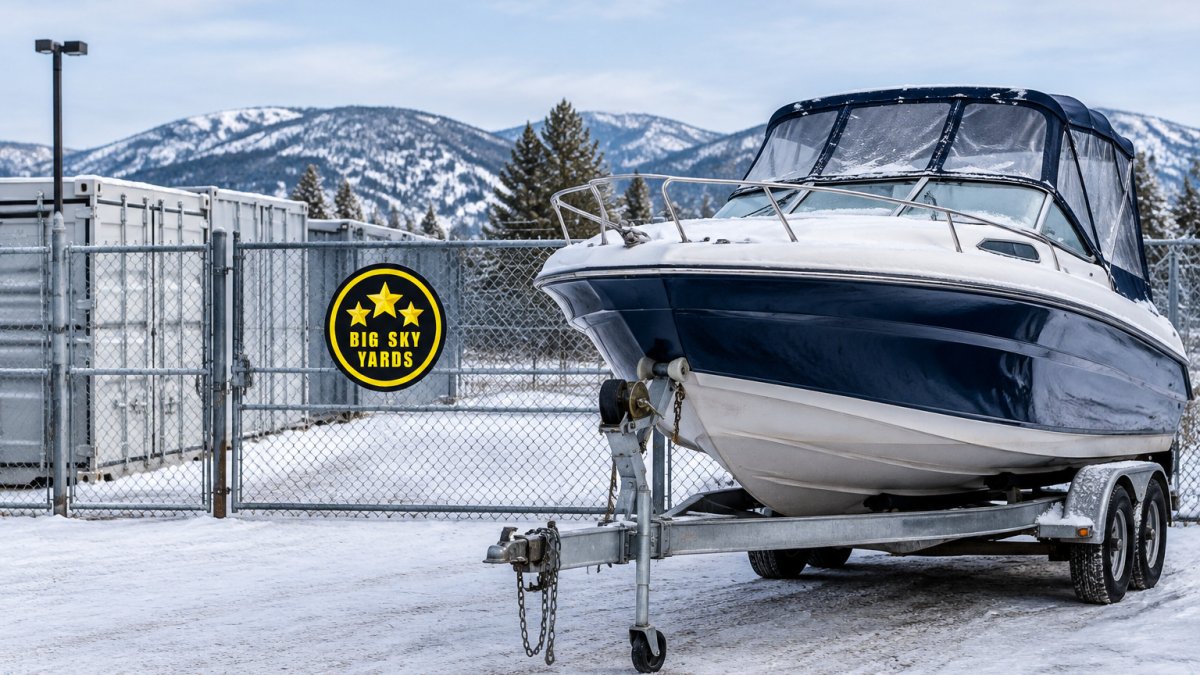
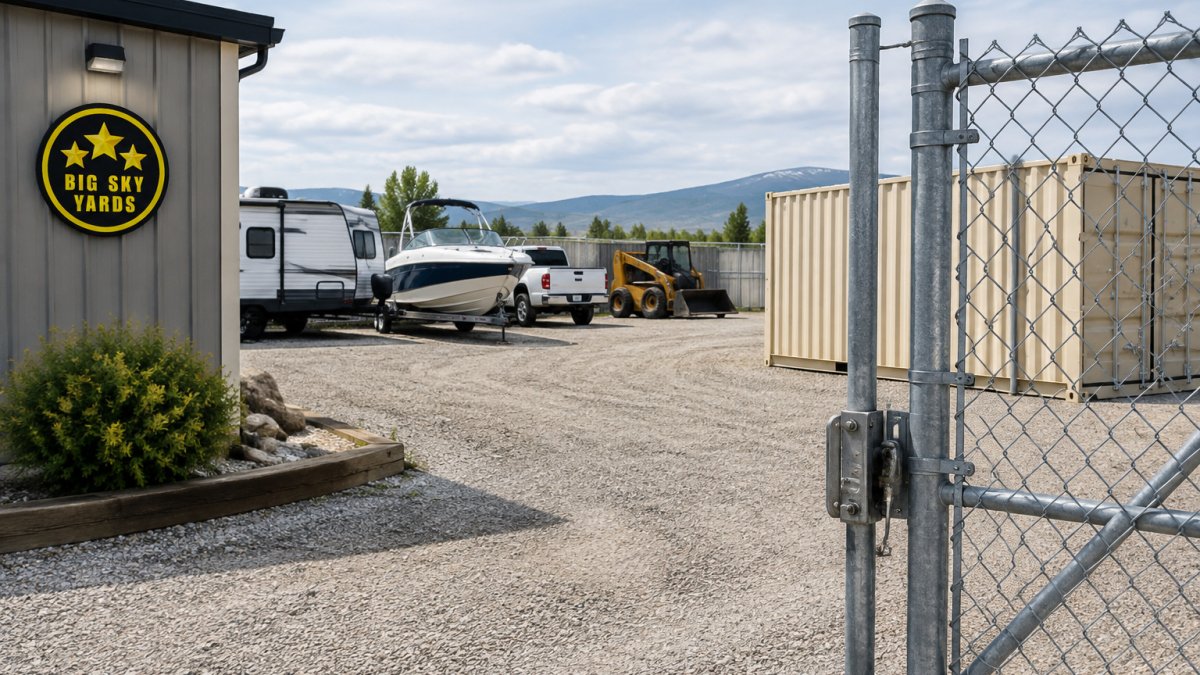
Big Sky Self Storage Yards offers double-secured fenced yards with locking gates, onsite lighting, and security cameras, plus 12' x 40' parking spots that fit a full-size enclosed trailer with room to spare. You get access near major crossroads and highways without maintaining a structure yourself.
Gear-Specific Organization: Keeping Helmets, Tires, and Tools in Shape
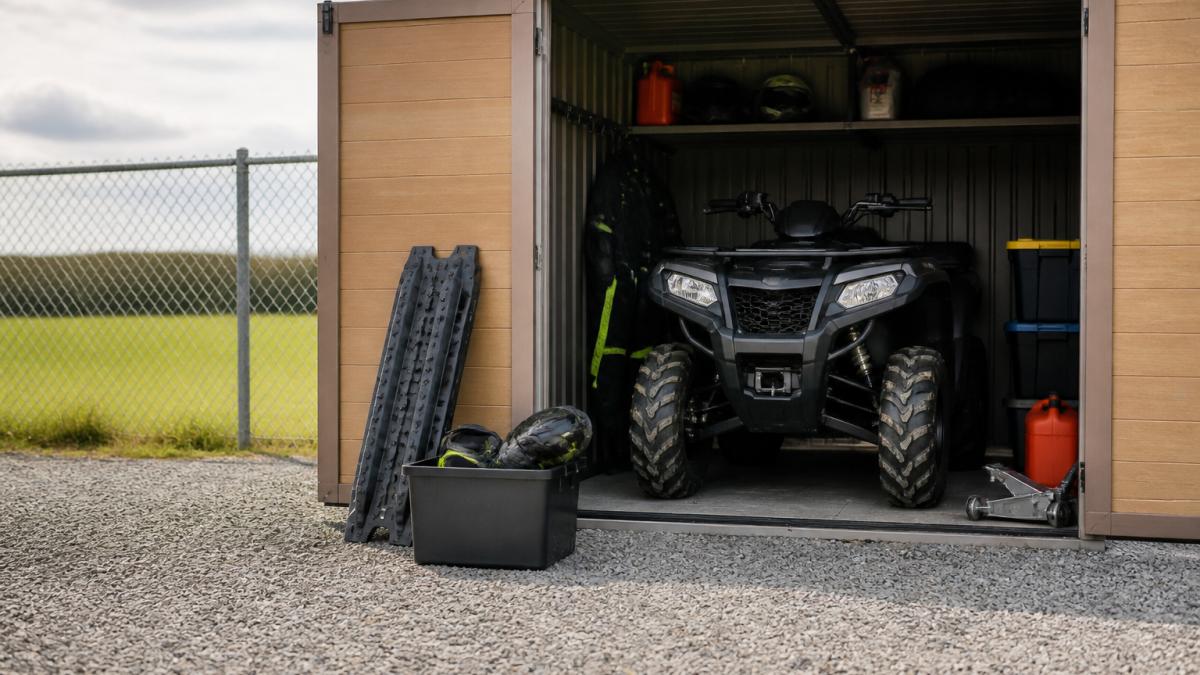
Gear that's stored badly fails before the machine does. Helmets lose their protective liner to heat and moisture. Spare tires crack when they sit in UV light. Tools rust in a damp corner of the shed.
Conclusion
Outdoor storage for atv gear rewards planning over improvisation. Get the security layers right, match your shelter to the weather, winterize properly, and organize your gear so nothing sits exposed longer than it should.
Frequently Asked Questions
Can an ATV be stored outside year-round?
Yes, with the right protection. A weather-resistant cover or shed keeps rain, UV rays, and debris off the machine. For winter, add fuel stabilizer, remove the battery, and block the tires off the ground. If you use a secure outdoor storage yard with cameras and locking gates, your ATV stays protected from theft and weather without taking up garage space.
What are the best outdoor storage options for ATV gear?
The best option depends on your space and budget. A galvanized steel shed offers durability and lockable doors. A carport or lean-to provides ventilation and quick access. For gear like helmets and tools, heavy-duty plastic containers with moisture barriers work well. Many riders combine a small shed for gear with a rented yard space for the ATV itself, keeping everything in one location.
How do I keep my ATV gear secure in an outdoor storage yard?
Choose a facility with double-secured fencing, locking gates, and onsite cameras. Use ground anchors and heavy-duty tie-down straps to secure the ATV. Store smaller gear in lockable containers inside the yard. Ask about lighting and whether security monitoring is included in your monthly rate.
What is the best weatherproof outdoor storage for powersports vehicles?
A metal shed with a ventilation system and a moisture barrier handles snow load, wind resistance, and condensation better than fabric covers alone. If you rent yard space, look for a facility that offers covered spots or optional containers. Add UV protection and rust prevention steps like spraying exposed metal with a corrosion inhibitor before storing. The goal is to block moisture while letting air move.