 Comparison
How Much Is Outdoor Storage? Real Costs and Options
Last Updated: November 15, 2026
Quick Summary
Outdoor storage is typically priced on three variables: how much ground you need, how easily a truck can get to it, and how tightly it is secured. Renting collapses the cost into a security deposit plus a monthly rate, with no foundation, permit, or asset to depreciate.
- Size, access, and security drive the base rate more than anything else.
- A shed's sticker price hides site prep, foundation, labor, permits, and HOA fees.
- Compare five years of rent plus deposits against total cost of ownership.
- Check gate security, surface condition, turning room, and after-hours access before signing.
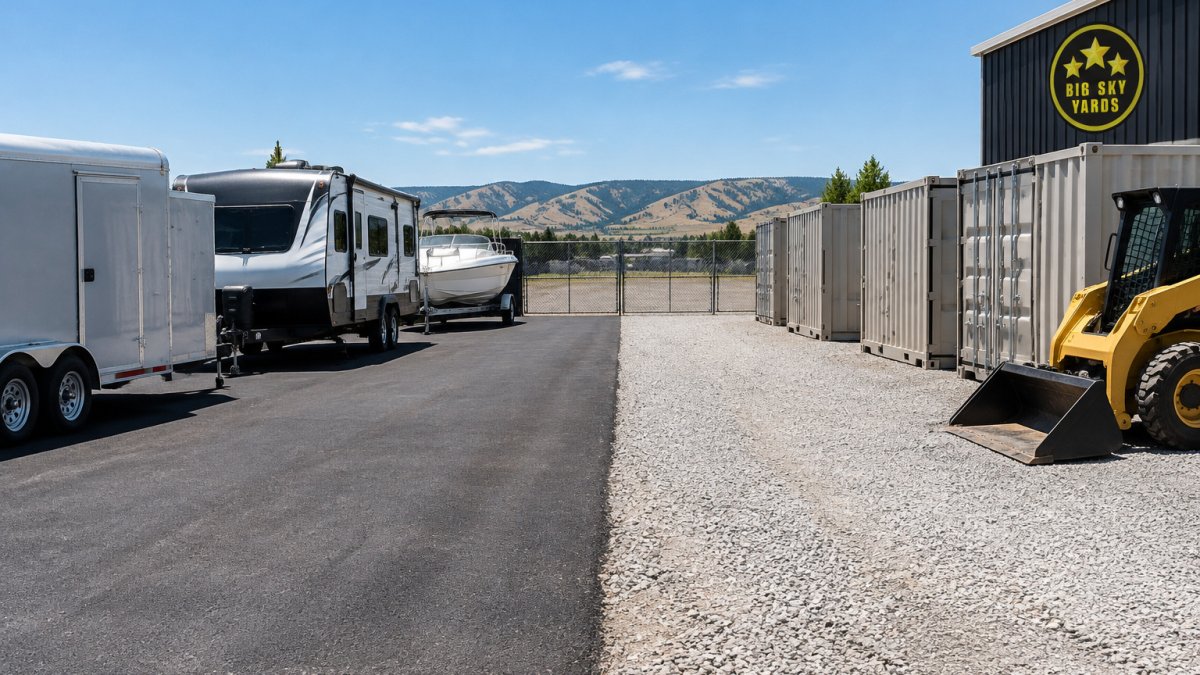
- Big Sky Self Storage Yards offers 12' x 40' spots suited to XL RVs.
Table of Contents
- What Drives the Price of Outdoor Storage
- Monthly Rental Rates vs. Buying a Shed
- Hidden Costs: Permits, HOA Rules, and Site Prep
- Finding Outdoor Trailer Storage Near Me: What to Check
- Best Storage for Large Trailers Near Me: Sizing and Access
- Indoor RV Storage Near Me: When the Extra Cost Pays Off
- Long-Term RV Storage Near Me: Contracts and Flexibility
- Reserving a Secured Yard Spot at Big Sky Self Storage Yards
- Frequently Asked Questions
What Drives the Price of Outdoor Storage
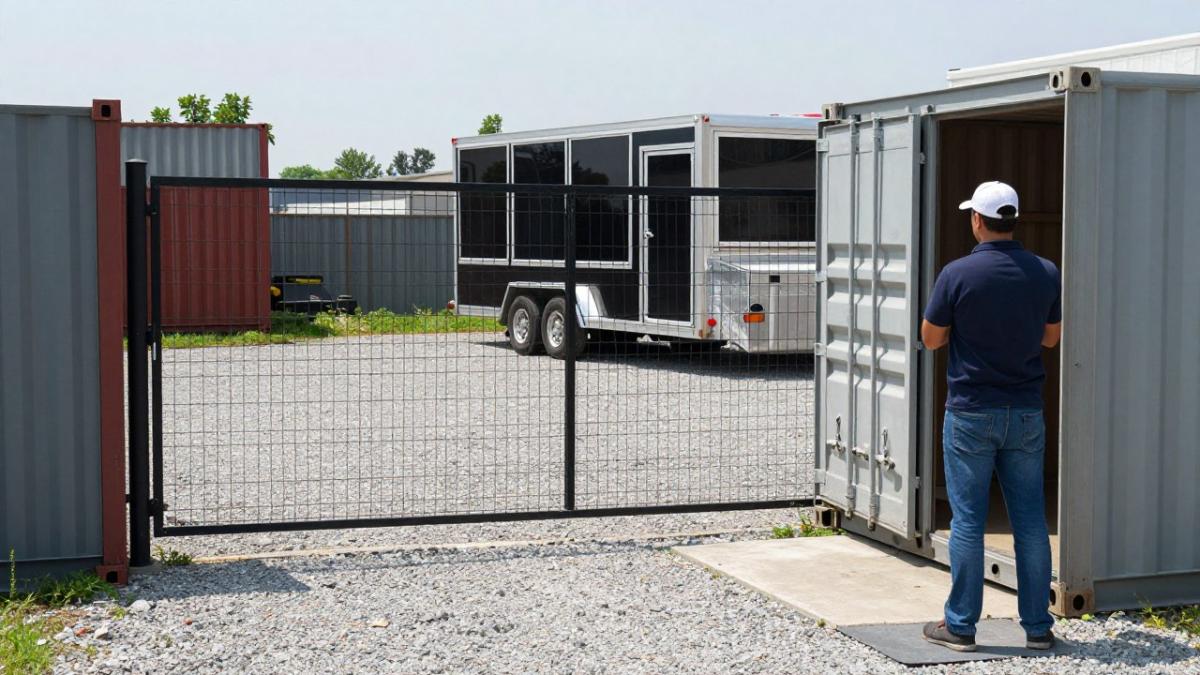
Outdoor storage is a fenced or open-air space where you park vehicles, trailers, or equipment on a rented pad rather than inside a building. Outdoor storage is typically priced on three variables: how much ground you need, how easily a truck can get to it, and how tightly it is secured.
Size, Access, and Security Set the Rate
Three factors do most of the work.
- Size. A single parking pad costs less than a full yard with a container. Square footage drives the base rate more than anything else.
- Access. A pad a full-size truck and trailer can pull straight into may cost more than a tight corner spot.
- Security. Gated access, onsite lighting, and surveillance raise the rate. So does a lockable door on a container.
A common mistake is shopping on price alone, since a low rate doesn't help if the space can't fit your rig.
Monthly Rental Rates vs. Buying a Shed
Renting outdoor space means a predictable monthly rental rate with no assembly, no foundation, and no maintenance. Buying a backyard shed means a one-time purchase plus the costs that follow it. Neither is cheaper in the abstract.
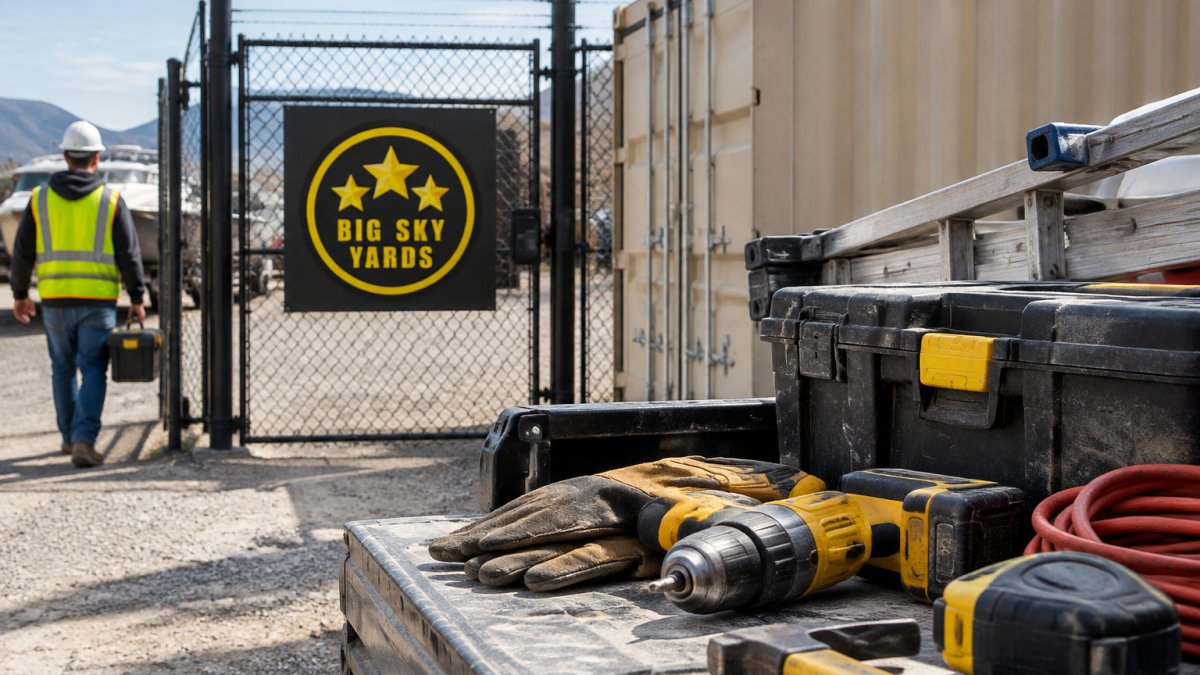
For contractors, renting usually wins because the space scales with the job and the cost is a single operating line item. For a homeowner parking a mower and a snowblower, a shed can make sense, but only after the full cost stack is on the table.
The Cost Components Most Buyers Leave Out
A shed's sticker price often understates the real number. The rest of the stack breaks down into predictable categories:
- Structure and delivery. The building itself plus freight to the site. Kit sheds ship flat; prefab sheds arrive on a truck and need a clear drop zone.
- Site prep. Leveling and compacting the ground, removing sod or rock, and building a gravel or concrete pad. A sloped lot can require grading or a retaining edge before anything sits level.
- Foundation. A wood floor on skids, a gravel pad, or a poured concrete slab. Concrete is the most durable and the most expensive; skids are the cheapest and the least permanent.
- Installation labor. Kit assembly, prefab placement, or a contractor crew. Labor scales with roof complexity, door count, and whether the site is accessible to a truck.
- Permits and HOA approval. Application fees, plan review, and any required survey or site plan. HOA architectural review can add its own fee and timeline.
- Ongoing costs. Paint or stain, roof repair, door hardware, pest control, and, in some jurisdictions, an increase in the assessed value of the property for tax purposes.
- Depreciation and resale. A shed is a fixed asset. It loses value, it does not move with you, and a buyer may discount the property if the structure is aging or non-conforming.
Renting typically collapses that entire stack into one recurring line item: a security deposit plus the monthly rate. There is no foundation to pour, no permit to pull, and no asset to depreciate. The trade-off is that you never build equity and the rate can change at renewal.
Total Cost of Ownership Over Five Years
Most buyers compare the sticker price and stop. That is the wrong number.
The mechanism is straightforward: add every one-time cost in year one, then add recurring maintenance and tax impact for years two through five, then subtract what the structure would resell for at the end of year five. Compare that net number against five years of rent plus deposits. The crossover point, the month where cumulative rent exceeds cumulative ownership cost, is the only number that matters, and it moves with the size of the structure and the cost of site prep.
If you are weighing the two, our guide to outdoor storage pricing for contractors lays out the benchmarks to compare against.
| Option | Upfront Cost | Ongoing Cost | You Own It | Walk Away Anytime |
|---|---|---|---|---|
| Rented yard space | Security deposit only | Monthly rental rate | No | Yes, per rental agreement |
| Purchased shed | Purchase, site prep, foundation, labor, permits | Maintenance, taxes, insurance | Yes | Only by selling |
Watch out: comparing a shed's purchase price to a single month of rent hides the foundation, permit, and labor costs that often push the true first-year outlay well above the sticker.
Hidden Costs: Permits, HOA Rules, and Site Prep
Permits and HOA rules are the costs buyers forget, and they are the ones that stall a project. Many shed pricing pages do not itemize these costs, which is why the first-year cost can surprise buyers. The categories below are the ones that show up on real projects.
Permits and Zoning
Zoning regulations govern where a structure can sit, how tall it can be, and how close to a property line it may stand. Setback rules are the most common tripwire: a shed that fits the yard may still violate the side-yard setback.
Budget for the permit application fee, plan review, and any required site plan or survey. The timeline matters as much as the fee: plan review can take weeks, and a shed ordered before approval may sit on a truck or in the yard while the paperwork clears.
HOA Covenants
HOA covenants can restrict shed size, color, roof pitch, materials, and placement outright, and many require architectural review before construction. That review usually carries its own application fee and its own timeline, and approval is not guaranteed even when the structure meets the written rules. Read the covenants before ordering, not after. A shed that violates a covenant can be ordered removed at the owner's expense.
Site Prep and Foundation
Site prep is the line item that scales fastest with the condition of the ground. Level and well-drained soil needs only grading and compaction. A sloped lot needs grading or a retaining edge. Rocky ground needs excavation. Soft or wet ground needs a gravel base or a pier foundation before anything sits on it.
Access is part of site prep. A truck and trailer need a clear path to the build site, and a fence, gate, or mature tree in the way adds removal or relocation cost before the first post goes in.
The Renting Alternative
Renting generally skips this entire category, since the facility operator typically carries those costs and the compliance burden. If you are parking an RV instead of building, our breakdown of outdoor RV storage parking requirements covers the rules that actually affect setup.
Watch out: ordering a shed before checking zoning and HOA covenants can leave you with a structure you are not allowed to keep, and removal is paid by the owner, not the seller.
Finding Outdoor Trailer Storage Near Me: What to Check
When you search for outdoor trailer storage near me, check four things before you sign: gate security, surface condition, turning room, and what happens after hours. Cameras and lighting can help protect your equipment. A gravel or paved surface that drains keeps trailers off soft ground. Turning room decides whether you can get in and out without a spotter.
Ask how often security incidents happen and whether you can talk to current tenants.
Best Storage for Large Trailers Near Me: Sizing and Access
The best storage for large trailers near me is a pad sized for the whole rig, not just the trailer. Measure the trailer plus the tow vehicle, then add clearance on both sides and behind.
Big Sky Self Storage Yards offers 12' x 40' parking spots suited to XL RVs. Our RV parking space dimensions guide walks through the exact measurements so you can judge fit before you commit.
Best for: contractors and RV owners with long rigs. Skip if: you only need a small utility trailer, where a compact pad costs less.
Indoor RV Storage Near Me: When the Extra Cost Pays Off
Indoor RV storage near me costs more than an open pad, and sometimes that premium is worth it. Climate-controlled space generally protects against sun damage, freeze-thaw cycles, and moisture. If you store a classic RV, a boat with vinyl and gel coat, or anything with wood trim, indoor space slows deterioration.
For a work trailer that gets used weekly, the extra cost rarely pays off. For a seasonal vehicle sitting for months, it often does. Match the storage to how the asset ages, not to how it looks on the lot.
Long-Term RV Storage Near Me: Contracts and Flexibility
Long-term RV storage near me comes down to contract terms. Ask three questions: what the term length is, what early cancellation costs, and whether the rate can change mid-term. A year-long agreement usually lowers the monthly rate. It also locks you in if your plans shift.
Seasonal storage is the other option. If you only need space for a few months, ask whether short-term terms exist before signing a year. Our guide to long-term RV parking requirements explains what those contracts typically require.
Reserving a Secured Yard Spot at Big Sky Self Storage Yards
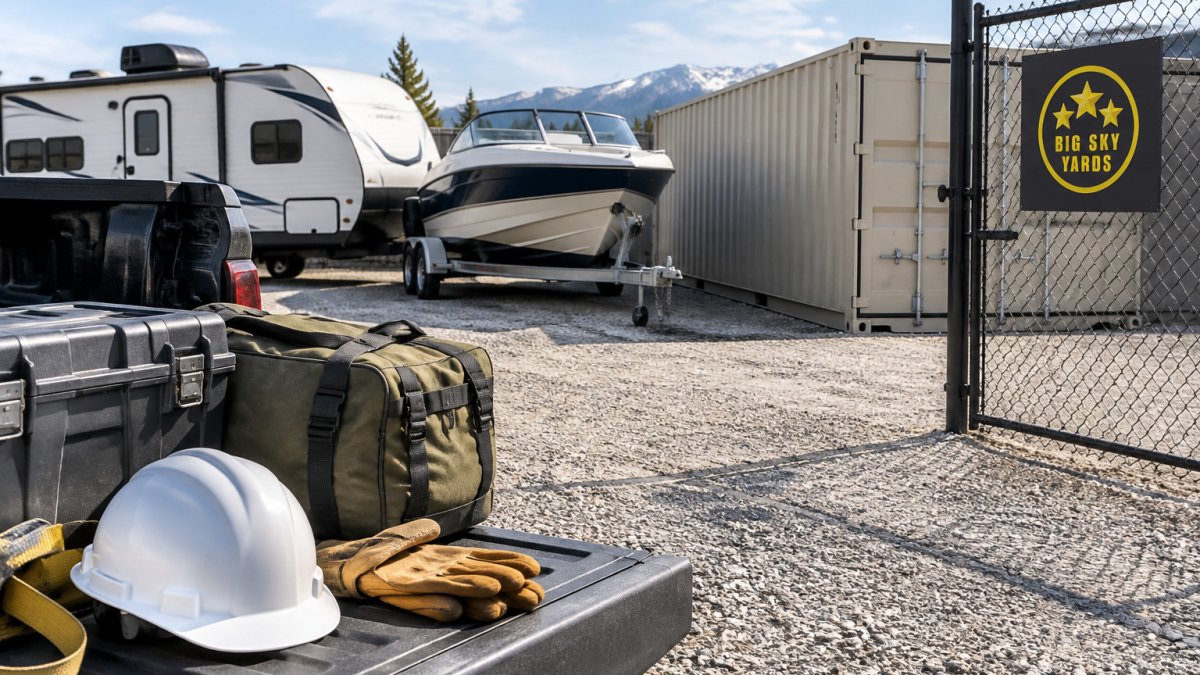
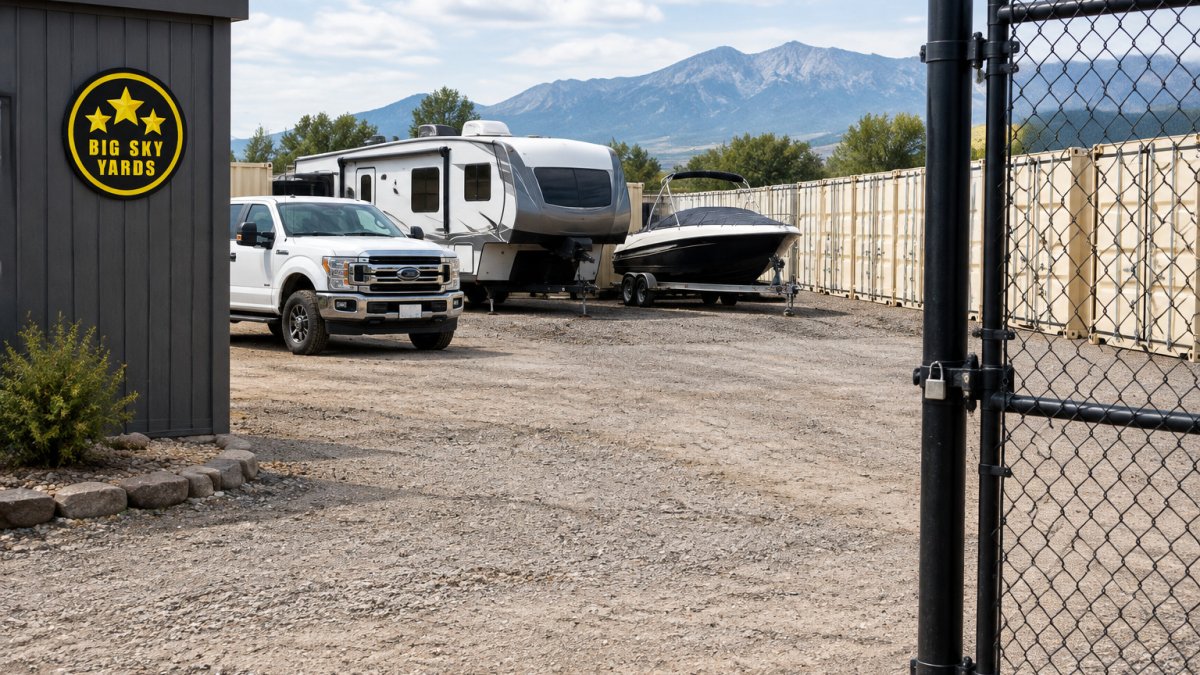
Reserving at Big Sky Self Storage Yards starts with picking your space type, then confirming access and security needs. The facility features double-secured fenced yards with locking gates, onsite lighting, and security cameras.
If you are ready to lock in a spot, our step-by-step guide shows how to book secure outdoor storage space.
The real cost of outdoor storage is not the monthly number. It is whether the space fits your rig, protects your equipment, and lets you leave when your plans change.
Frequently Asked Questions
What factors affect outdoor storage prices?
Several factors commonly affect outdoor storage pricing, including the footprint you need, how much security the facility provides, and how close it sits to major highways. Site accessibility matters too, since drive-up spots command more than spots you have to maneuver into. Check the current rates on the Big Sky Self Storage Yards pricing page or request a quote, and confirm what is included.
Is outdoor RV storage cheaper than indoor storage?
Open-air RV parking is generally less expensive per month than an enclosed bay, because enclosed space requires a building. The trade-off is exposure to sun, rain, and snow, which ages tires, seals, and gelcoat faster. If your rig is older or you store it year-round in a freeze-thaw climate, the gap in price is often smaller than the gap in wear. Compare both quotes side by side before deciding.
How much does it cost to store a 40ft trailer?
A 40-foot trailer needs a spot sized for it. Pricing depends on the yard, the surface, and whether the spot is pull-through, so request a quote for the dimensions you need. Pricing depends on the yard, the surface, and whether the spot is pull-through. Ask whether the spot is wide enough for your mirrors and whether you can back in without blocking the lane. Get a written quote for the exact dimensions you need.
Does outdoor storage include security features?
It varies by operator, so confirm specifics rather than assuming. Look for a locked perimeter gate, onsite lighting, camera coverage, and a fence that's actually maintained. Big Sky Self Storage Yards offers double-secured fenced yards with locking gates, onsite lighting, and security cameras. Ask about specifics before you book.
How can I find affordable outdoor storage for a large trailer?
Start by narrowing options by spot dimensions rather than by advertised starting price. Ask about short-term and seasonal options if you only need space for part of the year. Big Sky Self Storage Yards is located near major crossroads and highways, with easy access to I86.