 Comparison
Paved vs Gravel Commercial Storage Yards: Which Surface Works
Last Updated: November 21, 2026
Quick Summary
Paved vs gravel comes down to upfront cost, load-bearing needs, drainage, and maintenance capacity. Gravel generally costs less to install and wins on year-one cash outlay, while paved surfaces handle heavy truck traffic better and can win on cumulative cost over five to ten years. Asphalt millings sit in the middle on cost and performance.
- Gravel needs continuous maintenance: grading, dust control, weed control, and seasonal top-up aggregate.
- Asphalt millings are recycled pavement that compact into a semi-bound surface and resist rutting better than plain gravel.
- Compare costs over a five- to ten-year window, not the first invoice.
- Snow removal favors paved surfaces because a blade clears asphalt cleanly while gravel gets scraped and scattered.
- In hot climates, asphalt millings can soften under sustained loads.
Table of Contents
- Paved vs Gravel Commercial Storage Yards: What Actually Decides the Choice
- Upfront Installation Cost: Paved Surface vs Gravel Surface
- Asphalt Millings vs Gravel Cost: The Middle Option
- Gravel Yard Maintenance: Grading, Dust Control, and Surface Top-Up
- Commercial Storage Yard Drainage and Environmental Considerations
- Recycled Asphalt for Storage Yards: Where It Fits
- Durability, Load-Bearing Capacity, and All-Weather Access
- Choosing Your Surface: A Decision Framework by Site and Climate
- Frequently Asked Questions
Paved vs Gravel Commercial Storage Yards: What Actually Decides the Choice
The decision between paved and gravel surfaces in a commercial storage yard comes down to four factors: upfront cost, load-bearing needs, drainage, and how much maintenance you can absorb. Paved vs gravel is rarely a question of which is "better" in the abstract. It is a question of what your site, your equipment, and your operating budget can actually support.
Gravel wins on day-one cost almost every time. Paved wins over a decade of heavy truck traffic. The gap between those two facts is where most yard decisions go wrong.
Below, we break down the real trade-offs, including the middle option most guides skip: asphalt millings.
Upfront Installation Cost: Paved Surface vs Gravel Surface
Gravel generally costs less to install than asphalt or concrete. A gravel surface needs grading, a compacted base layer, and the aggregate itself. A paved surface adds subgrade preparation, a thicker structural base, and the paving lift on top.
Site Preparation, Subgrade, and Base Layer
The base layer is where budgets quietly blow up. A gravel yard can often go down over a graded, compacted subgrade with a modest aggregate base. Asphalt and concrete demand a deeper, more carefully compacted base to prevent cracking and rutting under heavy vehicle traffic.
Weak subgrade means the paved surface fails early, no matter how good the asphalt is. Fix the subgrade first, or the paving money is wasted.
For contractor-level pricing on outdoor storage space itself, see our outdoor storage pricing guide to compare against your paving or gravel quotes.
Asphalt Millings vs Gravel Cost: The Middle Option
Asphalt millings are generally less expensive than new asphalt, and pricing depends on local supply. Millings are recycled asphalt pavement, and they compact into a semi-bound surface that sheds water better than loose aggregate.
That semi-bound quality matters in a commercial storage yard. Millings resist rutting and dust better than plain gravel, and they look closer to a paved lot. The catch is consistency: millings vary by batch, and they still need grading and occasional top-up.
If you want a cleaner appearance without a full paving budget, millings are worth pricing. Just confirm the supplier's material is screened and free of oversized chunks before it goes down.
Gravel Yard Maintenance: Grading, Dust Control, and Surface Top-Up
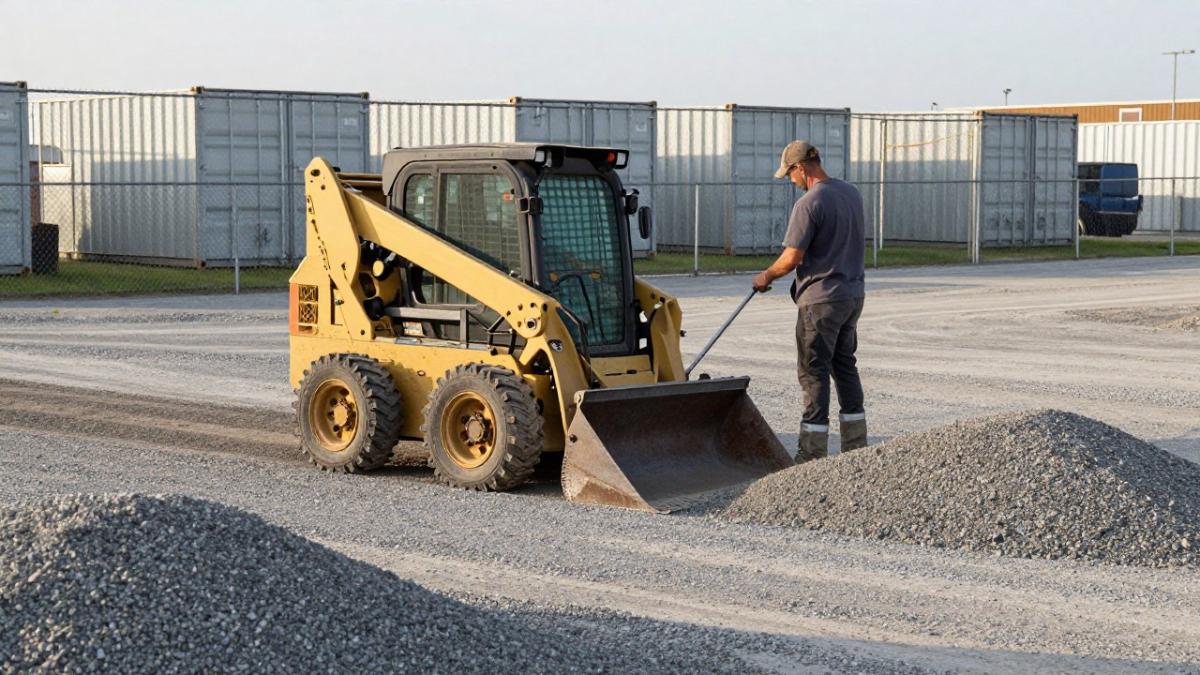
Gravel yard maintenance is continuous, not occasional. Plan on grading, dust control, weed control, and periodic surface top-up as standing line items. The useful question is not whether gravel needs work but how much work, how often, and at what cost over a defined period.
Realistic Maintenance Intervals
Maintenance frequency generally tracks traffic intensity and turning movements more than total acreage, and the schedule depends on how heavily a given yard is used.
- Grading: truck traffic pushes aggregate into ruts and windrows. Blade it back level regularly, and prioritize lane centers and turning areas where displacement concentrates.
- Dust control: unpaved surfaces generate dust that coats equipment and inventory. Water down or apply a dust suppressant; reapplication frequency rises with traffic and wind exposure.
- Weed control: gravel edges and thin spots grow weeds fast. Spot-treat before they spread, and treat fence lines and drainage swales where aggregate is thinnest.
- Top-up: aggregate migrates and compacts down. Budget for fresh material each season, with heavier top-up in high-traffic lanes and at transitions to paved aprons.
Total Cost of Ownership Over a Defined Period
A fair comparison looks at a five- to ten-year window, not the first invoice. For gravel, the ownership cost stack includes initial aggregate and grading, recurring grading labor or equipment, dust suppressant, weed control, periodic top-up aggregate, drainage repairs where ruts pond water, and eventual re-grading or partial replacement of the wearing course.
Gravel generally wins on year-one cash outlay, while paved surfaces can win on cumulative cost once traffic is heavy enough to drive frequent grading, top-up, and dust control. The break-even point depends on traffic volume, local aggregate and paving prices, and how much of the maintenance you absorb with your own crew versus hiring it out.
Watch out: comparing only the installation quote and ignoring five years of grading, dust suppressant, and top-up usually makes gravel look cheaper than it actually is in a heavy-traffic yard.
What Changes the Math
Three variables move the break-even point the most. First, traffic intensity and turning movements: concentrated loads and tight turns accelerate rutting and displacement. Second, drainage: a gravel yard that ponds water needs base repairs, not just re-grading, and those repairs erase the upfront savings. Third, labor source: in-house grading and dust control shift the economics toward gravel, while fully contracted maintenance shifts them toward paved.
Commercial Storage Yard Drainage and Environmental Considerations
Commercial storage yard drainage decides how usable a surface stays after rain. Both gravel and paved surfaces need a plan for runoff, but they fail in different ways.
Gravel drains well when it is graded correctly, because water passes through the aggregate. The risk is standing water in low spots and ruts, which turns the yard to mud and undermines the base. Paved surfaces shed water off the top, but only if the grading sends it somewhere. Poorly sloped asphalt pools water and degrades at the edges.
Runoff also carries sediment and, on paved lots, oil and fuel residue. Grading to direct water away from storage pads and containers protects both the surface and your stock. For a deeper look at keeping materials dry and undamaged, our guide to construction material storage mistakes covers the yard conditions that ruin inventory.
Recycled Asphalt for Storage Yards: Where It Fits
Recycled asphalt fits best in the middle of the cost and performance range. It gives you a more uniform, darker surface than gravel without the full installation cost of hot-mix asphalt.
Where it works: low-to-medium traffic yards, driveways, and parking areas where appearance and dust matter but heavy loads are occasional. Where it struggles: sustained heavy vehicle traffic and poorly drained sites. Millings need a solid base and good grading to hold up, and they can soften in extreme heat.
Think of recycled asphalt as a smart phased upgrade. It improves a gravel yard now and can be capped with a paved surface later.
Durability, Load-Bearing Capacity, and All-Weather Access
Durability under load is where paved surfaces pull ahead. A properly built asphalt or concrete surface handles heavy vehicle traffic, resists rutting, and keeps truck access reliable in wet weather.
Gravel holds up well when the base is solid and drainage is right. Under constant heavy loads, though, aggregate shifts, ruts form, and the surface loses stability. Mud and standing water follow, and all-weather access suffers exactly when you need it most.
Snow removal favors paved surfaces too: a blade clears asphalt cleanly, while gravel gets scraped and scattered. For equipment that sits outside through the seasons, surface stability is a direct cost. Our guide to outdoor storage for heavy equipment explains how load-bearing and weather access affect what you can safely store.
Choosing Your Surface: A Decision Framework by Site and Climate
Use this framework to match the surface to your site and climate. Start with traffic and loads, then drainage and soils, then climate, then budget. The order matters because a surface that fails on drainage or loads will cost more than the upfront savings ever return.
Step 1: Traffic and Load Requirements
Characterize the yard by vehicle type, axle loads, and turning movements before choosing a surface. Heavy trucks, loaded trailers, and forklifts concentrate loads and generate turning forces that displace loose aggregate. A yard dominated by passenger vehicles and light trailers behaves very differently from one with daily tractor-trailer traffic and tight backing maneuvers.
Step 2: Drainage and Soil Conditions
Drainage decides long-term performance more than surface type. Gravel infiltrates water when graded correctly, but low spots, ruts, and fine-grained or high-clay soils can pond water and undermine the base. Paved surfaces shed water off the top, but only if grading directs it away from storage pads, container floors, and pavement edges.
Step 3: Climate and Seasonal Performance
Rainfall, freeze-thaw cycles, and snow removal drive maintenance frequency. In freeze-thaw climates, water in gravel base and ruts expands and contracts, loosening aggregate and creating potholes; paved surfaces can crack and heave if the base is not built for frost. Snow removal favors paved surfaces because a blade clears asphalt cleanly, while gravel gets scraped and scattered, adding top-up cost each winter.
Step 4: Budget and Phasing
Only after the first three steps should budget decide the surface. Gravel has the lowest upfront cost and is easiest to phase, which makes it attractive for new yards or uncertain traffic. Asphalt millings sit in the middle on cost and performance. Paved surfaces carry the highest upfront cost but reduce routine maintenance and protect all-weather access under heavy use.
| Your Situation | Recommended Surface | Why |
|---|---|---|
| Heavy truck traffic, year-round, concentrated loads | Paved (asphalt or concrete) with engineered base | Best load-bearing and all-weather access |
| Tight budget, light-to-medium use, phased build-out | Gravel | Lowest upfront cost, easiest to phase |
| Want paved look, moderate budget, moderate traffic | Asphalt millings | Middle cost, semi-bound, less dust |
| Poor drainage, high water table, or clay soils | Paved with engineered grading and stormwater controls | Controlled runoff, fewer ruts and base failures |
| Freeze-thaw winters with regular plowing | Paved | Cleans better under a snow blade, less top-up |
| Hot climate with sustained heavy loads | Concrete or properly built asphalt | Resists softening and rutting better than millings |
| Uncertain traffic or short-term lease | Gravel or millings | Lower capital at risk, easier to modify |
If you are renting rather than building, check what the yard operator maintains before you sign. Our guide on how to rent a fenced yard for equipment covers the questions that protect your gear. And if you are still weighing surface options for inventory, our overview of outdoor storage solutions for business inventory puts the choices side by side.
Frequently Asked Questions
Is it better to have a gravel or paved commercial storage yard?
It depends on your traffic and climate. A paved surface handles heavy vehicle traffic, truck access, and snow removal better, while a gravel surface costs less upfront and drains faster. For contractors storing equipment and materials, a paved or stabilized surface reduces mud, rutting, and surface top-up. For seasonal or low-traffic storage, gravel can be enough. Compare lifecycle cost, not just installation cost.
How do asphalt millings compare with gravel for a storage yard?
Asphalt millings cost more than plain gravel in most markets, but they compact into a firmer, more uniform surface that looks like traditional asphalt. That means less dust, less rutting, and easier snow removal than loose aggregate. Gravel remains cheaper per ton and drains faster. If your yard sees regular truck traffic, millings often justify the higher upfront cost over a gravel surface.
Which storage yard surface is easiest to maintain?
Paved surfaces need patching and crack repair but no routine grading or dust control. Gravel yard maintenance includes periodic grading, weed control, dust control, and surface top-up, especially under heavy vehicle traffic. Asphalt millings sit between the two: they need less top-up than gravel but can still develop potholes. Budget for maintenance frequency based on traffic and freeze-thaw cycles.
How does yard surfacing affect dust, drainage, and equipment access?
A paved surface is waterproof, so commercial storage yard drainage must be designed with grading and runoff control. Gravel and recycled asphalt allow water to drain through, reducing standing water but increasing dust and mud. For all-weather access and surface cleanliness, paving wins. For quick drainage on a tight budget, gravel wins. Match the surface to your site's soil, slope, and stormwater rules.