 Ultimate guide
7 Outdoor Storage Solutions for Business Inventory
Last Updated: November 10, 2026
Quick Summary
Outdoor storage for business inventory is a practical alternative to indoor warehousing for equipment, materials, and supplies, since a fenced yard with controlled access avoids costs like overhead doors, lighting, climate systems, and loading docks. Most businesses combine two or three structure types, such as portable sheds, heavy duty tents, or rented yard space, rather than picking one.
- Compare every option on the same five-year basis, including maintenance, insurance, and replacement costs.
- Ask for wind-load ratings in miles per hour, snow-load ratings in pounds per square foot, and the anchorage method.
- Keep goods off the ground on pallets and leave space between stacks for air movement.
- Revoke gate codes the day someone leaves a crew, and light the whole yard, not just the entrance.
- Separate storage by turnover rate, placing fast-moving items nearest the gate and seasonal inventory in the back.
Table of Contents
- Why Outdoor Storage Beats Warehouse Space for Many Businesses
- Types of Outdoor Storage Structures and Units
- Commercial Outdoor Storage Yard Rental: What to Expect
- Industrial Outdoor Storage Cost Comparison: Buy, Rent, or Outsource
- Heavy Duty Outdoor Storage Tent Options for Weather Protection
- Security, Access Control, and Loss Prevention
- Permits, Zoning, Fire Codes, and Insurance for Outdoor Storage
- Planning Your Outdoor Storage Layout and Inventory Workflow
- Frequently Asked Questions
Why Outdoor Storage Beats Warehouse Space for Many Businesses
Outdoor storage for business inventory is a practical alternative to indoor warehousing for companies that need to keep equipment, materials, and supplies on hand without paying for heated square footage they never use. Contractors often need a place to park a trailer and lock up tools, not a climate-controlled bay.
The economics are straightforward. Warehouse space carries costs unrelated to the inventory itself: overhead doors, lighting, climate systems, loading docks, and staff. A fenced yard with controlled access carries almost none of that. For lumber, pipe, aggregate, steel forms, palletized materials, and heavy equipment, an open-air site with a hard surface often beats a building because you can drive right up to what you need.
The trade-off is exposure. Wind, rain, snow, and theft become real variables, and this guide covers managing them deliberately. Below, we break down structure types, rent-versus-buy math, security and compliance questions most operators skip, and how to lay out a yard so it stays organized after month three.
Types of Outdoor Storage Structures and Units
Outdoor storage covers a spectrum from a lockable box on a pad to a full commercial yard with containers, and the right choice depends on what you're protecting and how often you touch it. Most businesses end up combining two or three types rather than picking one.
Portable Buildings, Sheds, and Storage Boxes
Portable buildings, storage sheds, and deck boxes handle the smaller, higher-value inventory: hand tools, fittings, fasteners, small power equipment, and anything a crew needs quickly. Resin and plastic sheds resist rot but can flex under load. Steel and heavy-duty plastic storage boxes suit job-site tool storage and staging supplies. Assembly is usually a two-person job, delivery is often flat-packed, and maintenance is minimal, though you should confirm any shed meets local wind and snow-load requirements before anchoring it.
Commercial-Grade Structures and Heavy Duty Tents
Commercial-grade fabric structures and heavy-duty tents cover the middle ground: they shelter large equipment, vehicles, and bulk materials without a permanent building's cost. A heavy duty outdoor storage tent is a fabric-covered frame engineered for wind and snow load, and the specification matters far more than the price tag. Look for a rated wind speed, a snow-load rating in pounds per square foot, and an anchored rather than weighted frame. Fabric structures can be relocated and need periodic inspection of the cover and tensioning.
Before committing to containers as your structure, it's worth reading the key things to know before renting storage containers for business.
Commercial Outdoor Storage Yard Rental: What to Expect
A commercial outdoor storage yard rental gives a business a defined, fenced space with controlled entry, typically billed monthly and often sized by parking spot or container rather than square foot. What separates a good yard from a bad one isn't fence height. It's access control, lighting, surface condition, and how the operator handles crew access at odd hours.
Here's what a well-run facility typically provides:
- Defined spaces. Numbered spots or containers so your inventory has a fixed home and your team knows where to go.
- Controlled entry. Locking gates and a documented process for who gets a code or key.
- Lighting and cameras. Onsite lighting and recorded video coverage across the yard, not just at the gate.
- Surface and drainage. A graded, hard or compacted surface that stays usable after rain.
- Access hours. Clear rules on when you and your crews can get in, including weekends.
If you're weighing yard rental for the first time, our 2026 guide to commercial outdoor storage yard rental walks through the full process from inquiry to move-in.
Industrial Outdoor Storage Cost Comparison: Buy, Rent, or Outsource
The buy-rent-outsource decision comes down to three variables: how long you need the space, how much capital you want tied up, and how much administration you'll carry. Most comparisons stop at the headline rent or purchase price, the least useful number, because the costs that decide whether outdoor storage saves money sit outside it: site preparation, delivery, installation, maintenance, security, utilities, and replacement.
Start with total cost of ownership, not sticker price. For a purchased structure, add site preparation (grading, compacted base, anchoring), delivery and installation, permits, electrical for lighting or cameras, annual maintenance, and the replacement horizon for covers, panels, or frames. For a rented yard, add the deposit, any required insurance rider, locks and containers, and labor hours driving to and from the site.
| Option | Upfront Cost | Ongoing Cost | Commitment | Best For |
|---|---|---|---|---|
| Buy land and build | Highest | Property tax, maintenance, insurance | Long-term | Businesses with stable, permanent space needs |
| Rent yard space | Low deposit | Monthly rent | Month-to-month or annual | Contractors with seasonal or shifting volume |
| Outsource to managed yard | Low | Monthly service fee | Flexible terms | Teams without staff to manage a site |
| Buy portable structures | Equipment cost | Minimal | Until resale | Small inventories on existing property |
Use a simple decision framework rather than gut feel. If you need space for less than a year, or volume swings with seasons or project cycles, renting a yard or outsourcing usually wins because you avoid capital and maintenance.
Watch out: a common costing mistake is comparing monthly rent to a purchase price without annualizing maintenance, insurance, and replacement. Put every option on the same five-year basis before you decide.
For contractors who want concrete numbers before deciding, our contractor pricing guide breaks down what drives the monthly figure.
Heavy Duty Outdoor Storage Tent Options for Weather Protection
Weather protection is a common concern for businesses considering outdoor storage. Covered structures can shield inventory from direct rain and snow while allowing airflow. But the structure is only half the question.
Sort inventory into suitability tiers. Weather-tolerant goods, lumber, pipe, aggregate, steel forms, palletized masonry, heavy equipment, and most construction materials, generally do fine under cover with airflow.
Specify for your actual conditions rather than the average. Ask for the wind-load rating in miles per hour, the snow-load rating in pounds per square foot, and the anchorage method.
Pests and temperature swings are the other variables. Rodents nest in stored materials and chew wiring and packaging, so keep the perimeter clear and avoid storing food-adjacent goods outdoors.
Durability is a maintenance question as much as a specification question.
Watch out: a covered structure keeps rain off but does not control humidity or temperature, so goods that need climate control will still degrade under cover.
Security, Access Control, and Loss Prevention
Inventory protection on an open site depends on layers, not a single measure. Cameras record what happened; they don't prevent it. Yards that avoid losses combine physical deterrence, controlled access, and a simple system for knowing what's on site.
Start with access control. Every person with a gate code should be someone you'd trust with the contents, and codes should be revoked the day someone leaves a crew. Pair that with onsite lighting across the whole yard, not just the entrance, because most losses happen in unlit corners.
What most guides miss is the value of layout as a security tool. Park the highest-value equipment deepest in the yard behind lower-value items, keep the perimeter clear of anything climbable, and store trailers with hitches locked or removed. For a deeper set of tactics, see these proven ways to protect construction tools from theft.
Watch out: the most common mistake is treating a camera system as a substitute for access control. A recorded theft is still a theft, and the footage rarely recovers the equipment.
Permits, Zoning, Fire Codes, and Insurance for Outdoor Storage
Compliance is where outdoor storage plans quietly fall apart, and it's the angle most competing guides skip. Zoning rules govern whether you can store materials, equipment, or vehicles on a given parcel, and many municipalities treat outdoor storage of commercial goods differently from parking. Check with your local planning office before you sign a lease or pour a pad.
Fire codes matter most when storing flammable or combustible materials, and separation distances between structures and property lines are often prescribed. Insurance is the third piece: standard commercial property policies may exclude or limit coverage for property stored outdoors, so confirm with your carrier that inventory, equipment, and structures are covered at the location, and document the schedule of property. For official guidance on workplace storage and material handling, consult the Occupational Safety and Health Administration (OSHA).
Planning Your Outdoor Storage Layout and Inventory Workflow
A storage layout that works in month one fails by month six unless it's built around how inventory actually moves. The principle is simple: separate storage by turnover rate, not category. Fast-moving items belong near the gate; slow-moving or seasonal inventory goes to the back.
Here's a layout sequence that holds up in practice:
- Map your inventory by turnover. List every item or category and how often it leaves the yard.
- Assign zones. Fast, medium, and slow, with the fastest nearest the entrance.
- Define a container or spot for each zone. Number them and label them.
- Set an access rule per zone. High-value zones get tighter control.
- Build a check-in and check-out log. Paper or digital, but consistent.
- Review monthly. Move items between zones as usage changes.
Once the plan is set, our step-by-step guide to booking secure outdoor storage space covers how to reserve the right spot size and get set up.
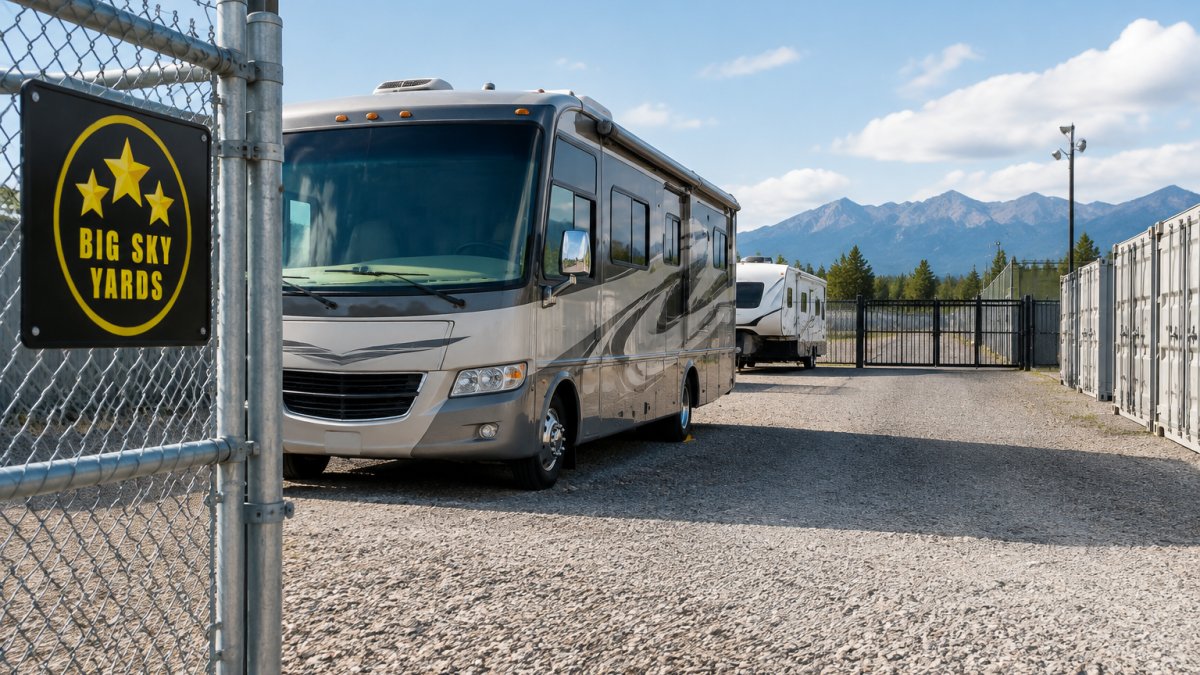
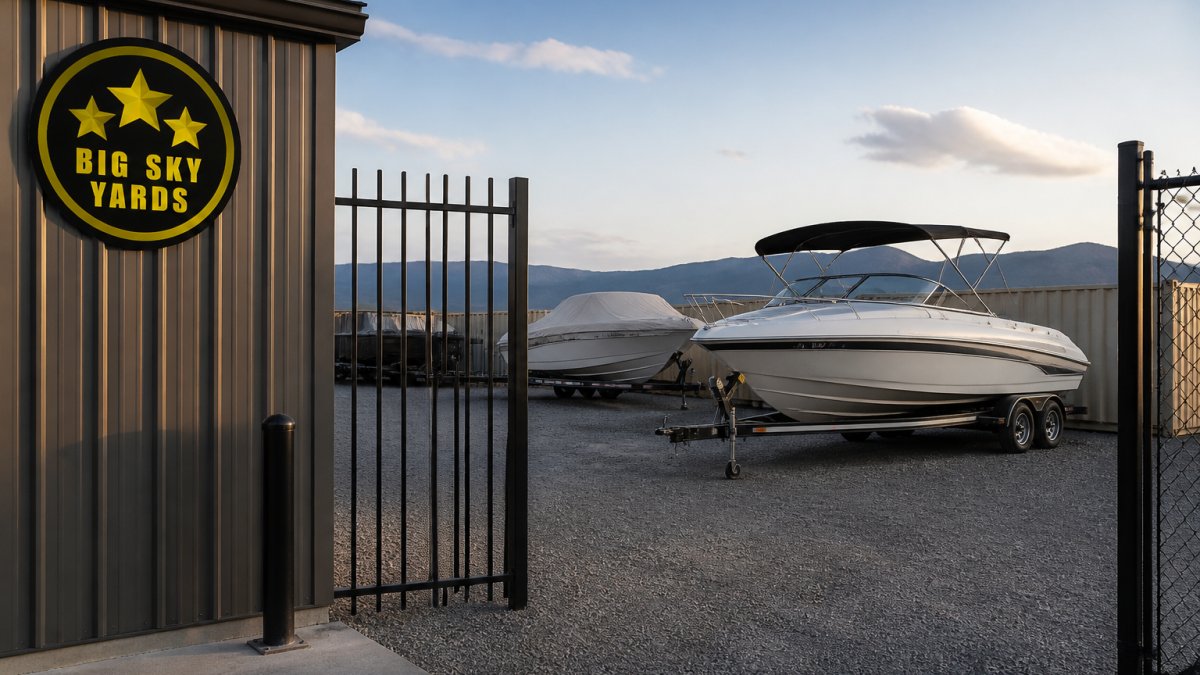
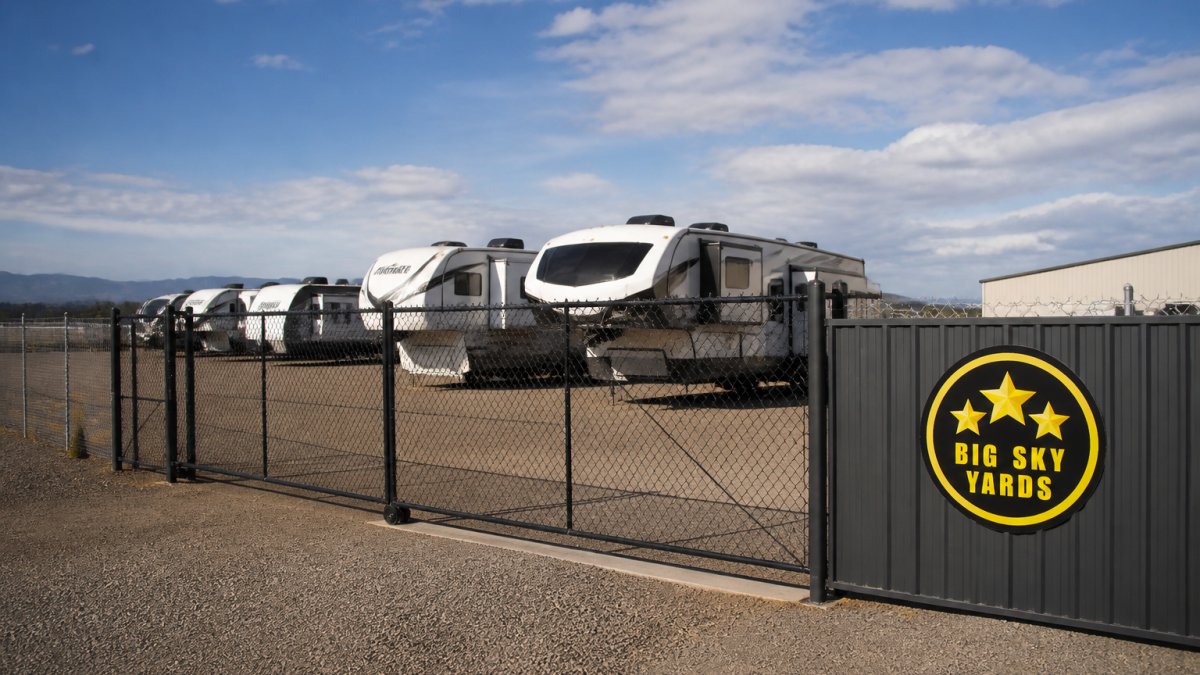
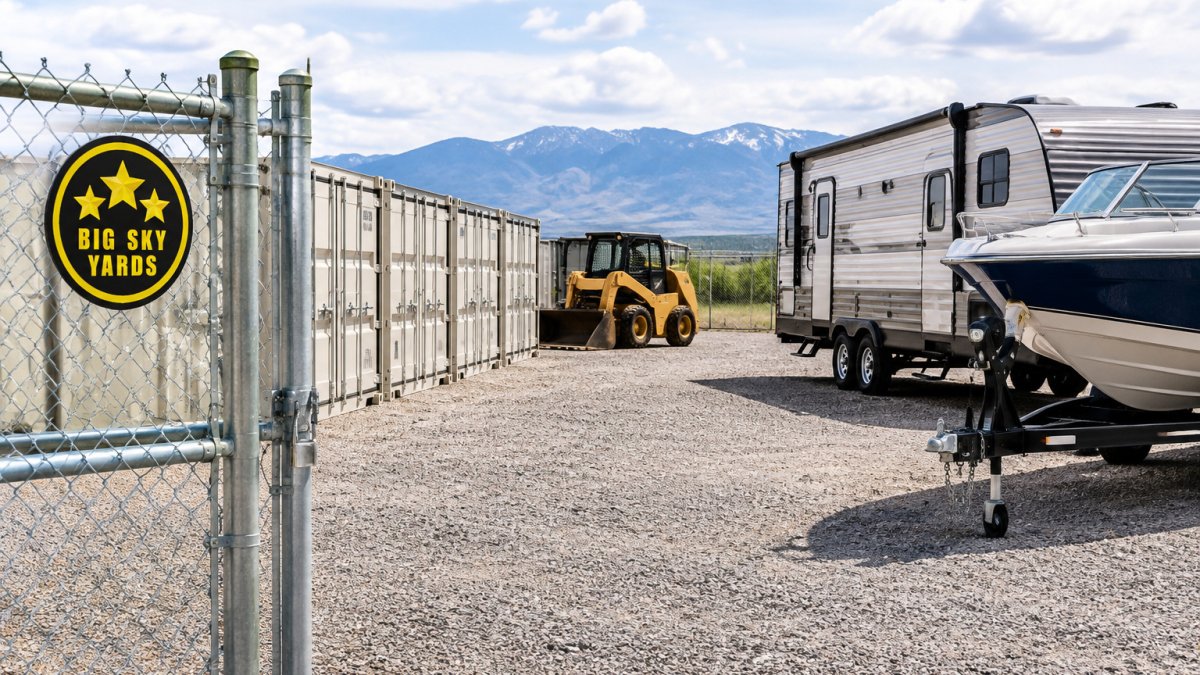
The hard part of outdoor storage isn't finding space. It's finding a site that stays secure, stays organized, and doesn't cost an hour of driving every time a crew needs a tool. Big Sky Self Storage Yards offers double-secured fenced yards with locking gates, optional 20-foot containers for professionals, 12' x 40' spots sized for XL RVs, and onsite lighting and security cameras. The facility is located near major crossroads and highways, with access to I86. Get started with Big Sky Self Storage Yards and put your equipment and inventory behind a gate that stays locked.
Frequently Asked Questions
Can you legally run a business from a storage unit?
Using a storage unit or outdoor yard for business inventory is generally allowed for storage and staging, but not for operating a business, retail sales, or living. Check your lease terms and local zoning rules. Many facilities, including Big Sky Self Storage Yards, permit commercial storage of tools, supplies, and inventory. Confirm that your insurance covers stored business property and that the facility allows your specific use before signing.
What security features should I look for in a commercial outdoor storage yard?
Prioritize fenced perimeters with locking gates, onsite lighting, and security cameras covering entry points and storage areas. Ask about access hours, whether the yard is double-secured, and how incidents are handled. A yard with clear sightlines and restricted access reduces loss risk. Visit in person to check lighting and gate condition, and request references from other contractors who store equipment there.
What is the average cost of outdoor storage for business inventory?
Costs vary widely by location, yard size, and included features such as containers or parking spots. Rather than quoting a single average, compare total monthly cost against warehouse space and your own property constraints. Request a quote from Big Sky Self Storage Yards for current pricing on fenced yard spaces and 20-foot containers. Factor in insurance and any access fees when comparing options.
Can I write off outdoor storage for my business?
Storage costs for business inventory, equipment, and supplies are typically deductible as ordinary and necessary business expenses under IRS rules. Keep receipts and documentation showing the storage is used for business purposes. Consult a tax professional for your situation. Personal storage mixed with business storage should be separated or prorated to avoid issues during an audit.