 Ultimate guide
Long Term Boat Storage Options: A Complete Guide
Last Updated: October 28, 2026
Quick Summary
Long term boat storage options fall into two families: open-air storage, where a trailer-mounted boat sits in a fenced yard or lot, and enclosed storage, where a structure shields the hull from sun, rain, and debris. The right choice depends on how much weather protection your boat needs and how often you plan to access it.
- Outdoor yard storage offers the lowest cost and easiest access but leaves your boat exposed to the elements.
- Wet slips suit owners who boat several times a week and want zero launch time.
- Measure your boat and trailer together, tongue to prop, plus the beam at its widest point.
- Winterize before the first hard freeze: flush the engine, stabilize fuel, drain water systems, and change the oil.
- Look for gated entry, locking access, onsite lighting, and camera coverage when choosing a provider.
Table of Contents
- Types of Long Term Boat Storage Options
- Marina vs Dry Storage: Which Fits Your Boat
- Boat Storage Size Guide: Matching Your Boat to a Space
- What Boat Storage Costs and What Drives the Price
- How to Winterize a Boat for Storage
- Factors to Weigh When Choosing a Storage Provider
- Reserving a Secure Yard Spot for Your Boat
- Frequently Asked Questions
Types of Long Term Boat Storage Options
Long term boat storage options fall into two broad families: open-air storage, where a trailer-mounted boat sits in a fenced yard or lot, and enclosed storage, where a structure shields the hull from sun, rain, and debris. Choosing between them comes down to how much weather protection your boat needs and how often you plan to access it.
The right option depends less on the boat's price tag and more on how the owner actually uses it.
Outdoor Yard and Lot Storage
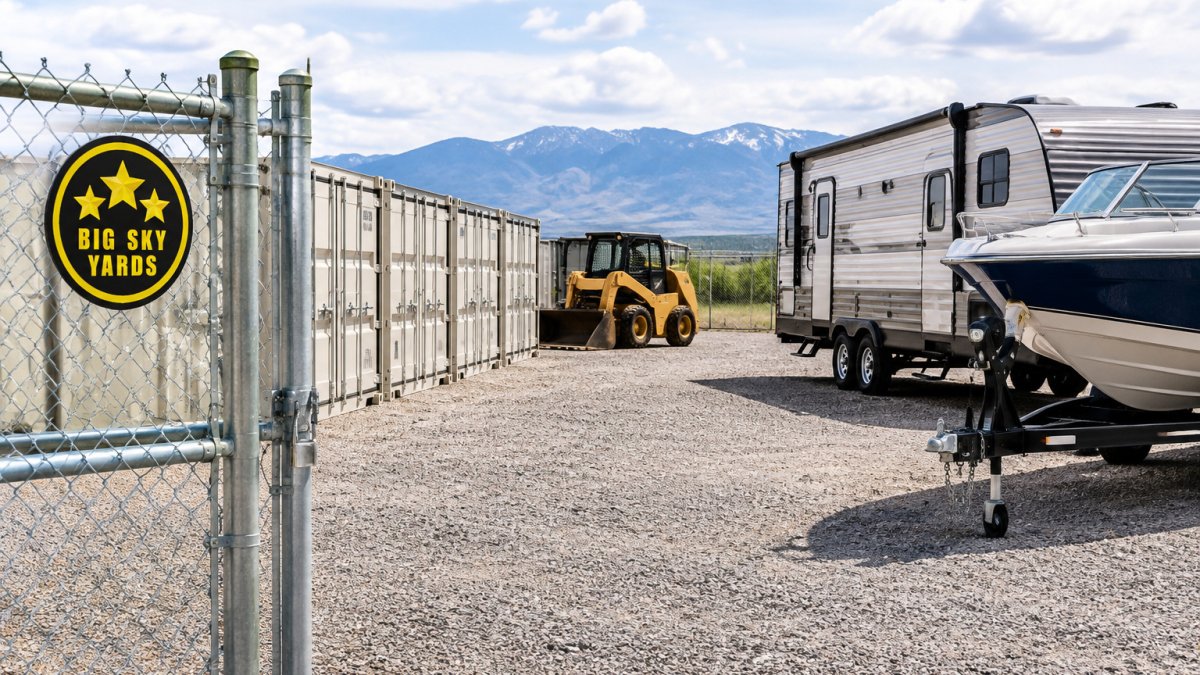
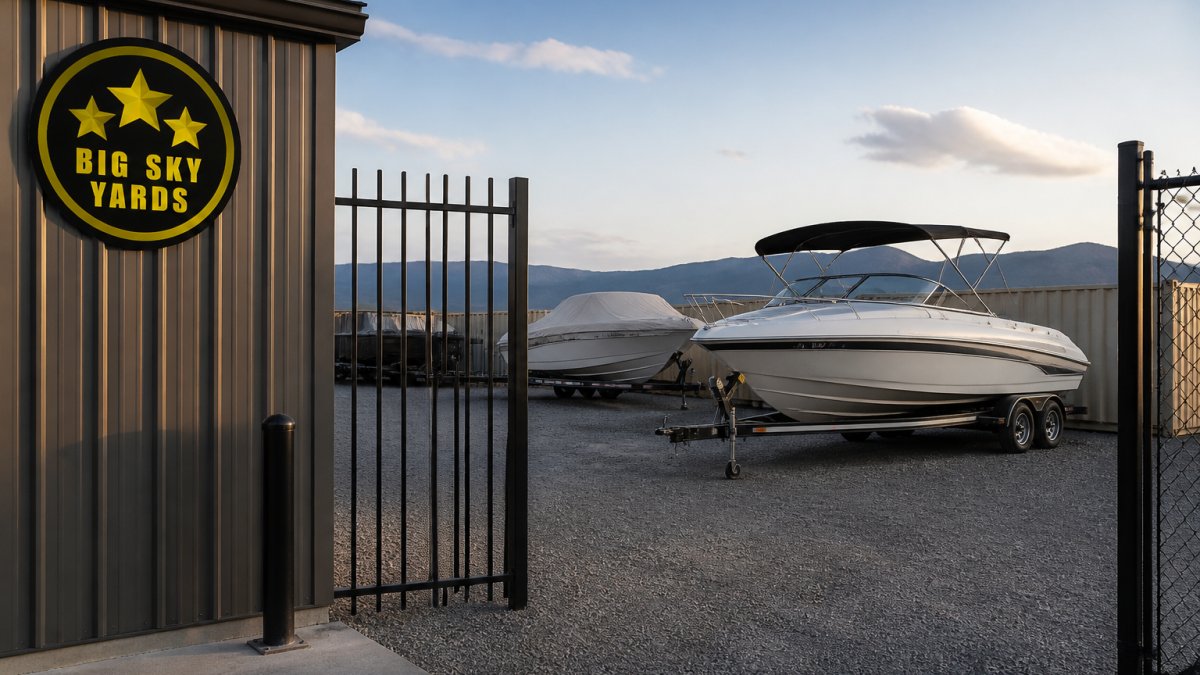
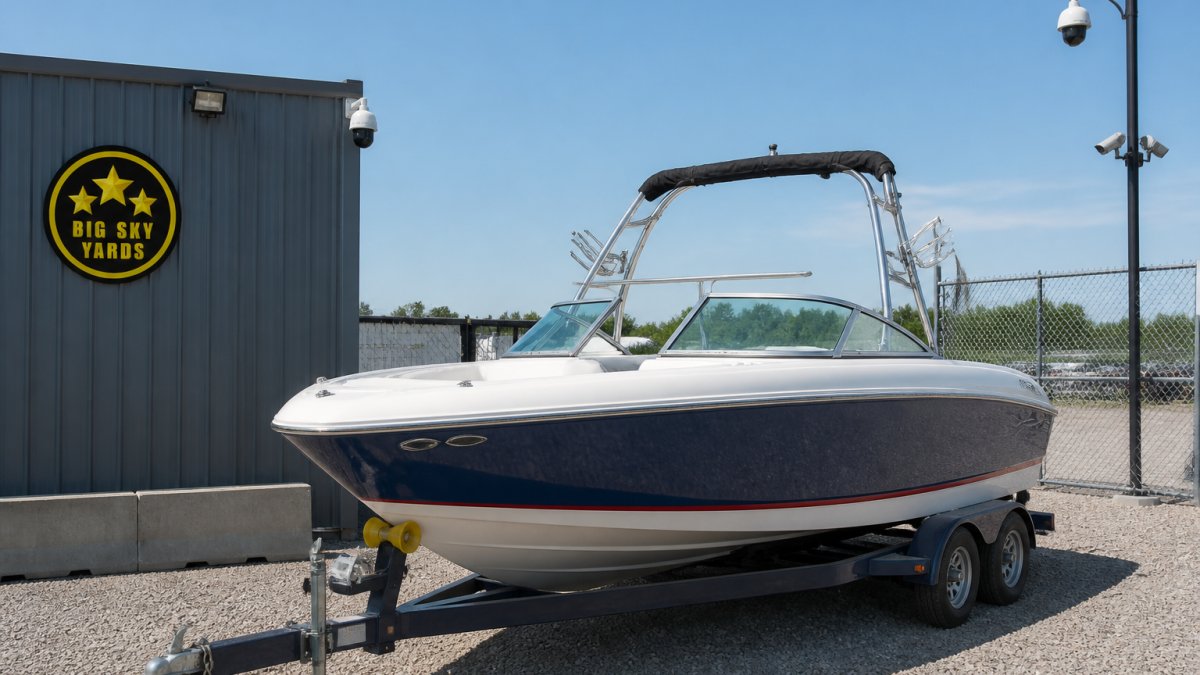
Outdoor yard storage is the most common long term boat storage option for trailerable boats. You park the boat and trailer in a secured lot, often on gravel or packed stone, and the boat stays exposed to the elements.
The trade-off is straightforward. You get the lowest cost and the easiest access, but sun, rain, and falling leaves work on the hull, cover, and tires year-round. A quality fitted cover and periodic inspection offset most of that wear.
Covered and Indoor Storage
Covered storage puts a roof, and sometimes walls, between your boat and the weather. Indoor storage is the premium tier: fully enclosed, often climate-influenced, and priced accordingly. Covered open-sided structures sit in the middle.
For boats with teak, gelcoat that has already faded, or upholstery you want to preserve, enclosed storage earns its premium. For an aluminum fishing boat that lives on a trailer, it usually does not.
Marina vs Dry Storage: Which Fits Your Boat
Marina wet slips keep the boat in the water, ready to go. Dry storage keeps it on land, typically in a rack or yard, and launches it when you call ahead or haul it yourself. The choice hinges on how you boat.
Wet slips win for owners who go out several times a week and want zero launch time. They cost more, expose the hull to constant water contact, and require bottom paint maintenance.
Dry storage wins for seasonal boaters and anyone who wants the hull out of the water between trips. It cuts bottom maintenance and keeps the boat cleaner. The catch is that you need a launch plan, whether that is a ramp, a marina hoist, or your own trailer.
For owners who trailer their boat anyway, a dry yard spot is effectively the same arrangement at a lower cost, with a shorter drive than a full-service marina.
Boat Storage Size Guide: Matching Your Boat to a Space
Matching boat to space is where most storage mistakes happen. Measure the boat and trailer together, tongue to prop, plus the beam at its widest point. Then add clearance for the trailer's swing and for walking around the boat.
A practical rule: reserve a space at least a few feet longer and wider than your combined boat-and-trailer footprint. Storage operators quote spaces in standard footprints, so know your numbers before you call.
| Boat Type | Typical Combined Length | Space to Request | Notes |
|---|---|---|---|
| Kayak or small dinghy | Under 12 ft | Small yard spot or rack | Often stored indoors |
| Aluminum fishing boat | 14-18 ft | 20 ft space | Trailer included in length |
| Bowrider or runabout | 18-24 ft | 25-30 ft space | Check beam clearance |
| Pontoon boat | 20-28 ft | 30-35 ft space | Wide beam needs extra width |
| Cabin cruiser on trailer | 24-30 ft | 35-40 ft space | Verify tongue-to-prop length |
| Large boat and trailer | 35 ft and up | 40 ft space | Measure before you reserve |
Big Sky Self Storage Yards offers 12' x 40' parking spots. If you are unsure whether your rig fits, measure tongue to prop and compare it to the spot's length before you commit.
What Boat Storage Costs and What Drives the Price
Boat storage costs vary. Rather than guess at a number, check Big Sky Self Storage Yards' website for current prices or a quote.
For a closer look at how parking rates and security features compare, see our guide to affordable boat parking and storage security.
How to Winterize a Boat for Storage
Winterizing protects the engine, water systems, and hull during the off-season. Do it before the first hard freeze, and do it in this order:
- Flush and drain the engine and cooling system per the manufacturer's manual.
- Stabilize the fuel with a fuel stabilizer and run the engine briefly to circulate it.
- Drain the water systems completely, including livewells, washdown lines, and the freshwater tank.
- Change the oil and filters so contaminants do not sit in the engine all winter.
- Remove batteries and store them on a maintainer in a dry spot.
- Clean and dry the hull and interior to prevent mold and staining.
- Cover the boat with a fitted, breathable cover that sheds water and allows airflow.
Watch out: trapping moisture under a non-breathable tarp causes more damage than leaving the boat uncovered in many cases. Mildew and trapped condensation attack upholstery and wiring.
For a full walkthrough on blocking, covering, and securing a boat on land, our step-by-step boat storage guide covers the details beyond winterizing.
Factors to Weigh When Choosing a Storage Provider
Security tops the list for most boat owners, and it should. Look for gated entry, locking access, onsite lighting, and camera coverage. A yard that is fenced but unlit invites problems after dark.
Then weigh these:
- Access hours. Can you get to your boat when you need it, or only during office hours?
- Location and drive time. A cheap yard an hour away costs you in fuel and time.
- Surface and drainage. Gravel or paved ground that drains well protects tires and trailers.
- Contract terms. Understand cancellation, notice periods, and whether long-term rates lock you in.
- Onsite management. Someone who checks the yard regularly catches problems early.
A common mistake is choosing on price alone and discovering the gate is unmanned and the lighting is poor. Visit in person, ideally after dark, before you sign. The benefits of gated storage yards explain why controlled access matters more than most owners expect.
Reserving a Secure Yard Spot for Your Boat
Reserving a spot comes down to four steps: measure your boat and trailer, confirm the space size you need, check the security and access terms, and lock in your dates. Do this before boating season fills the best spots.
Ask about flexibility if you store seasonally. Many owners only need a spot for part of the year, and a provider should tell you plainly whether short-term arrangements exist or whether the rate assumes a longer commitment.
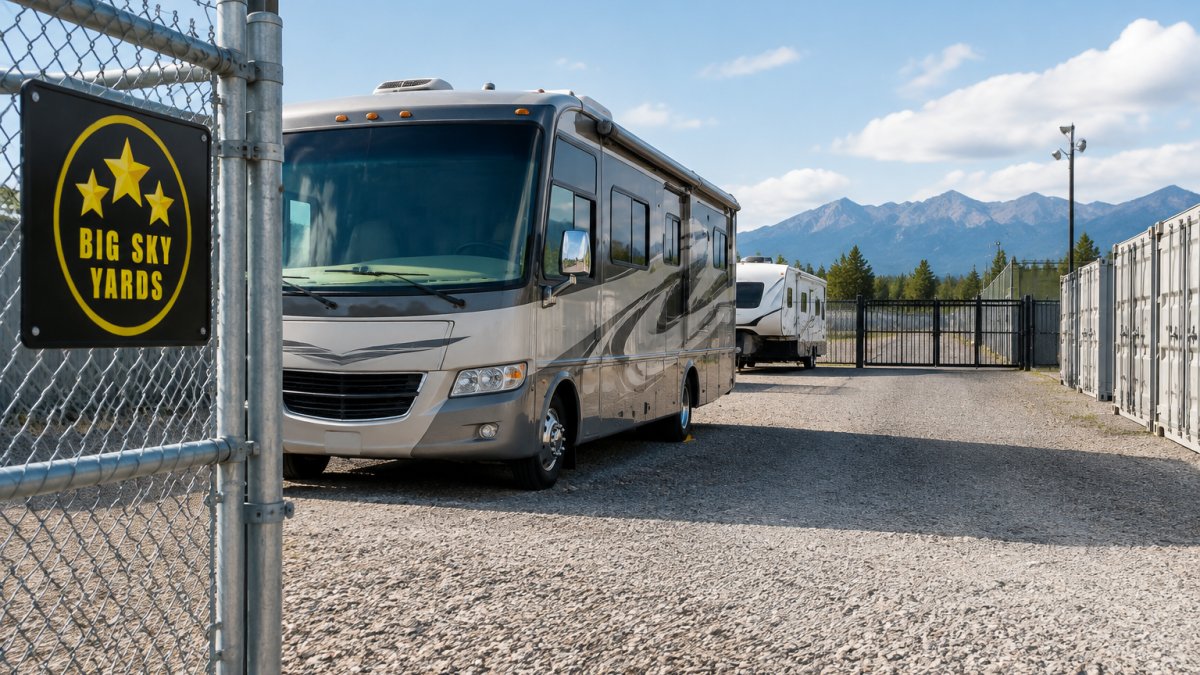
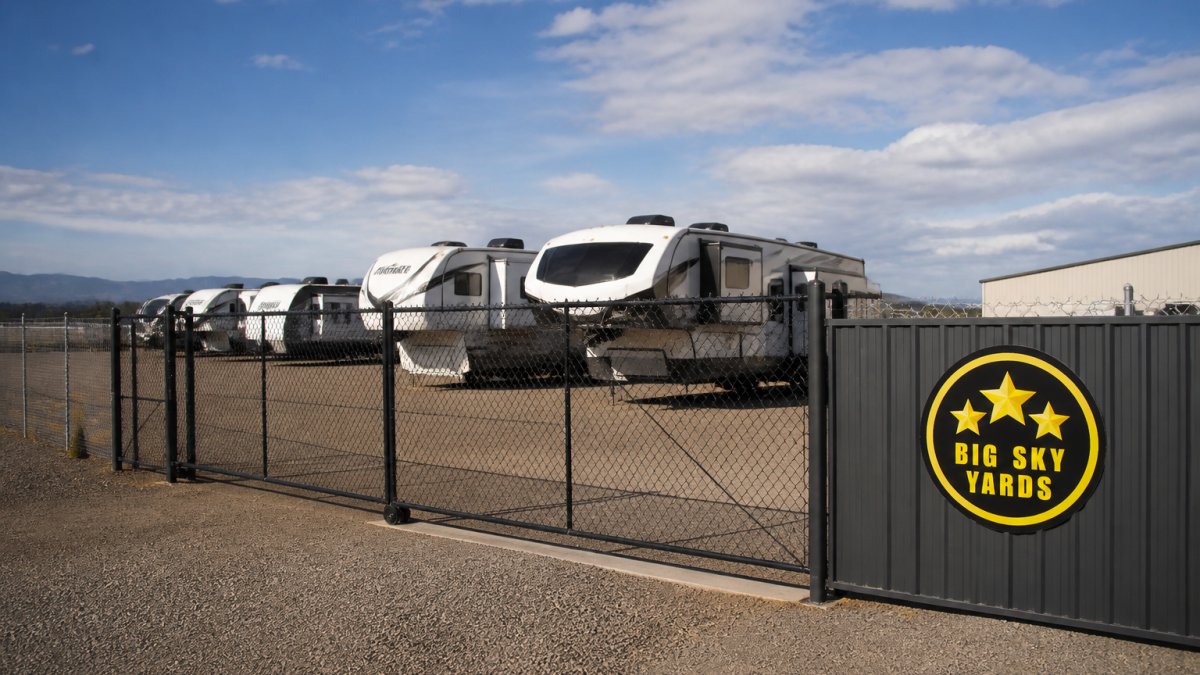
Our double-secured fenced yards have locking gates, onsite lighting, and security cameras, and our 12' x 40' spots are for XL RVs. We are located near major crossroads with easy access to I86. If you want the details before you commit, our guide to booking a secure outdoor storage space walks through the process.
Frequently Asked Questions
What are the best options for long-term boat storage?
The main choices are outdoor yard storage, covered storage, indoor warehouse storage, and marina slips. Match the option to your boat size, how often you use it, and your budget.
Is indoor or outdoor boat storage better for long-term storage?
Indoor storage shields the hull, upholstery, and electronics from UV, rain, and temperature swings, which slows gelcoat fade and mildew growth. Outdoor storage costs less and is easier to find, but you need a quality cover and a site with lighting, cameras, and a locked gate. For a boat you use a few times a season, a secure outdoor yard is often the practical pick. For a high-value boat or one stored for years, indoor space can justify the higher rate.
How much does long-term boat storage cost?
For current prices or a quote, check Big Sky Self Storage Yards' website.
How do I prepare a boat for long-term storage?
Start with a full wash and dry, then change the oil and filter on inboard engines. Add fuel stabilizer and top off the tank to limit condensation, or drain carbureted systems per the manual. Remove electronics, cushions, and food. Fog the engine, disconnect the battery and store it on a maintainer, and cover the boat with a vented cover that sheds water. Lower the outboard or sterndrive, and block the trailer wheels. Check on the boat monthly for moisture, pests, and cover damage.
Should I store my boat in the water or on land?
In-water storage at a marina suits boats used regularly and saves launch time, but hull growth, zinc wear, and storm risk mean more maintenance. Land storage on a trailer keeps the hull out of water, cuts bottom-cleaning work, and usually costs less. For seasonal use or long idle periods, land storage in a secure yard is the lower-maintenance choice. If you keep a boat in the water year-round, plan for haul-out inspections and bottom paint on a regular schedule.
Your boat sits idle for months at a time, and where it sits matters as much as how you winterize it. Big Sky Self Storage Yards gives you a double-secured fenced yard with locking gates, 12' x 40' spots sized for full-size boats and trailers, and onsite lighting and cameras so your equipment stays protected between trips. Get started with Big Sky Self Storage Yards and reserve a spot that fits your boat, your schedule, and your budget.