 How-to
7 Construction Material Storage Mistakes That Ruin Your Stock
Last Updated: November 5, 2026
Quick Summary
Good construction material storage means planning the layout before the first delivery, keeping every stack off bare ground on raised platforms, and leaving gaps between stacks so air can circulate. Store moisture-sensitive goods like cement and drywall under cover, stack lumber flat and level, and label and log everything so inventory stays accurate.
- Sketch the yard before delivery day and mark zones for heavy, moisture-sensitive, and fast-moving materials.
- Keep stacks several inches off the dirt on pressure-treated runners or pallets to stop ground moisture wicking in.
- Cover the top of lumber only and leave the sides open, since a full tarp traps moisture and invites mold.
- Stack cement bags on pallets under a roof, never against a concrete wall or directly on a slab.
- Label every stack by material and date received, and count key items weekly to catch loss early.
Table of Contents
- Why Construction Material Storage Goes Wrong on Most Sites
- Construction Material Storage Best Practices That Actually Hold Up
- How to Store Lumber So It Stays Flat and Straight
- How to Store Cement Bags and Other Bagged Materials
- Protecting Drywall, Sheet Goods, and Materials From Rain
- Stacking, Blocking, and Securing Loads Safely
- Construction Materials Inventory Management That Prevents Loss
- Security, Access Control, and Off-Site Storage Decisions
- Frequently Asked Questions
Why Construction Material Storage Goes Wrong on Most Sites
Most contractors don't lose money on materials because they bought wrong. They lose it because the stock sat in the rain, got buried under a tarp, or walked off the site. Learning how to store construction materials properly is one of the cheapest ways to limit damage on a job.
Here's the core problem: a jobsite is a temporary space treated like a permanent warehouse. No racks, no ground clearance, no labeling, no plan for incoming materials. The result is warped lumber, hardened cement, and a crew hunting for parts that should have been easy to find.
The fix isn't complicated. It's a storage plan built around three things: keeping moisture out, keeping loads stable, and keeping track of what you have.
- Moisture ruins bagged goods and sheet materials fastest.
- Poor stacking causes warping, crushing, and tip-over risk.
- No tracking turns inventory accuracy into guesswork.
Below, we'll show you exactly how to build a storage area that holds up through a full project, material by material. Most of it costs almost nothing beyond a little planning.
Three storage failures account for most material losses on a jobsite.
| Problem | What it ruins |
|---|---|
| Moisture | Bagged goods and sheet materials fastest |
| Poor stacking | Causes warping, crushing, and tip-over risk |
| No tracking | Turns inventory accuracy into guesswork |
Construction Material Storage Best Practices That Actually Hold Up
Good construction material storage comes down to four basics: a planned layout, ground clearance, air circulation, and clear access. Get those right and most damage never happens. Skip them and no amount of tarping will save the stock.
Plan the Layout Before the First Delivery Lands
The biggest mistake is planning storage after the truck arrives. By then, material gets dumped wherever there's space, and the storage area becomes a dumping ground for the rest of the job.
A common approach is to sketch the yard before delivery day. Mark three zones:
- Heavy and bulky: lumber, sheet goods, pipe, near the access route.
- Moisture-sensitive: cement, bagged materials, drywall, under cover.
- Fast-moving: consumables and hardware, closest to the work area.
Leave a clear access route wide enough for a forklift or pallet jack. Ingress and egress matter more than most crews think. If you can't get material in and out without moving three other stacks, the layout is wrong.
Raised Platforms, Ground Clearance, and Air Circulation
Direct ground contact is the enemy. Ground wicks moisture into lumber, sheet goods, and bags, and it does it faster than most people expect.
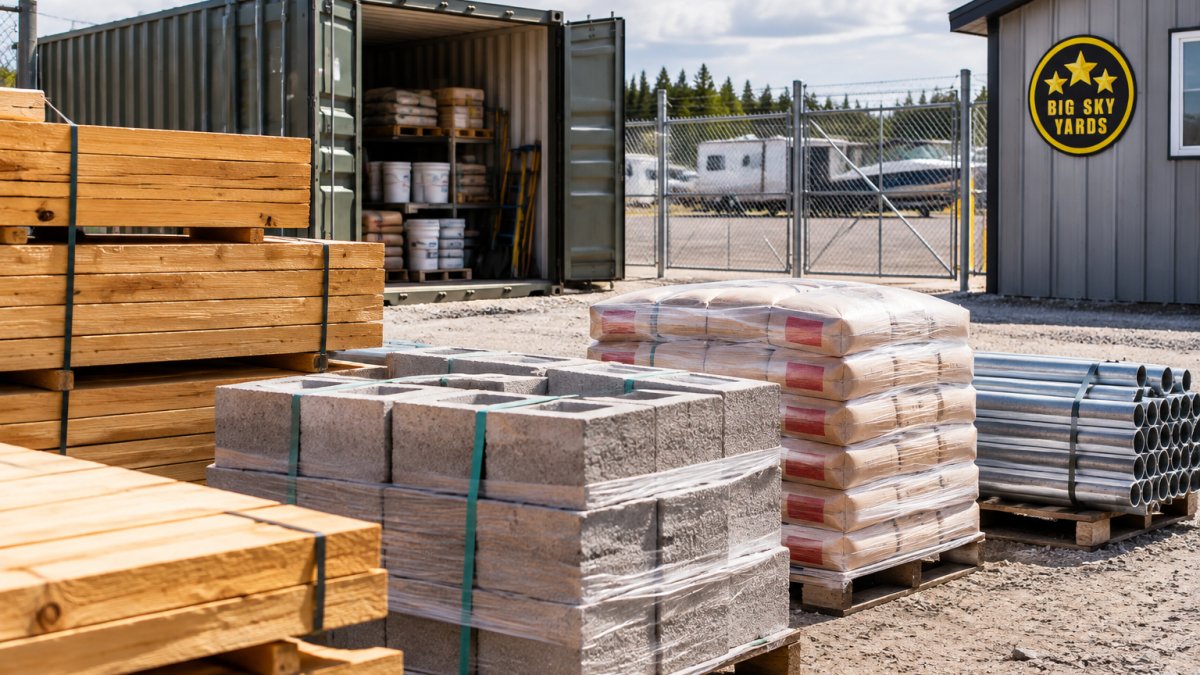
Raised platforms and ground clearance solve this. A simple approach is pressure-treated runners or pallets under every stack, keeping material several inches off the dirt. On a jobsite, even scrap 4x4s work fine.
Air circulation matters just as much. Ventilation keeps condensation from forming under tarps and inside stacks. Ventilated storage beats sealed storage for most building materials, because trapped damp air does more harm than fresh air ever will.
- Keep stacks off bare ground.
- Leave gaps between stacks for airflow.
- Never wrap moisture-sensitive goods airtight.
How to Store Lumber So It Stays Flat and Straight
Store lumber flat, level, and off the ground, supported every few feet, with spacers between layers. Lumber that sits on uneven ground or in standing water will warp, bow, and twist, and warped boards cost you time at installation.
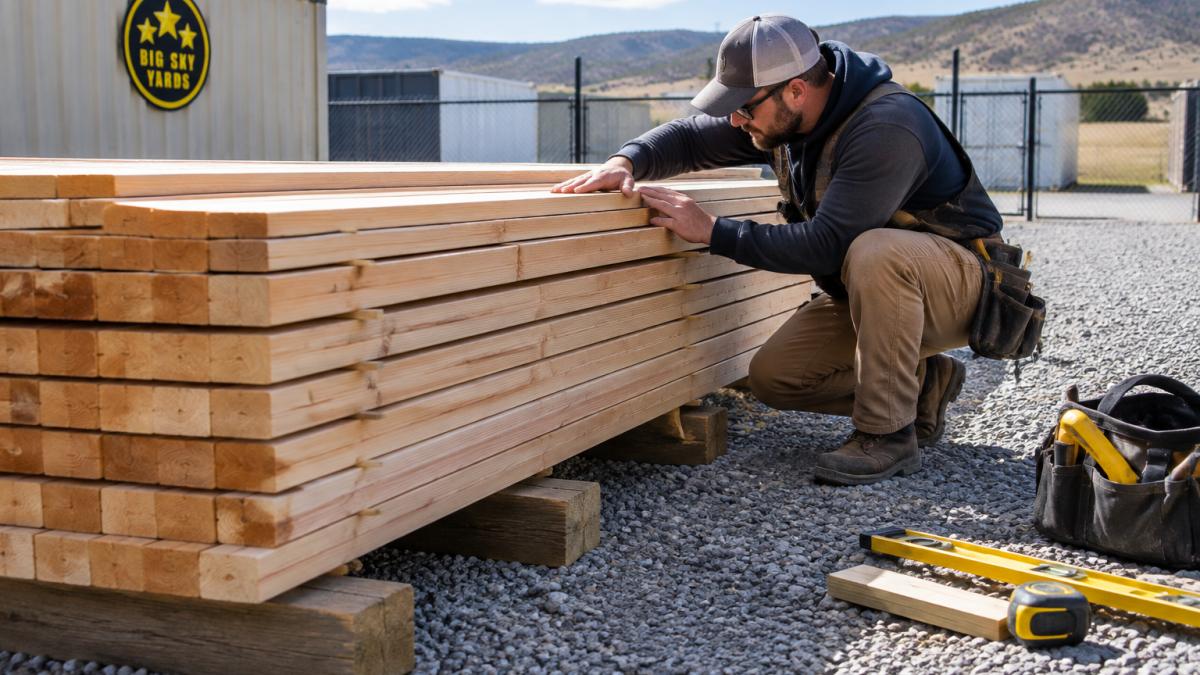
The rules for storing lumber are simple but unforgiving:
- Stack boards flat, never leaning against a wall or trailer.
- Use level supports at regular intervals so the stack can't sag.
- Add spacers between layers to keep air moving.
- Keep it off the ground on runners or pallets.
Lumber should be supported evenly along its length, with spacers aligned vertically with the supports below so the weight travels straight down. Check the spacing guidance from your lumber supplier or the manufacturer for the specific stock you are storing.
If you're storing lumber for weeks rather than days, cover the top only and leave the sides open. The same logic applies to heavy or bulky stock kept outdoors, which is why our guide to outdoor storage for heavy equipment covers load support and weather protection in more detail.
Watch out: pressure-treated lumber is often sold wet and will shrink and check as it dries. Stack it with stickers and keep it out of direct sun for the first week or two to slow the drying rate and reduce surface cracking.
How to Store Cement Bags and Other Bagged Materials
Store cement bags in a dry, ventilated area, off the floor, stacked no more than a few bags high, and used oldest-first. Cement and other bagged materials pull moisture from the air, and once they set, they're worthless.
Watch out: the classic mistake is stacking cement bags against a concrete wall or directly on a slab. Both wick moisture straight into the paper, and you find out when the bags turn rock-hard.
A workable routine:
- Place bags on pallets, never on bare ground or concrete.
- Keep them under a roof or inside a container, not under a loose tarp.
- Stack no higher than the bag manufacturer advises, and never crush the bottom layer.
- Rotate stock so older bags get used first.
- Keep the area ventilated so damp air doesn't settle.
Bagged materials also need protection from rain and ground damp together. A dry storage spot with airflow handles both.
Protecting Drywall, Sheet Goods, and Materials From Rain
Drywall and other sheet goods must be stored flat, fully covered, and off the ground, with edges protected from rain. Water damage to drywall doesn't always show until you hang it, and by then the material is scrap.
Plastic sheeting and tarps work, but only when used correctly. The goal is a cover that sheds rain without sealing in moisture. Lean sheets against a wall, and you invite warping.
- Store sheet goods flat, never on edge for long periods.
- Raise them off the ground on runners.
- Cover with plastic sheeting that overhangs the edges.
- Check after every storm for pooled water.
Keep the cover clear of the top sheet so air can move, and let the sides hang free. Sheet goods need continuous, level support so the weight is distributed and the bottom sheets do not sag between supports.
Stack height matters too. Follow the stacking-height guidance from your material manufacturer, and keep sheet goods well off the ground on a stable base.
Rain protection is seasonal work. In wet months, inspect covers weekly. In dry spells, let the stack breathe.
Stacking, Blocking, and Securing Loads Safely
Stack, block, and secure every load so it cannot shift, slide, or tip. Safe handling starts with stable stacks, and unstable stacks are the most common cause of jobsite injuries involving stored materials.
The rules are straightforward:
- Stack heavy items low, light items high.
- Block and chock anything round, like pipe or drums, so it can't roll.
- Secure loads with straps or banding where movement is possible.
- Keep stacks square and aligned, not leaning.
- Never stack higher than you can safely unload.
Secure loads also means securing the storage area itself. A fenced yard with locking gates and clear sightlines does more for safety and theft prevention than any single lock on a container. That's the thinking behind the yards at Big Sky Self Storage Yards: double-secured fencing, locking gates, and onsite lighting.
Construction Materials Inventory Management That Prevents Loss
Construction materials inventory management is the practice of tracking what comes in, what gets used, and what's left, so material availability stays predictable. Without it, you buy twice, lose stock, and can't tell damage from theft.
A simple system beats a fancy one nobody uses. Start with these habits:
- Label every stack and container by material and date received.
- Log incoming materials on delivery, not later.
- Track material movement in and out of the storage area.
- Count key items weekly to catch loss early.
- Group material categories so like items sit together.
Material labeling and material tracking together give you inventory accuracy you can trust. That accuracy is what protects your budget. If you're budgeting for off-site space, our guide to outdoor storage pricing for contractors explains what drives the cost.
Security, Access Control, and Off-Site Storage Decisions
Access control means limiting who can enter the storage area and recording when they do. Theft on jobsites is common, and stored materials are an easy target when anyone can walk up and help themselves.
Basic access control looks like this:
- One controlled entry point with a locking gate.
- Keys or codes issued only to crew who need them.
- Lighting over the storage area and entry.
- Cameras covering the yard and gates.
- A simple sign-out log for high-value items.
When a jobsite can't offer that, off-site storage makes sense. A commercial yard with fencing, lighting, and cameras can reduce theft risk and free up site space. If you're weighing it, read 7 things to know before renting storage containers for business, and for a fuller picture of yard options, see our commercial outdoor storage yard rental guide. For crews protecting tools specifically, these proven ways to protect construction tools from theft are worth the read.
At Big Sky Self Storage Yards, contractors get double-secured fenced yards with locking gates, optional 20-foot containers, onsite lighting, and security cameras, with easy access to I86. If your stock keeps getting damaged or disappearing, it is worth reviewing your storage plan. Get started with Big Sky Self Storage Yards and give your materials a yard that protects them.
Frequently Asked Questions
What is the proper procedure for storing construction materials?
Start with a storage plan: group materials by category, keep everything off the ground on raised platforms, and leave clear access routes so you can reach stock without moving three stacks. Lumber goes flat on spacers, bagged cement stays in dry, ventilated conditions, and sheet goods stand or lie flat with plastic sheeting over the top. Label incoming materials, log them in your inventory system, and inspect the storage area weekly for moisture, warping, and pest damage.
How should lumber be stored to prevent warping?
Stack lumber flat and level, never leaning against a wall. Keep it off the ground on 4x4 skids or a raised platform, and place spacers between layers so air circulates through the stack. Add weight or straps to the top of the pile to hold boards straight while they dry. Cover the top with a tarp or plastic sheeting, but leave the sides open so moisture can escape rather than getting trapped under the cover.
How do you keep cement and other bagged materials dry?
Store cement bags on pallets or a raised platform, never directly on concrete or dirt, and keep them in a dry, ventilated area away from exterior walls. Stack bags no higher than the manufacturer advises, and use the oldest bags first. If you store outdoors, put a waterproof cover over the top and sides. Bags that have absorbed moisture will harden and lose strength, so inspect them before every pour.
When should contractors use off-site storage for construction materials?
Off-site storage makes sense when a job site has no room for safe stacking, when materials arrive before the site is ready, or when you want to protect expensive stock and equipment from theft and weather. A secure yard with locking gates, lighting, and cameras also gives you room to keep surplus inventory between jobs. Compare the monthly cost against the value of materials you would otherwise replace and the labor lost to disorganized storage.