 How-to
How to Find Flexible Short Term Boat Storage
Last Updated: November 2, 2026
Quick Summary
Flexible short term boat storage lets you keep a boat in a secure spot for a few weeks or months without committing to a year-long lease. Choose a storage type that fits your boat's size, budget and how often you need access. Prepare the boat first, then compare the contract terms before signing.
- Define how long you need the space, how often you'll access the boat, and what protection it needs.
- Outdoor fenced yards cost less, while indoor or enclosed units give full weather protection.
- Add fuel stabilizer and run the engine briefly before storage to avoid fuel system damage.
- Fitted canvas or vinyl covers are generally the most practical choice for a few months.
- Check minimum term, notice period, early cancellation cost and included services before signing.
Table of Contents
- What Flexible Short Term Boat Storage Means
- Types of Short Term Boat Storage Available
- Indoor vs. Outdoor Boat Storage for a Few Months
- Boat Storage Preparation Before You Drop Off
- Boat Storage Cover Options and What They Protect Against
- How Boat Storage Costs and Contracts Are Structured
- Checklist for Evaluating a Storage Facility
- Booking Your Short Term Spot at Big Sky Self Storage Yards
- Frequently Asked Questions
What Flexible Short Term Boat Storage Means
Flexible short term boat storage lets you keep a boat somewhere secure for a few weeks or a few months, without committing to a year-long lease. For seasonal owners in the Binghamton area, that matters. A boat may only need storage from late fall through spring, and paying for twelve months when you use three is a waste of money.
Owners often want a spot that fits the season, not a contract that outlasts it. Flexible storage means shorter terms, clear notice rules, and access when you need it.
The term "flexible" can mean different things, so it helps to define your needs first. Ask yourself how long you need the space, how often you'll access the boat, and what kind of protection it requires. Those answers will narrow your options quickly.
Types of Short Term Boat Storage Available
Short term boat storage generally falls into a few categories. Each one trades cost, protection, and access differently.
- Outdoor fenced yards: Gated, secured lots with the boat exposed to weather.
- Covered or partially covered spaces: Roof protection from sun, hail, and falling debris, with open sides.
- Indoor or enclosed units: Full weather protection and the highest level of security.
- Trailer and parking spots: Designed for boats on trailers, sized for larger vehicles and rigs.
Pick the category that matches your boat's size, your budget, and how the boat will be stored. A trailered bass boat and a 30-foot sailboat on a trailer have very different needs.
Indoor vs. Outdoor Boat Storage for a Few Months
For a few months of storage, the choice usually comes down to protection versus cost. Indoor storage keeps the boat out of rain, snow, and UV exposure, which helps protect upholstery, electronics, and gelcoat. Outdoor storage works well for sturdy boats that are properly covered and prepared.
Outdoor storage is often a practical choice for a short season, provided the boat is prepared correctly and covered. Neglecting prep is the most common mistake owners make, regardless of where the boat sits. A poorly covered boat outdoors can suffer more damage than a well-prepared boat stored indoors.
Consider how the boat will be used when you retrieve it. If you need quick access to put the boat in the water on short notice, an outdoor yard with easy gate access may suit you better than a unit that requires advance scheduling.
Boat Storage Preparation Before You Drop Off
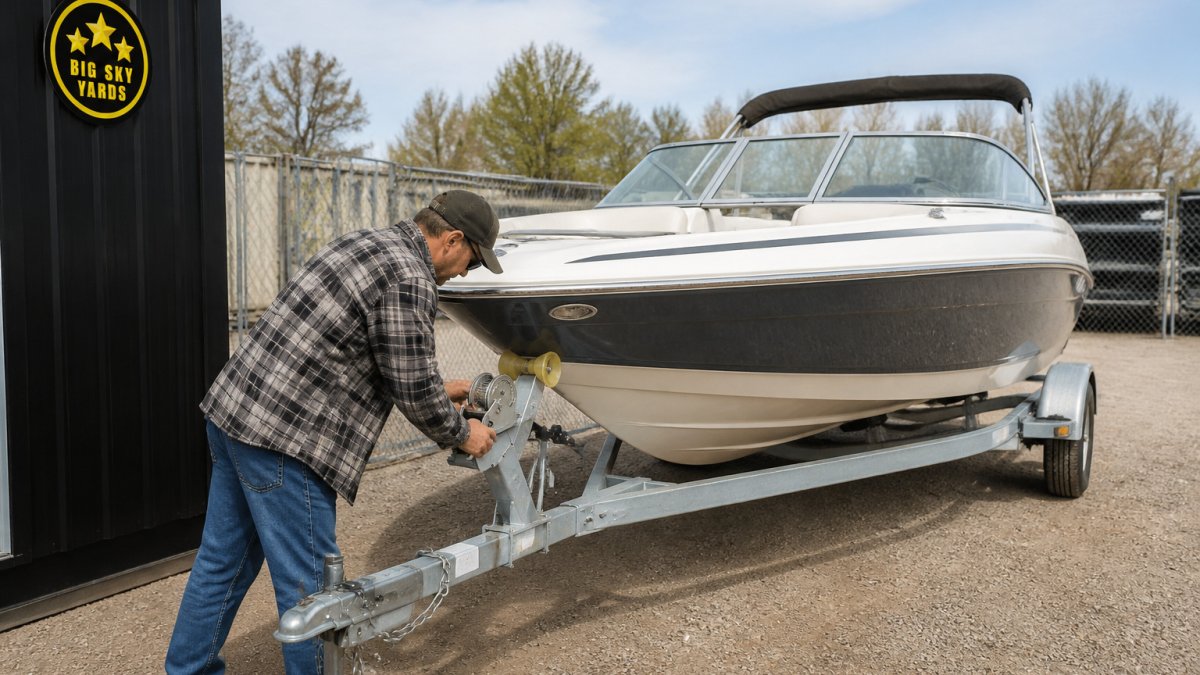
Preparation protects your boat during storage and makes spring launch much easier. Start a few weeks before drop-off.
- Clean the hull and deck. Remove dirt, salt, and algae so residue doesn't set during storage.
- Drain the engine and fuel system. Add fuel stabilizer to the tank and run the engine briefly so it reaches the lines.
- Winterize the water systems. Drain freshwater tanks, pumps, and lines, then add antifreeze where needed.
- Remove valuables and gear. Take out electronics, life jackets, cushions, and personal items.
- Ventilate the cabin. Leave hatches slightly open or use moisture absorbers to limit mildew.
- Charge or disconnect the batteries. Batteries left discharged can fail, so keep them charged or remove them.
Watch out: skipping the fuel stabilizer is a common error. Old fuel can gum up carburetors and fuel injectors, and that repair often costs more than the storage itself.
The article lays out a six-step preparation routine, with a rough timeline and the reason behind each step.
| Step | What to do | Timing or detail |
|---|---|---|
| Clean the hull and deck | Remove dirt, salt and algae | Before storage |
| Drain engine and fuel system | Add fuel stabilizer, run engine briefly | Before storage |
| Winterize water systems | Drain tanks, pumps and lines; add antifreeze | Before storage |
| Remove valuables and gear | Take out electronics, life jackets and cushions | Before storage |
| Ventilate the cabin | Leave hatches slightly open or use moisture absorbers | Limits mildew |
| Charge or disconnect batteries | Keep charged or remove | Discharged batteries can fail |
Boat Storage Cover Options and What They Protect Against
Covers vary widely in material and fit. The right choice depends on your boat's size and the weather it will face.
- Shrink wrap: Offers strong protection from moisture and weather. It's best for boats stored outdoors for longer periods, but it is harder to remove.
- Fitted canvas or vinyl covers: Breathable and reusable. They protect against UV and debris and are easier to access than shrink wrap.
- Basic tarps: Low cost but limited. They can trap moisture and chafe the finish if not secured well.
A fitted cover is generally the most practical choice for a few months. Make sure it fits snugly and allows some airflow.
How Boat Storage Costs and Contracts Are Structured
Pricing depends on the boat's size, the storage type, and the length of the stay, so ask for a current quote. Current rates are listed on the Big Sky Self Storage Yards pricing page.
Check the following before you sign:
- Minimum term: Confirm whether a minimum stay applies.
- Notice period: Find out how much notice you must give to end the rental.
- Early cancellation: Confirm whether you can cancel early and what it costs.
- Included services: Clarify what is covered, such as security monitoring and lighting.
Ask these questions in writing. Clear terms prevent surprises when your plans change.
Checklist for Evaluating a Storage Facility
Use this checklist to compare facilities:
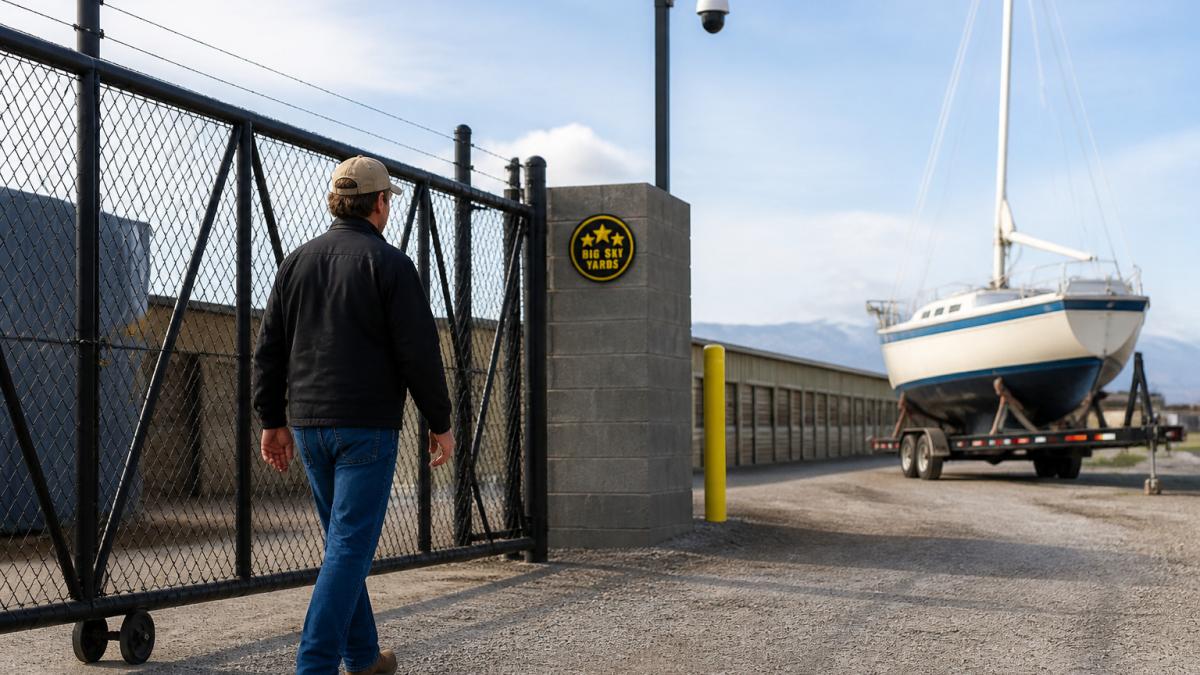
- Fenced perimeter with locking gates
- Onsite lighting and security cameras
- Space sized for your boat and trailer, with room to maneuver
- Clear access hours and gate procedures
- Convenient distance from your home and boat launch
- Transparent pricing and contract terms
- Flexible notice and cancellation policy
- Insurance requirements explained up front
Visit in person if you can.
Booking Your Short Term Spot at Big Sky Self Storage Yards
Big Sky Self Storage Yards offers secure outdoor storage for contractors, RVs, and boats. Our facility features double-secured fenced yards with locking gates, onsite lighting, and security cameras. Spaces include 12' x 40' parking spots, plus optional 20' containers.
If you need short term storage for your boat, you can review our options and request a quote through our website. Our book a boat storage space page explains the preparation steps and what to expect when you drop off. For a broader look at storage types, see our long term boat storage options guide, and review security features on our affordable boat parking page. If you are weighing indoor against outdoor storage, our outdoor RV storage parking requirements guide covers the rules that apply.
Frequently Asked Questions
What is the best way to store a boat for a few weeks?
For a few weeks, a fenced outdoor yard with locking gates and onsite lighting is usually enough, provided the boat is clean, dry and covered with a fitted cover. Remove loose gear, drain the livewell and bilge, and disconnect the battery if it will sit longer than a couple of weeks. Ask the facility whether it allows access during your storage period so you can check on the boat if needed. Short stays rarely justify indoor climate control unless the boat has expensive electronics or a wood interior that is sensitive to humidity.
How much does short term boat storage cost?
Pricing depends on boat size, storage type, the length of your stay and any add-ons such as security camera monitoring or container space. Some facilities offer monthly terms that suit seasonal use, so you may pay only for the months you need. Check the Big Sky Self Storage Yards pricing page for current rates, and ask whether camera monitoring is included before you compare offers. Confirm the cancellation terms too, since a short stay with an early exit clause can change the total cost.
Can I access my boat while it is in storage?
Access rules vary by facility. Many yards let you visit during set hours through a locking gate, but some restrict entry to office-hour windows or require advance notice. Ask how the gate code or key system works and whether you can bring a trailer or tow vehicle onto the lot for launch day. Clear answers on access matter most when you are storing a boat for only four or five months and need to use it on short notice.
Is indoor or outdoor boat storage better for a few months?
Outdoor storage works well for a few months when the boat has a quality cover and the yard is well lit and secured. Indoor storage costs more but shields the hull, upholstery and electronics from sun, rain and UV exposure. For a short off-season, a covered outdoor spot with good security is a practical choice for most recreational boats. Consider indoor storage if the boat has sensitive interior materials or if you live where hail or heavy snow is common.